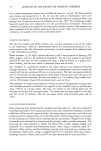
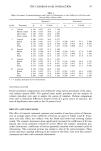
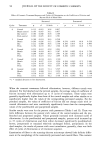
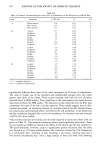
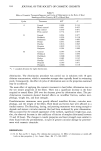
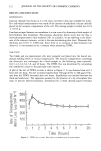
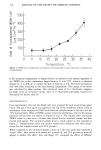
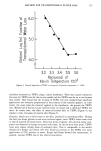
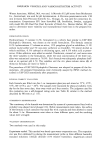
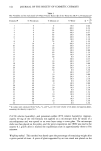
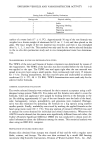
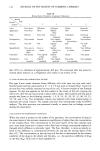
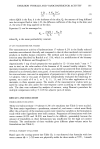
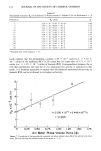
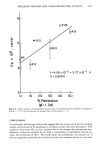
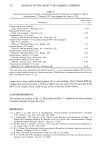
EMULSION VEHICLES AND VASOCONSTRICTOR ACTIVITY 141 Waters Associates, Milford, MA, was used. A Metrohn 632 pH meter from Brinkmann Co., Switzerland, was used for pH determination. A Precision penetrometer with 1/10 mm divisions from Precision Scientific Co., Chicago, IL, was used for consistency de- termination. Evaporimeter EP1 from ServoMed AB, Stockholm, Sweden, equipped with model SR-206 Dual Pen Chart Recorder of Heath Co., Benton Harbor, MI, was used to determine water volatility and transepidermal water loss in the prepared for- mulas. FORMULATION DESIGN Hydrocortisone 17-valerate 0.2%, formulated in a vehicle base similar to USP XXI Hydrophilic Ointment, was chosen as the model formulation. The formula contains 0.2% hydrocortisone 17-valerate as active, 12% propylene glycol as solubilizer, 0.1% sodium lauryl sulfate and 3% non-ionic surfactant as emulsifier, 5% stearyl alcohol as vehicle stabilizer, 0.5% carbopol as thickening agent, and 0.3% sorbic acid as preser- vative. Other additives were added as needed. Petrolatum, mineral oil, and water were the three variables in the formulation, while the total concentration of the three vari- ables was maintained constant at 78.9%. Each formula was adequately phosphate buff- ered at its optimal pH 4.70. The variables and the o/w phase-volume ratios (0) of thirty-six formulas are listed in Table I. The procedure of USP XXI Hydrophilic Ointment was adopted to prepare all the for- mulations. All prepared formulations were chemically assayed by HPLC method de- scribed in USP XXI immediately after preparation. PHYSICAL STABILITY EVALUATION Each formula was filled into five 1-oz transparent glass jars and stored at 55øC, 45øC, 35øC, RT (23øC), and - 20øC. The samples were examined for physical stability every day for the first seven days, then every week until four months. The judgment used for this evaluation was a self-designed rating scale (see Table II) similar to the method described by Wittern et al. (13). CONSISTENCY DETERMINATION The consistency of the formula was determined by means of a penetrometer fitted with a polished cone-shaped metal plunger (14). Before measurements were taken, the surface of the formula in each container was made flat with a spatula and then allowed to stand for about « hr. Measurements were taken at three different spots, and the resulting values were averaged. VOLATILITY DETERMINATION Two methods were used in this study: Evaporimeter method. This method was based upon water evaporation rate. The evaporim- eter was first calibrated by placing the measurement probe in three different humidity standard solutions: lithium chloride (11% relative humidity), magnesium nitrate

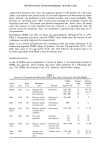
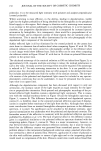
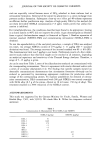
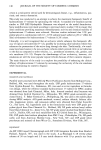
142 JOURNAL OF THE SOCIETY OF COSMETIC CHEMISTS Table I The Variables and the Calculated o/w Phase-Volume Ratios (4)) of the Thirty-Six HCV 0.2% Emulsions* Formula # % Petrolatum % Mineral oil % Water 1 0 0 78.9 0.06 2 0 10 68.9 0.19 3 0 20 58.9 0.35 4 0 30 48.9 0.57 5 0 40 38.9 0.88 6 0 50 28.9 1.34 7 0 60 18.9 2.10 8 0 70 8.9 3.59 9 10 0 68.9 0.19 10 10 10 58.9 0.35 11 10 20 48.9 0.57 12 10 30 38.9 0.88 13 10 40 28.9 1.34 14 10 50 18.9 2.10 15 10 60 8.9 3.59 16 20 0 58.9 0.35 17 20 10 48.9 0.57 18 20 20 38.9 0.88 19 20 30 28.9 1.34 20 20 40 18.9 2.10 21 20 50 8.9 3.59 22 30 0 48.9 0.57 23 30 10 38.9 0.88 24 30 20 28.9 1.34 25 30 30 18.9 2.10 26 30 40 8.9 3.59 27 40 0 38.9 0.88 28 40 10 28.9 1.34 29 40 20 18.9 2.10 30 40 30 8.9 3.59 31 50 0 28.9 1.34 32 50 10 18.9 2.10 33 50 20 8.9 3.59 34 60 0 18.9 2.10 35 60 10 8.9 3.59 36 70 0 8.9 3.59 * 4) values were calculated from Vo/V,, Vo and V,, are the total volume of oil phase and aqueous phase, assuming the density is equal to 1. (54.5% relative humidity), and potassium sulfate (97% relative humidity). Approxi- mately 30 mg of the test formula was applied on a microscope slide by means of a microdispenser and was spread to an even layer using a cover glass. The microscope slide was then placed on the probe, and the water evaporation rate (WE) was read to the nearest 0.1 g/m2h after it reached the equilibrium state in approximately three to five minutes. Weighing method. This method was based upon the percentage of remaining weight after a given period of time. A piece of glass supported by an iron stand was placed on the
Purchased for the exclusive use of nofirst nolast (unknown)
From: SCC Media Library & Resource Center (library.scconline.org)