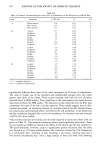
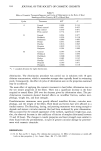
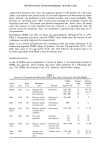
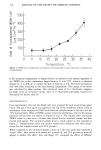
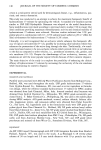
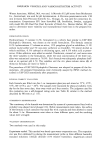
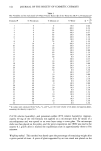
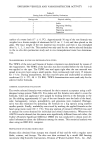
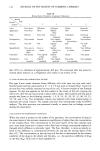
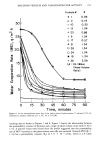
EMULSION VEHICLES AND VASOCONSTRICTOR ACTIVITY 143 Table II Rating Scale of Physical Stability Evaluation Rating scale Physical stability 1 Stable 2 Beginning bleeding 3 Bleeding 4 Beginning separation 5 Separation surface of a water bath (37 --- 0. iøC). Approximately 50 mg of the test formula was weighed on a known weight of aluminum foil (2 cm X 2 cm) and then placed on the glass. The exact weight of the test material was recorded, and then it was reweighed after V2, 1, 2, 3, and 4 hr. This method was only used for the twelve selected formulas in the in vitro skin permeation study and in vivo transepidermal water loss determina- tion. TRANSEPIDERMAL WATER LOSS DETERMINATION (TEWL) The TEWL of the wrist and forearm of human volunteers was determined by means of the evaporimeter. The TEWL of the bare skin was first recorded before the test formula was applied to the spot. The TEWL was read again right after the test material was spread in an even layer using a small spatula, then continuously read every 15 minutes for 1 V2 hr. During measurement, the skin was left open and undisturbed at ambient conditions (23 --- 2øC, 40 ___ 5% RH). TEWL determinations were made only for the selected twelve formulas. COSMETIC ACCEPTANCE EVALUATION The twelve selected formulas were evaluated for their cosmetic acceptance using a self- designed rating system (Table lll). Five males and five females were asked to score the formulas. Color and appearance were judged by looking directly at the formulas in the jar. By rubbing approximately 0.5 gm of the test formula onto the back of the hand, odor, homogeneity, texture, spreadability, and greasiness were evaluated. Homoge- neity was also examined by spreading the formula on a big spatula using another smaller spatula. Finally, washability was scored by washing the applied formula on the hand using warm water (30 --- 3øC). Two-way analysis of variance (ANOVA) was used to analyze the scores obtained for individual and overall characteristics. Whenever the ANOVA results showed that the means were significantly different from each other, the Tukey's Honestly Significant Difference (HSD) test was conducted to obtain more de- tailed information about the differences among the means. This statistical analysis was done using an IBM 4033 computer. PREPARATION OF EXCISED HUMAN SKIN Human skin obtained from autopsy was cleaned of hair and fat with a regular razor blade, scissors, and forceps. The skin was then sectioned by a model 880 freezing microtome (AQ Scientific Instruments, Division of Warner Lambert Tech., Inc., Buf-

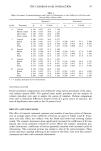
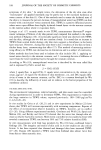
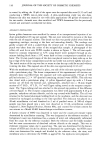
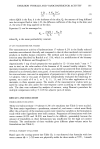
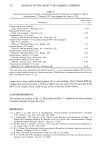
144 JOURNAL OF THE SOCIETY OF COSMETIC CHEMISTS Table III Rating Scale of Cosmetic Acceptance Evaluation Rating Chara.c- .• cale teristics "• 1 2 3 4 5 Color Pure white Off-white Yellowish Yellow Brownish Appearance Very shiny Shiny Slightly Dull Unctuous shiny Odor Odorless Faint odor Faintly Unpleasant Extremely unpleasant unpleasant Homogeneity Very smooth Smooth Very slightly Slightly Non-uniform non-uniform non-uniform Texture Very soft Soft Slightly Stiff Vey stiff/ stiff hard Spreadability Very easy to Easy to Slightly Difficult Very difficult spread (no spread difficult to to spread to spread drag) spread Greasiness Non-greasy Very slightly Slightly Greasy Very greasy greasy greasy Washability Very Slightly Very slightly Practically Non-washable washable washable washable non -washable falo, NY) to a thickness of approximately 200 }xm. The sectioned skin was stored in normal saline solution in a refrigerator until ready to use within 24 hr. IN VITRO HUMAN SKIN PERMEATION STUDIES Flat-type 9-mm inside diameter Franz diffusion cells with open top caps were used. Normal saline solution maintained at 37 --- 0. iøC was used as receptor fluid. A piece of section skin was carefully mounted on top of the cell. A known weight of test formula (approx. 50 mg) was applied on the skin surface at the center of the cell covering the entire cell, then the cap was secured in place with a clamp. One hundred and fifty •xL of sample was drawn at the following intervals: 1, 4, 8, 24, 26, 28, 30, 32, 48, 50, 52, 54, 56, and 72 hr. The withdrawn volume was replaced with fresh normal saline to maintain the initial volume. The sample solutions were immediately ready for HPLC analysis. The skin specimen was examined visually to ensure that no leakage occured during the experiment. CALCULATION OF PERMEABILITY CONSTANT When the cream is present on the surface of the specimen, the concentration of drug in the outer layers of the stratum corneum at equilibrium is higher than the concentration in the receptor fluid. The concentration in the lower layers of the skin remains near zero, since these layers are in contact with a fluid that is being continuously replaced or through which diffusion is relatively rapid. The flux, therefore, is more accurately re- lated to the difference in concentration between the top and the bottom layers of the skin (15). The concentration in the top layers of the skin is determined by the relative solubility of the drug in the vehicle and the skin, i.e., the partition coefficient of drug in the skin (Kin). Fick's law is then expanded to:
Purchased for the exclusive use of nofirst nolast (unknown)
From: SCC Media Library & Resource Center (library.scconline.org)