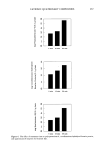
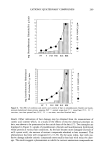
230 JOURNAL OF THE SOCIETY OF COSMETIC CHEMISTS polymers commonly used in hair products include hydroxyethylcellulose (HEC) and hydroxypropyl methylcellulose (HPMC). Long-chain alkyl groups can be also incorpo- rated onto HEC to yield a hydrophobically modified HEC (HMHEC). Shampoo formulations often contain cationic polymers to provide hair conditioning. The efficacy of a conditioning shampoo is directly related to the amount of cationic polymer deposited on the hair surface (4). It is well known that cationic polymer deposition is decreased when surfactants are included in a formulation. This interference is most marked in the presence of anionic surfactants, but amphoteric, or cationic, surfactants, as well as nonionic surfactants (5), may also decrease the deposition of cationic polymer. Other factors such as treatment temperature (6), cationic polymer concentration (7), and added electrolytes (8) have been examined and found to influence cationic polymer uptake. However, nothing has been reported on the effects of added cellulose ethers, which are ingredients common in hair care products, on cationic polymer deposition. This paper presents the results of work examining the influence of nonionic cellulosic polymers on the uptake of polyquaternium-10 by bleached hair. EXPERIMENTAL HAIR TRESS PREPARATION Medium-dark brown, 8-inch-long virgin quality European hair (DeMeo Bros., New York, NY) was washed and bleached in a formulation of 3% hydrogen peroxide (9). Two bleach conditions were chosen, 30 minutes at 32øC and 4 hours at 40øC. This yielded hair with two degrees of damage. CELLULOSIC POLYMERS Polyquaternium-10 (UCARE © Polymer JR 400, Amerchol, Edison, NJ) solutions of 0.05, 0.10, and 0.20 w/v% were prepared in a 0.001 M buffer of mono- and dibasic sodium phosphate (10). In addition, polyquaternium-10 solutions of the above concen- trations were prepared to contain 0.10 w/v% concentrations of nonionic cellulosic polymers. The nonionic cellulosics added were high-molecular-weight hydroxyethylcel- lulose (HMW HEC, NATROSOL © 250 HHR) medium viscosity (lower molecular weight) hydroxyethylcellulose (LMW HEC, NATROSOL © 250 MR) hydroxypropyl methylcellulose (HPMC, BENECEL © MP 943 PR) and hydrophobically modified hydroxyethylcellulose (HMHEC, NATROSOL © Plus CS, Grade 330). All nonionic cellulosic polymers were supplied by Aqualon, a Hercules Incorporated Unit (Wilming- ton, DE). COLLOID TITRATION The uptake of cationic polymer from treatment solutions by hair was determined by a colloid titration method discussed elsewhere (10). System parameters described previ- ously were identical in this study.

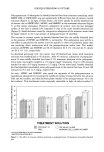
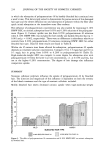
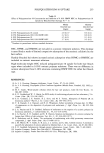
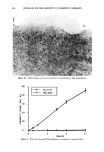
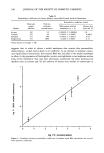
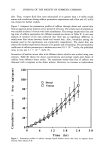
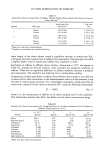
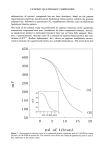
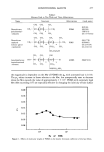
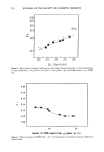
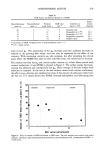
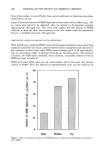
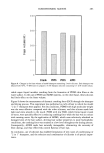
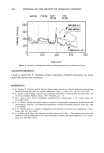
POLYQUATERNIUM- 10 UPTAKE 231 SUBSTRATE TREATMENT Approximately one gram of bleached hair was accurately weighed and placed in a 125-ml Erlenmeyer flask. About 20 g of the polyquaternium-10 or polyquaternium- 10/nonionic cellulosic polymer solution was accurately weighed and dispensed onto the hair using a syringe. The flask was tightly covered and placed in a 40øC shaker bath for 45 minutes. The solution was then decanted for concentration analysis by colloid titration (10). Cationic uptake for the two bleached hair types was determined by measuring solutions containing polyquaternium-10 before and after immersion of a hair tress. Differences in solution concentration were attributed to sorption of the polymer by the hair. Identical measurements were made for solutions containing polyquaternium-10 at the same con- centration but which also contained one of the nonionic cellulosic polymers. DATA ANALYSIS Statistical analyses were performed on an IBM-compatible, personal computer using the MINITAB © (State College, PA) statistical analysis software program. All data are reported as average values of n = 3 determinations, unless otherwise noted. Standard deviations are reported for all data and illustrated in the accompanying figures. Tests of differences in cationic polymer uptake between solutions containing nonionic cellulosic polymers with cationic polymer and control solutions of cationic alone were examined using a pooled t-test for the difference between two sample means. p-Values of 0.05 or less were noted and indicate significant differences in the data. RESULTS AND DISCUSSION COLLOID TITRATION Because the colloid titration method is susceptible to contaminants (11), the nonionic cellulosic polymers were first analyzed to assess their possible influence on titration endpoints. Titrations of 300-lxL aliquots of 0.10% nonionic cellulosic polymer solutions showed no difference in their equivalence points when compared to the normal indicator blank. This is not unexpected, since cellulose ethers are uncharged and should not participate in the titration. The titration endpoints determined in this method are therefore due solely to the presence of polyquaternium-10 in the various treatment solutions. Polyquaternium-10 uptake onto "mildly" and "harshly" bleached hair was measured from control solutions containing the cationic alone. These adsorptions measured 2.6 - 0.1 mg/g hair and 8.6 +-- 0.2 mg/g hair, respectively. Uptake was then determined from polyquaternium-10 solutions containing 0.10 w/v% of one of the four nonionic cellu- losics: LMW HEC, HMW HEC, HPMC, and HMHEC. Sorption data are found in Table I. Uptake by mildly bleached hair (Figure 1) from polyquaternium- 10 solutions containing HMW HEC was significantly less (p = 0.002) than the cationic control. There were also strongly directional and significant decreases in cationic adsorption from poly-
Purchased for the exclusive use of nofirst nolast (unknown)
From: SCC Media Library & Resource Center (library.scconline.org)