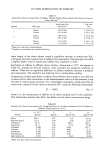
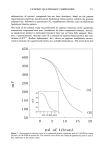
260 JOURNAL OF THE SOCIETY OF COSMETIC CHEMISTS of individual fibers (4), wettability scanning and microfluorometry'(5), and electron spectroscopy for chemical analysis (6). These methods require expensive instrumenta- tions and expert acquisition and interpretation of the data. One of the most powerful methods to measure the substantivity of quaternary com- pounds to hair is the application of radiotracer techniques (7-9). Being quantitative and accurate, this method is time-consuming and requires synthesis of radio-tagged starting materials. Spectrophotometric methods have also been widely used to analyze the substantivity of conditioning agents to hair. One method involves the absorbance measurement of the quaternary ammonium surfactant-Orange II dye complex (10,11). This procedure re- quires elaborate sample preparations. Recently, colloid titration (12) was shown to be a useful method to quantify the sorption of cationic polymer to bleached hair (13). The technique is based on a direct neutral- ization reaction between cationic species and potassium polyvinylsulfate. The color change of the o- toluidine blue indicator indicates the end point of the neutralization process. Another way to follow the neutralization process is by means of potentiometric titration. In this method, the positive potential reading of the cationic solution decreases as the cationic compound is allowed to react with the anionic standard solution. The complete 1:1 ion pair interaction is determined with the surfactant electrode as an endpoint indicator (14, 15). This technique is simple, fast, and reproducible. Application of the potentiometric titration with a surfactant electrode as an analytical tool in the cosmetic industry has not been reported in the literature. Only recently, Oei et al. applied this method to quantitatively analyze simple cationic surfactants in a commercial shampoo (16). The present investigation demonstrates the feasibility of the potentiometric titration of various mono- and polyfunctional quaternary ammonium conditioning agents as well as animal and botanical quaternary ammonium proteins. It also demonstrates the appli- cation of this simple method in quantitative measurement of the substantivity of these cationic quaternary compounds to hair under various experimental conditions. EXPERIMENTAL MATERIALS The cationic quaternary ammonium compounds tested in this investigation include cationic conditioners, cationic cellulosic polymer, cationic wheat protein, and cationic keratin protein (Table I). All compounds are commercial grade and used as received. Only stearalkonium chloride is not soluble in water at room temperature however, upon warming (40øC), it remains water-soluble under the conditions of the test. METHOD FOR POTENTIOMETRIC TITRATION The titration procedure was adopted from Oei et al. (16): a solution containing a measured amount of cationic compound, 0.6 ml of 0.01 N HCI, 2 ml of 1% solution

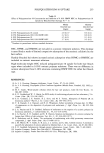
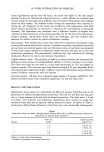
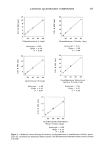
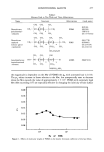
CATIONIC QUATERNARY COMPOUNDS 261 Table I General Information of Tested Quaternary Compounds Material CTFA adopted name % Solid pH Source Celquat L-200 Polyquaternium-4 90-95 5-6 Nat'l Starch • Carsoquat SDQ-85 Stearalkonium Chloride 85-90 5-6 Lonza 2 Ceraphyl 65 Quaternium-26 53-63 5-6 Van Dyk 3 Hydrotriticum QL Laurdimonium 28-32 4-6 Croda 4 hydrolyzed wheat protein Croquat WKP Cocodimonium 28-32 4-5 Croda 4 hydrolyzed keratin protein National Starch and Chemical Company, Specialty Polymer, Finderne Avenue, Bridgewater, NJ 08807. Lonza, 17-17 Rt 208, Fair Lawn, NJ 07410. Van Dyk, Main and William Sts., Belleville, NJ 07109. Croda Inc., 183 Madison Avenue, New York, NY 10016. of octoxynol-9 in water (Rohm & Haas), and distilled water (total volume 100 ml) was titrated by a Brinkman Potentiograph E536 connected to a Dosimat E535 that dispenses a standard 0.0 ! M sodium dodecylsulfate (SDS E. Merck) at a rate of 3.5 ml/minute. The change in the potential was monitored by a surfactant electrode, Model 93-42, obtained from Orion Research. From the potentiogram, the endpoint was determined as the point of steepest slope by a tangent template. All solutions were titrated at a pH of 2-3. PREPARATION OF CALIBRATION CURVES Solutions containing 10, 20, 40, and 80 mg (corrected for average percent solid) of cationic compound were prepared in triplicate and titrated with 0.01 M SDS solution as described above. It was not necessary to correct for a blank since the titration does not yield any endpoint (no neutralization process occurs). The calibration curves were ob- tained by plotting the weight (mg) of cationic compounds vs the volume (ml) of standard SDS solution used in the titration. SUBSTANTIVITY STUDY Unless otherwise noted, the procedure to measure the substantivity of quaternary com- pounds is as follows: 0.1 g of bleached hair was added to a 40-ml solution of quaternary compound that was then placed in a 35øC shaker bath for 30 minutes. At the end of the treatment time, the solution was decanted and the hair was rinsed (3 X 20 ml) with distilled water. The combined solution (100 ml) was titrated with 0.01 M SDS solution as described above. An untreated sample (without hair) was subjected to the same conditions. All experiments were performed in triplicate. The average of three deter- minations was obtained, and the quantity of the quaternary compound in the titrated solutions was calculated from the appropriate calibration curve. The calculated differ- ence in the amount of cationic compound present in the untreated and treated solutions represents the cationic uptake by the hair sample. The effect of the rinse on the desorption of cationic compounds from the hair is not
Purchased for the exclusive use of nofirst nolast (unknown)
From: SCC Media Library & Resource Center (library.scconline.org)