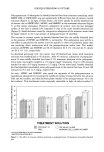
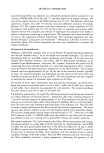
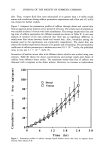
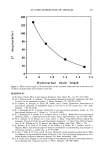
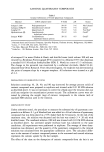
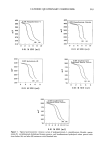
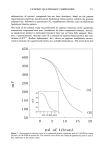
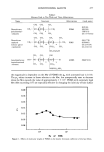
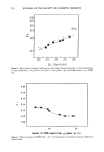
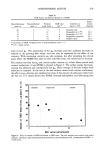
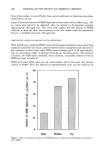
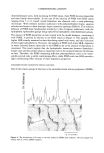
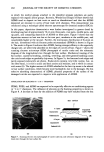
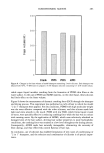
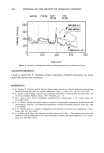
262 JOURNAL OF THE SOCIETY OF COSMETIC CHEMISTS definitive. The amount of the quaternary compound found in the rinse (about 1% of the adsorbed quantity) may not result from the desorption, but instead from the residual solution adhering to the hair tress. HAIR SAMPLES AND CHEMICAL TREATMENTS Light brown, normal virgin (NV) quality European hair (DeMeo Brothers, New York) was used as received throughout the study. Virgin hair tresses were bleached with Levitation Bleach TM powder (Redken Laboratories, Inc.) mixed with 9% hydrogen per- oxide. The tresses were saturated with bleach, covered with plastic film, and incubated at 35øC for 45 minutes. The hair tresses were then rinsed under a stream of distilled water for five minutes and air dried (B 1 x). The same procedure was repeated on the B 1 x hair to obtain two-time bleached hair (B2 x). The permanent waving procedure utilized a commercial alkaline permanent wave, Perm Art TM (Redken Laboratories, Inc.). Reduction of hair samples was accomplished by saturating hair with a solution containing 9% thioglycolic acid (pH 9.5) at 30øC for 15 minutes. The tresses were then rinsed under a stream of distilled water for three minutes and blotted dry. These reduced tresses were saturated with neutralizing solution (2% hydrogen peroxide) for five min- utes, rinsed with distilled water for five minutes, and air dried (PIX). The same procedure was repeated on the P 1 x hair to obtain two-time permed hair (P2 x). Tinted hair (T) was obtained by using a commercial cream color (Deco Color TM 6RU, Redken Laboratories, Inc.) mixed with 6% hydrogen peroxide. Hair tresses were saturated with the color at 38øC for 45 minutes, then rinsed under a stream of distilled water for five minutes and air dried. AMINO ACID ANALYSIS Hair samples were hydrolyzed in sealed evacuated tubes with 6N HCI at 110øC for 48 h. The hydrolysates were then analyzed on a Beckman 121M or 6300 amino acid analyzer following a previously reported procedure (17). RESULTS AND DISCUSSION To illustrate the versatility and the efficiency of the new method, a variety of quaternary compounds were tested (Table I). Since the present procedure is an aqueous titration, the quaternary compounds should be water-soluble. However, water-insoluble or dispersible compounds can also be used if they are solubilized in mixed solvent systems such as water-alcohol mixtures. In the present study, a 0.01 M SDS solution was used as the titrant because it is a designated standard for the Orion surfactant electrode. Also, in the potentiometric titration of quaternary ammonium compounds, one of the main criteria for a successful quantitative analysis is the presence of a sufficiently large potential decrease at the endpoint. The titration curves should display a pronounced inflection at the endpoint such that the point of steepest slope can be obtained accurately and reproducibly. Typical potentiometric titration curves obtained for the tested cationic compounds are shown in Figure 1. All of the curves in Figure 1 show a suitable potential decrease and

CATIONIC QUATERNARY COMPOUNDS 263 420 450 4 390 400 360 350 330 • 300 300 250 270 200 24O 150 210 i i , i ,• (B) j,(A)• 100 0 2 4 6 8 10 0.01 M SDS (ml) 0.05• Stearalkonium Chloride I I I I I I , o 2 4 6 8 10 0.01 M SDS (ml) 450 0.05% quaternium-26 4OO 350 300 25O 2OO s) • 150 0 2 4 6 8 0.01 M SDS (ml) 225 0.05% Cocodimonium 200 rein 175 150 125 100 75 , , I , (BI) (A) I 0 2 4 6 8 0.01 M SDS (ml) 225 O. 10% Laurdimonium n 2OO 175 150 125 100 (•) (A) 75 • • • • ' • • • 0 2 4 6 õ 10 12 14 0.01 M SDS (ml) Figure 1. Typical potentiometric titration curves of polyquaternium-4, stearalkonium chloride, quater- nium-26, cocodimonium hydrolyzed keratin protein, and laurdimonium hydrolyzed wheat protein solu- tions before (A) and after (B) treatment with bleached hair.
Purchased for the exclusive use of nofirst nolast (unknown)
From: SCC Media Library & Resource Center (library.scconline.org)