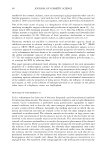
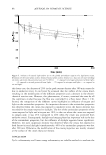
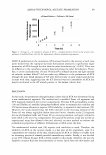
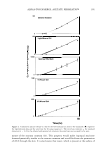
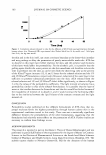
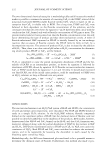
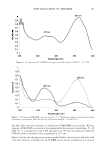
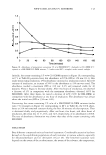
88 JOURNAL OF COSMETIC SCIENCE 120 ,----------------------------------, 100 � 80 ..... -� 60 40 20 0 300 time (min) 600 Fi g ure 5. Influence of natural light and/or air on the global antioxidant capacity of a depilatory cream. Evolution of the ratio (peak current density)/(initial peak current density) as a function of time (working electrode: platinum disk potential scan rate: 50 m V/s): - ◊ exposed to nitrogen and protected from light · - · f:o., exposed to air and protected from light ... □, exposed to nitrogen and light - - x, exposed to air and light. this latter case, the decrease of 20% in the peak current density after 500 min cannot be due to oxidative stress. It can better be assumed that the surface of the cream dried, resulting in the modification of the diffusion properties and a decrease in the electro chemical reaction rate. However, this phenomenon, if correct, remained the same for all the conditions studied because the flux was controlled by a flow meter (flow: 1 1/h). Second, the comparison of the different curves highlights an influence of oxygen and light on the antioxidant properties. An important decrease in the antioxidant properties was observed when the cream was exposed to oxidative stress the fastest decrease was recorded for the creams exposed to daylight. The loss of the antioxidant properties of the cream exposed to light and nitrogen was 30% in the case where the cream was exposed to oxygen only, it was 25% (compared to 20% when the cream was protected from oxidative stress). Consequently, daylight and oxygen played an important role in the loss of the antioxidant properties, but the influence of daylight appeared more significant. However, the most important decrease was observed when the cream was exposed to both factors (air and daylight) simultaneously: 40% of its antioxidant properties was lost after 500 min. Otherwise, the modification of the cream properties was mainly situated at the surface of the cream (data not shown). CONCLUSION Cyclic voltammetry and linear sweep voltammetry are reliable methods to evaluate the

ANTIOXIDANT POWER OF DERMOCOSMETIC CREAMS 89 effective global antioxidant power of dermocosmetic creams. The protocol allowed a simple, rapid, precise and direct determination of the redox properties of eleven anti oxidant-containing or antioxidant-free creams without any pretreatment of the sample. The method made it also possible to highlight the evolution of the antioxidant capacity under oxidative stress. This preliminary study gives opportunity to further develop the method in a way to quantitatively determine the cream antioxidant titer. ACKNOWLEDGMENTS We thank Sophie Chenoy, Marlene Delaunois, Caroline Tressens, and Marianne Vila from Centre de Recherche Dermo-cosmetique Pierre Fabre for their advice in cosmetic formulation. We also thank Jean-Pierre Lafaille from the Laboratoire de Genie Chimique for his technical assistance. REFERENCES (1) P. U. Giacomoni, L. Declercq, L. Hellemans, and D. Maes, Aging of human skin: Review of a mechanistic model and first experimental data, IUBMB Life, 49, 259-263 (2000). (2) A. Favier, Le stress oxydant: Interet de sa mise en evidence en biologic medicale et problemes poses par le choix d'un margueur, Ann. Biol. Clin., 55, 9-16 (1997). (3) W. A. Pryor, Oxy-radicals and related species: Their formation, lifetimes and reactions, Ann. Rev. Physiol., 48, 657-667 (1986). (4) M. S. Reisch, Turning back the clock, Chem. Eng. News, 6, 15-19 (2000). (5) A. R. Cross and 0. T. G. Jones, Enzymic mechanisms of superoxide production, Biochirn. Biophys. Acta, 1057, 281-298 (1991). (6) B. Halliwell and J. M. C. Gutteridge, Free Radicals in Biology and Medicine (Oxford University Press, Oxford, 1989). (7) B. Halliwell, Reactive oxygen species in living systems: Source, biochemistry and role in human disease, Arn. J. Med., 91, 14S-22S (1991). (8) J. J. Thiele, F. Dreher, and L. Packer, Antioxidant defense systems in skin, J. Toxicol., Cutan. Ocul. Toxicol., 21, 119-160 (2002). (9) A. Bast, G. R. M. M. Haenen, and C. J. A. Doelman, Oxidants and antioxidants: State of the art, Arn. j. Med., 91, 2S-13S (1991). (10) H. Sies, Oxidative stress: From basic research to clinical application, Arn.]. Med., 91, 31S-38S (1991). (11) B. Halliwell and S. Chirico, Lipid peroxidation: Its mechanism, measurement, and significance, Arn. j. Clin. Nutr., 57, 715S-725S (1993). (12) C. G. Cochrane, Cellular injury by oxidants, Arn. J. Med., 91, 23S-30S (1991). (13) R. L. Prior and G. Cao, In vivo total antioxidant capacity: Comparison of different analytical methods, Free Rad. Biol. Med., 27, 1173-1181 (1999). (14) C. A. Rice-Evans, Measurement of total antioxidant activity as a marker of antioxidant status in vivo: Procedures and limitations, Free Rad. Res., 33, S59-S66 (2000). (15) A. Janaszewska and G. Bartosz, Assay of total antioxidant capacity: Comparison of four methods as applied to human blood plasma, Scand. J. Clin. Lab. Invest., 62, 231-236 (2002). (16) M.A. M. Shehata, S. M. Tawakkol, and L. E. A. Fattah, Colorimetric and fluorimetric methods for determination of panthenol in cosmetic and pharmaceutical formulation,]. Pharrn. Biorned. Anal., 27, 729-735 (2002). (17) S. Chevion and M. Chevion, Antioxidant status and human health: Use of cyclic voltammetry for the evaluation of the antioxidant capacity of plasma and of edible plants, Ann. N. Y. Acad. Sci., 899, 308-325 (2000). (18) E. I. Korotkova, Y. A. Karbainov, and A. V. Shevchuk, Study of antioxidant properties by voltam metry,J. Electroanal. Chern., 518, 56-60 (2002). (19) P.A. Kilmartin, H. Zou, and A. L. Waterhouse, A cyclic voltammetry method suitable for charac terizing antioxidant properties of wine and wine phenolics,j. Agr. Food Chern., 49, 1957-1965 (2001).
Purchased for the exclusive use of nofirst nolast (unknown)
From: SCC Media Library & Resource Center (library.scconline.org)