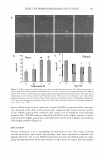
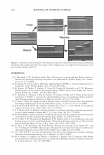
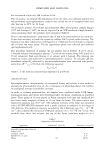
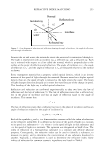
226 JOURNAL OF COSMETIC SCIENCE Perm I' Washing Bleach� L Figure 5. Advanced model encompasses hair damage mechanisms induced by both perming and bleaching treatments. This model starts from the "actual cuticle" chipped away at its edge in the second stage of our previous hair damage model (5 ). REFERENCES (1) I. Marenholz, C. W. Heizmann, and G. Fritz, Sl00 proteins in mouse and man: From evolution to function and pathology (including an update of the nomenclature), Biochem. Biophys. Res. Commun., 322, 1111-1122 (2004). (2) K. Kizawa, H. Uchiwa, and U. Murakami, Highly expressed SlO0A3, a calcium-binding protein, in human hair cuticle, Biochim. Biophys. Acta, 1312, 94-98 (1996). (3) K. Kizawa, H. Troxler, P. Kleinert, T. Inoue, M. Toyoda, M. Morohashi, and C. W. Heizmann, Characterization of the cysteine-rich calcium-binding S 100A3 protein from human hair cuticles, Biochem. Biophys. Res. Commun., 299, 857-862 (2002). (4) T. Takizawa, T. Takizawa, S. Arai, K. Kizawa, H. Uchiwa, I, Sasaki, and T. Inoue, Ultrastructural localization of SlO0A3, a cysteine-rich, calcium binding protein, in human hair shafts revealed by rapid-freezing immunocytochemistry,J. Histochem. Cytochem., 47, 525-532 (1999). (5) T. Inoue, I. Sasaki, M. Yamaguchi, and K. Kizawa, Elution of Sl00A3 from hair fiber: New model for hair damage emphasizing the loss of S100A3 from cuticle, J. Cosmet. Sci., 51, 15-25 (2000). (6) J. A. Swift and B. Bews, The chemistry of human hair cuticle. I. A new method for the physical isolation of cuticle,]. Soc. Cosmet. Chem., 25, 13-12 (1974). (7) S. S. Sandhu and C. R. Robbins, A simple and sensitive technique, based on protein loss measurement, to assess surface damage to human hair,]. Soc. Cosmet. Chem., 44, 163-175 (1993). (8) M. M. Bradford, A rapid and sensitive method for the quantitation of microgram quantities of protein utilizing the principle of protein-dye binding, Anal. Biochem., 72, 248-254 (1976). (9) U. G. Fohr, C. W. Heizmann, D. Engelkamp, B. W. Schafer, and J. A. Cox, Purification and cation binding properties of the recombinant human S 100 calcium-binding protein A3, an EF-hand motif protein with high affinity for zinc,]. Biol. Chem., 270, 21056-21061 (1995). (10) G. Fritz, C. W. Heizmann, and P. M. Kroneck, Probing the structure of the human Ca2 + - and Zn 2 + -binding protein S 1 00A3: Spectroscopic investigations of its transition metal ion complexes, and three-dimensional structural model, Biochim. Biophys. Acta, 1448, 264-276, (1998). (11) H.J. Ahn and W. S. Lee, An ultrastructural study of hair fiber damage and restoration following treatment with permanent hair dye, Int.]. Dermatol., 41, 88-92 (2002). (12) M.A. Rogers, L. Langbein, H. Winter, I. Beckman, S. Praetzel, and J. Schweizer, Hair keratin associated proteins: Characterization of a second high sulfur KAP gene domain on human chromosome 21,J. Invest. Dermatol., 122, 147-158 (2003).

J. Cosmet. Sci., 56, 227-251 Guly/August 2005) Hemp-seed and olive oils: Their stability against oxidation and use in 0/W emulsions S. SAPINO, M. E. CARLOTTI, E. PEIRA, and M. GALLARATE, Dipartimento di Scienza e Tecnologia def Farmaco, Universita degli Studi di Torino, via Pietro Giuria No. 9, 10125 Turin, Italy. Accepted for publication April 4, 2005. Synopsis Hemp-seed oil has several positive effects on the skin: thanks to its unsaturated fatty acid (PUPA) content it alleviates skin problems such as dryness and those related to the aging process. We present a comparative study of hemp-seed and olive oils, determining some physicochemical indices and evaluating their stability against oxidation. The peroxide value of hemp-seed oil was below 20, the threshold limit for edible oils. Hemp-seed oil was less stable against peroxidation than olive oil, but MDA and MONO assays showed its stability to be above expectations. The chlorophyll contained in extra virgin olive oil had a higher photo stability than that contained in hemp-seed oil, possibly due to the larger amount of antioxidant in the olive oil. A certain amount of Vitamin E was found in hemp-seed oil. Since quality analyses indicated that hemp-seed oil is relatively stable, emulsions were prepared with the two oils, and their stability and rheological characteristics were tested. Some of the resulting gel-emulsions were suitable for spraying on the skin. INTRODUCTION Hemp (Cannabis sativa 1.) is one of the oldest and most versatile plants (1-3). Docu mentation of its use dates back as far as the 28th century B.C., and it likely to have been used even earlier the fiber was used for textiles and the seeds for food. The existence of its botanical relative, marijuana (cannabis varieties containing psychoactive substances) did not enhance the status of the plant. Since the late 1930s many Western countries have prohibited its cultivation due to the presence of the phytochemical drug component 0-9-tetrahydrocannabinol (THC). Then, in the late 1980s and early 1990s, hemp was rediscovered today only varieties containing less than 0.3% THC in their flower por tions can legally be farmed in Canada and the European Union, whereas marijuana flowers typically contain between 3% and 20%. In addition to its nutritional value, hemp-seed has other health benefits, including lowering cholesterol and high blood pressure. Hemp seeds are a rich source of essential Address all correspondence to M. E. Carloni. 227
Purchased for the exclusive use of nofirst nolast (unknown)
From: SCC Media Library & Resource Center (library.scconline.org)