230 JOURNAL OF COSMETIC SCIENCE ing an LC-6A Shimadzu HPLC, equipped with a C-R3A Chromatopac integrator, an SPD-2A UV-VIS spectrophotometric detector, and an RP-C18 column (particle diam eter 5 µm). Shear deformation of emulsions and oil viscosity were determined using a rotational viscometer (model DV-II, Brookfield) with a small adapter chamber, SC 21-29. An Ultra Turrax® T25 basic (Janke and Hunkel-IKA-Labortechnik), a Silverson SL 2 homogenizer (Silverson Machines Ltd), and a DLS stirrer (Velp) were used to prepare the emulsions. An Eppendorf 541 7 centrifuge was used for the stability tests on the emulsions. pH measurements were performed with an HI 9321 microprocessor pH meter (Hanna Instruments). Microscopic analysis used a Labovert Leitz optical micro scope equipped with a Wild MPS 46 Fotoautomat camera. Irradiation tests were per formed in Pyrex glass cells (5-ml solutions) under solarboxes equipped with a UVB TL 40/12 RST40Tl2 lamp (Philips®), a UVA TL K0540 W lamp (Philips®), and an Osram Ultravitalux lamp (solar spectrum). METHODS In order to make a qualitative evaluation of hemp-seed oil and test the validity of the analytical methods adopted, comparative studies were carried out on hemp-seed, olive, and extra-virgin olive oils simultaneously (4,8-11). Two different hemp-seed oil samples, obtained from the same batch of seeds, picked in 1998 and crushed in 1998 and in 1999, were also analyzed. The two hemp-seed oil samples had been produced by two different oil mills, adopting two different seed-crushing techniques. The hemp-seed oil produced in 1998 was obtained by mechanical extraction employing a screw press provided at its extremity with a filter to remove suspended impurities from the oil. The hemp-seed oil produced in 1999 was obtained by mechanical extraction with a method known as "Baglioni": hemp seeds are placed under a millstone with hazelnut shells, which, increasing the contact surface, reduce the crushing time required. DETERMINATION OF DENSITY Oil density was determined at 20°C by weighing an exact volume (5 ml) of oil the determination was carried out three times for each oil sample. The density of oil (p 20 , expressed in g/cm3) is the ratio of weight to volume at 20°C, while the relative density (d20 4 ) is the ratio of the density of oil to the density of water at 4°C. Results were expressed as relative density d20 4. DETERMINATION OF VISCOSITY Determination with rotational viscometer. The apparent viscosity of oil samples was deter mined with a Brookfield® rotational viscometer employing a small adapter chamber, SC 21, at 2 5 °C. The determinations were performed at 18. 6 s - 1 on 8 g of oil and were repeated three times per sample. Determination with capillary viscometer. Kinematic viscosity was determined with an Ostwald capillary viscometer by measuring oil-flow time through a capillary. The kinematic viscosity (v, expressed in cm2s- 1 ) was calculated from equation 1, whereas the

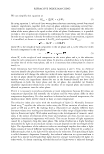
HEMP-SEED AND OLIVE OILS 231 dynamic viscosity (11, expressed in mPa s) was calculated from equation 2. The mea surements were repeated three times for each oil sample and were conducted at 25°C. v=Kt 11 = Kpt (1) (2) where K is the viscometer constant (0.01053), p is the oil density, and t is the oil flow time through the capillary. DETERMINATION OF REFRACTIVE INDEX (RI) The refractive index is an important parameter in terms of quality it can reveal adul teration if its value is outside the accepted range (1.4672-1.4679). The refractive index was determined with an Abbie refractometer: the oil was placed in the prism cell, whose refractive index was known. The index was determined directly by reading it from the scale. DETERMINATION OF ACIDITY INDEX The acidity index I A is the amount of KOH, in milligrams, required to neutralize the free fatty acids present in 1 gram of fat. It is considered an important analytic parameter, as it indicates the state of conservation of a fat and its quality. This is because the presence of free acids in a fat increases as triglycerides become hydrolyzed, and this process reduces quality. Acidity may also be expressed as the percentage content of oleic acid. The acidity index was determined as follows: 5 g (m 1 ) of oil was dissolved in 25 ml of a mixture of absolute ethyl alcohol and diethyl ether in equal volumes, previously neutralized with a solution of O. lM KOH, using 0.5 ml of phenolphthalein (R 1 ) as indicator. The dissolved oil was then titrated, adding n 1 ml of KOH 0.1 M until the pink color of phenolphthalein persisted for at least 15 seconds. The acidity index was calculated from equation 3. One milliliter of KOH N/10 corresponds to 0.0282 g of oleic acid thus the percentage of oleic acid was calculated from equation 4. 0.0282 X n Oleic acid%= 100 X ---- DETERMINATION OF PEROXIDE NUMBER (3) (4) Peroxides are the primary products of fat lipoperoxidation hence determination of the amount of peroxide present in an oil is another analytical method to evaluate its quality. Peroxides are not only oxidizing agents they also promote the release of iodine from
Purchased for the exclusive use of nofirst nolast (unknown)
From: SCC Media Library & Resource Center (library.scconline.org)