238 JOURNAL OF COSMETIC SCIENCE Finsolv TN®, and Eurol BT®) was completely melted at about 50°C. The aqueous phase (Hamamelis distillate and filtered water) was heated to 50°C. The hot aqueous phase was then slowly added to the lipid phase under homogenization, the emulsion was cooled, and the preservatives added. Sepigel 305® was added to the emulsion to increase its viscosity. This formulation could also be used as a fluid body cream, omitting the Sepigel 305®. Face cream 12. The emulsion was prepared using, as emulsifiers, sucrose stearate or palmitate some runs were first made to determine the correct percentage of the emul sifiers and the best preparation technique. In the first run the two emulsifiers were both dispersed in the lipid phase, but the result was not satisfactory. The more lipophilic sucroester (DUB SE® 3S) was thus dispersed in the lipid phase while the more hydro philic one (DUB SE® 15P) was dispersed in the aqueous phase. This adjustment pro duced a homogeneous system with optimal viscosity. Following this method, the emulsifier DUB SE® 15P and Harnarnelis distillate were dispersed in warm water. The mixture was homogenized at 11000 rpm for one minute. The lipid phase (DUB SE® 3S, cetearyl alcohol, Finsolv TN®, olive oil, hemp-seed oil, dimethicone, and Eurol BT®) was slowly added to the aqueous phase under homogeni zation. The system was then cooled under stirring, and Kathan CG®, Gram 1 ® , and Sepigel 305® were added to the cold emulsion as described above. Face cream 13. Emulsion 13 was obtained employing the sucroesters SP 30 and SP 50 from Sistema as emulsifiers these and the Hamamelis distilled water were added to filtered water at 70°C, homogenizing the mixture at 11000 rpm for one minute. The lipid phase (Finsolv TN®, hemp-seed oil, olive oil, dimethicone, Eurol BT®, and cetearyl alcohol), at about 65°C, was slowly added to the aqueous phase under homogenization, and cooled under mechanical stirring at 100 rpm. The preservatives and Sepigel 305® were added to the system at room temperature, homogenizing until the desired consis tency was achieved. PERCUTANEOUS PENETRATION IN VITRO OF KATHON CG® FROM AN O/W EMULSION THROUGH PIG SKIN (16) Kathan CG®, a common preservative contained in many commercial formulations, was also present in all the emulsions prepared in this study. The compound possesses both antibacterial and antifungal properties and may also induce allergic reactions (17). Mutagenic activity has also been reported (18) on bacteria treated with a number of cosmetic products listing methylisothiazolinone and methylchloroisothiazolinone, the components of Kathan CG®, among their ingredients. Thus the release of this biocide from face cream 11 was investigated, and likewise the skin absorption of Kathan CG®, so as to determine the amount that crosses the skin and to evaluate any risk. Skin penetration studies play an essential role in optimizing formulation design for dermal and transdermal delivery. Experimental use of in vitro permeation techniques, such as Franz-type diffusion cells, is therefore very important. This system enables the kinetics of the uptake of different components and their diffusion from pharmaceutical or cos metic formulations (emulsions, gels, or creams) to be evaluated. The concentrations of such components in the deeper skin layers may also be determined by analyzing the receptor fluid. The Franz-cell system is widely used, being inexpensive, quick, and reproducible (16,19). Pig skin is suitable for in vitro dermal penetration studies, and the

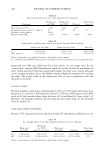
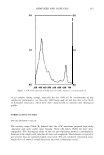
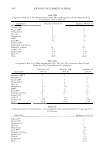
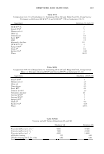
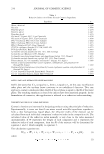
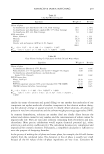
HEMP-SEED AND OLIVE OILS 239 anatomic similarity between pig and human skin makes the results obtained with this technique predictive for human skin absorption. The pig skin was prepared: A fresh pig's ear was thoroughly washed in physiological solution and the bristles removed. The skin was then fixed onto a cork mat and the external surface of the ear cut away. To make the conditions reproducible, skin strips of equal thickness were cut, consisting of horny layer, epidermis, and a part of the dermis there is little or no subcutaneous fat in the edge of the ear. Disks of the same diameter as the Franz cells (2.5 cm2 ) were cut from these strips. The emulsion was applied to the skin disk held in place between the donor and receptor compartments of the Franz-static diffusion cell the epidermis was in contact with the donor compartment and the dermal layer in contact with the receptor compartment, consisting of physiological solution (0.9% NaCl) under continuous magnetic stirring. To quantify the amount of Kathon CG® that had permeated through the skin, samples were taken every 60 minutes. After 24 hours, the receptor compartment was emptied and replaced with fresh physiological solution the solution removed was subjected to HPLC analysis, under the above conditions. At the end of 24 hours, the skin was cleaned, cut into small pieces, and placed in a beaker containing the eluent employed for the HPLC analyses, in order to determine any Kathon CG® trapped in the tissues. Each sample was injected into the HPLC apparatus following the procedures reported below. The experiment was repeated twice. The concentration of Kathon CG® in the receptor solution was found directly from the standard calibration graph obtained by injecting standard solutions of Kathon CG® at different concentrations, between 1 mg/1 and 6 mg/1, into the HPLC apparatus. The analytical conditions were as follows: • Column: Cromasil C 18 • Eluent: methanol/water: 30/70 • Flow: 0.7 ml/min • Detector: UV (A. = 275 nm) • Retention time: 7 .4 min The calibration curve showed a good linear correlation between peak areas and sample concentration (R2 = 0.9978). The results of the study of permeation showed that only small amounts of the preser vative penetrated the dermis: after 24 hours the concentration of Kathon CG® in the receptor phase was negligible. RESULTS AND DISCUSSION QUALITY INDICES AND PHYSICOCHEMICAL CHARACTERISTICS The quality indices and physicochemical characteristics of the hemp-seed oils (1998 and 1999) and olive oil are in Table II. ACIDITY The acidity indices and percentages of oleic acid are listed in Table III. Both batches of
Purchased for the exclusive use of nofirst nolast (unknown)
From: SCC Media Library & Resource Center (library.scconline.org)