236 JOURNAL OF COSMETIC SCIENCE RHEOLOGICAL RUNS (13-15) In order to reveal any structuring or destructuring of the systems, flux rheograms were determined on 13 g of each sample, in steady-state conditions at 25 ° C ± 0.1 °C, using a Brookfield viscometer with a small SC 029 adapter chamber. Shear stress values were determined at increasing and decreasing shear rates, with each shear rate maintained for one minute. pH DETERMINATION pH values were determined on each sample at room temperature before and after heating to 40°C for 24 h. CENTRIFUGE TEST An accelerated test of emulsion stability was performed by centrifuging a small amount of each sample in an Eppendorf® centrifuge at 3000 and 4000 rpm, checking for outcrop or phase separation every 10 minutes. PREPARATION OF EYE GEL-EMULSION WITH VEGETABLE OILS The emulsion was prepared employing (a) as lipid, hemp-seed, olive, or extra-virgin olive oils and (b) as rheological modifier with emulsifier activity, Carbopol 1382® (acrylates/ Cl0-30 alkyl acrylate crosspolymer) neutralized with a 10% NaOH aqueous solution. The polymer was dispersed in the aqueous phase, heated to 60°C under stirring with Ultra Turrax T 25 homogenizer. The lipid phase was then added to the aqueous phase, homogenizing until the system reached room temperature. An aliquot (0.272%) of 10% NaOH aqueous solution was added to the emulsion until it became homogeneous. PREPARATION OF SPRAYABLE AFTER-SUN FLUID CREAMS (MILK) WITH VEGETABLE OILS Recent research has focused on sprayable cosmetic products, whose functional and sen sory characteristics meet market demands. These products are generally emulsions with high viscosity, though they are sprayable using a device intended for liquids. Fluid sprayable creams meet consumer demands for cosmetics that are easy to apply. The emulsions were prepared employing, as lipid, the hemp-seed, olive, or extra-virgin olive oils and, as rheological modifier, Pemulen TR-1 ® (acrylates/Cl0-30 alkyl acrylate cross polymer) neutralized with 18% NaOH aqueous solution. The emulsifiers employed in their preparation were Polysorbate 20 (Tween 20®), Polysorbate 40 (Tween 40®), Peg- 40-hydrogenated castor oil (Cremophor RH®40), methyl glucose sesquistearate (20) OE (Glucamate SS E20®), and LRI® solubilizer. The gels were initially obtained by dis persing the polymer in cold water and homogenizing with Ultra Turrax T25 for about one minute. The system was then neutralized by adding an aqueous solution of NaOH under mild stirring. 0/W emulsions were subsequently obtained by slowly adding the emulsifiers and oils to the aqueous phase under homogenization. The sprayable emul sions were then characterized through pH determination, test of centrifugation, and studies of viscosity and rheological behavior, following the methods described above. Some

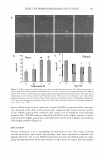
HEMP-SEED AND OLIVE OILS 237 preliminary runs were carried out to obtain a sprayable 0/W emulsion whose pH was skin-compatible and that had an acceptable consistency and texture. The emulsion was modified by reducing the amount of Pemulen TR-1 and of 18% NaOH aqueous solu tion, as the initial cream was too thick and had a basic pH. NaOH aqueous solution was added slowly, and the pH was monitored to determine the minimum amount necessary to neutralize the system. This emulsion had acceptable rheological behavior (pseudo plastic with no hysteresis areas) and acceptable viscosity and pH. It was therefore chosen as the basic formulation from which to prepare some systems. Each emulsion was prepared with both hemp-seed and olive oils. The systems were characterized by evalu ating their stability, pH, apparent viscosity (at 5 s- 1 ), and rheological behavior, as described above. Each emulsion was then centrifuged at 3000 rpm for 60 minutes, and checked for any outcrop or phase separation every 10 minutes. The test was repeated at 4000 rpm. To verify the sprayability of the emulsions, an aliquot of each formulation was placed in a pump supply device. The product was then sprayed onto a sheet of glass, and uniformity of distribution was checked visually. All emulsions were also examined through an optical microscope. PREPARATION OF EMULSIONS WITH VEGETABLE OILS FOR USE AS FACIAL MOISTURIZING CREAMS These emulsions were obtained after a series of systems had been tested to determine the best systems. The best emulsions were obtained with the following emulsifiers: PEG- 4-olivate (Olivem 700®), cetearyl alcohol/cetearyl glucoside (Montanov 68EC®), C 14- 22 alkylalcohol/C 12-20 alkylglucoside (Montanov L®), polyglyceryl-3-methylglucose distearate (Tego Care®), sucrose tristearate or palmitate (sucroesters DUB SE® 3S and 15P), and sucrose mono (or di)stearate (or palmitate) (sucroesters SP® 30 and 50). These systems were characterized with the same methods previously described. Face cream 9. This emulsion was prepared with the cold-hot technique: the lipid phase (Olivem 700®, dimethicone, hemp-seed and olive oils, Finsolv TN®, cetearyl alcohol and glyceryl monostearate with the addition of Eurol BT®) was heated under mild stirring until complete homogenization. The aqueous phase (hydrolyzed milk protein, Hamamelis distillate, and filtered water) was prepared and slowly added to the hot lipid phase under homogenization at 11000 rpm. The homogenization was continued until the correct viscosity was achieved. The emulsion was cooled to room temperature under mechanical stirring at 100 rpm. Ten milliliters of an aqueous solution of Kathon CG® and Gram 1 ® were added to the emulsion at 25-30°C. Sepigel 305® was added, as rheological modifier, at room temperature, homogenizing at 11000 rpm for a few minutes. An alternative to this face cream was produced by adding Proteol OAT® as secondary emulsifier (Face cream 9B). Face cream 10. The emulsion was prepared with the hot technique. The lipid phase (Montanov 68EC® or Montanov L®, dimethicone, hemp-seed and olive oils, Finsolv TN®, and Eurol BT® was heated to 80°C, under mild stirring until uniformity was achieved. The aqueous phase (Hamamelis distillate and filtered water) was heated to 80°C and slowly added to the aqueous phase, homogenizing by Ultra Turrax T25 at 11000 rpm. The homogenization continued until the desired viscosity was achieved. The emulsion was cooled to room temperature, while being stirred mechanically at 100 rpm. Gram 1 ® , Kathon CG®, and Sepigel 305® were added at 25°C as for face cream 9. Face cream 11. The lipid phase (Tego Care, dimethicone, hemp-seed and olive oils,
Purchased for the exclusive use of nofirst nolast (unknown)
From: SCC Media Library & Resource Center (library.scconline.org)