268 JOURNAL OF COSMETIC SCIENCE structure, such as a lamellar phase, can be many orders of magnitude higher than that of an isotropic swollen micellar phase that can have a composition only slightly different from that of the mesophase. The viscosity of an emulsion is one of the most important factors when it is used as a delivery system in cosmetic and pharmaceutical applications. The present work is part of our wider studies of the influence of the microenvironment (i.e., type of micellar system) on the activity of antioxidants of varying hydrophobicity (18-23). In this context, it seems interesting to investigate how the addition of bioactive species to the emulsion system changes its rheological properties. Vitamin C, in the form of 1-ascorbic acid (AA), is the most popular antioxidant. It can protect tissues and cells against oxidative damage by free radicals and reactive oxygen derived species (18,24,25,27-31). Vitamin C also improves the elasticity of the skin and reduces wrinkles by its well-known ability to take part in proline and lysine hydroxyl ation in collagen biosynthesis. Because of its ability to suppress pigmentation of the skin and decomposition of melanin, it can be used as a whitening agent, removing age spots (28-30). For the reasons mentioned above, vitamin C has been used in cosmetic and dermatological products. Because of its hydrophilic character, ascorbic acid has a lower ability to penetrate into the skin. Therefore it is important to select a suitable carrier system to deliver it to the site of action. Microemulsions such as the colloidal drug (e.g., vitamins) delivery systems are preferred because they usually enhance penetration. After application to the skin, the microemulsion components interact with the intercellular lipids of the skin, resulting in changes in their liquid lamellar structure. This effect facilitates drug transport (31-34). Other advantages of microemulsions are thermody namic stability, simple technology of preparation, and high solubilizing power (3 5 ). Although the use of microemulsions seems to be suitable for cosmetic products, it should be noted that they are very often a low-viscosity Newtonian fluid (13). For this reason, they cannot be applied directly to the skin without modifying their viscosity. The usual way to solve this problem is to add suitable thickening agents. But first of all, depending on the final requirements for the product (moisturizing cream, nourishing cream, mas sage cream) and the skin conditions of the user, the emulsion type and its rheological properties ( cream or lotion) should be determined. In the literature one can find propositions of delivery systems of ascorbic acid and its derivatives, which are most convenient for cosmetics (25 ,26-34). Spiclin et al. (28,29) proposed as the delivery system for ascorbyl palmitate and sodium ascorbyl phosphate the microemulsion consisting of the medium-chain-length trigliceryde Mygliol 812 as the oil phase, the PEG 8 caprylic/capric glycerides (Labrasol) as the surfactant, the polyglyceryl-6-dioleate Plurol oleique as the cosurfactant, and water. Gallarate et al. (31) in their studies of ascorbic acid stability in emulsified systems for topical and cosmetic use applied O/W microemulsions, O/W and W/O emulsions, and a W/0/W multiple emulsion prepared using the nonionic, skin-compatible emulsifiers dodecylglucoside and cocoamide propylbetaine. As oil they applied isopropyl palmitate or cetearyl oc tanoate, and 2-ethyl-1,3-hexanediol was chosen as the cosurfactant. The authors under lined the possibility of increasing the stability of AA by choosing an appropriate type of emulsified system in which it is vehicled. The W/0/W multiple emulsion appears to be an interesting topical vehicle for AA, as it provides better stability of the vitamin over time than that given by the W/O emulsion. Han et al. (25) studied the phase behavior of alkanoyl-6-O-ascorbates/water/dodecane mixtures and butyl lactate and butanol as the cosurfactants as far as the application of vitamin derivatives in cosmetics is concerned.

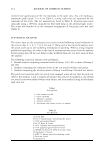
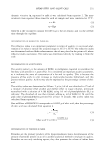
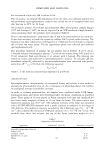
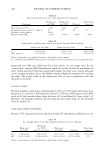
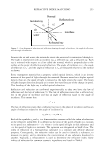
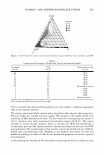
VITAMIN C AND SDS/PENTANOL/WATER SYSTEM PENTANOL rTER I A9CORIIICAaD □ -0% 0- 2% � -10",{, ■ -20% ■ -&0% sos 269 Figure 1. Solubilization of ascorbic acid in a microemulsion region formed by water, pentanol, and SDS. Table I Composition (Percentage by Weight) and Type of the Examined Samples 1-pentanol H20 Microemulsion type (wt%) (wt%) (wt%) 89 5 W/0 77 17 W/0 75 19 W/0 65 29 W/0 50 44 W/0 39 55 W/0 22 72 Bicontinuous system 7 87 0/W 5 89 0/W 3 91 0/W 93 0/W 0 94 Micellar solution In all samples the SDS content was 6% by weight. They concluded that alkanoyl-6-O-ascorbates are more stable in surfactant aggregates than in the aqueous solution. The systems mentioned above contain many ingredients that improve their properties. They are rather not suitable for basic studies. We propose as the model system that consisting of SDS, pentanol, and water. The first reason for investigating this system is that it contains a very well pronounced microemulsion region (18,36,37). This region includes an inverse micellar solution, which is the basis for W /0 microemulsions, a bicontinuous part, and the aqueous micellar solution that forms the basis for the O/W microemulsions. The second reason is that ascorbic acid can be solubilized up to 60% by weight into a microemulsion (18). Therefore, in our opinion, this system can serve as a model for studying an effect of AA on the rheological properties of various types of microemulsion. Understanding the rheology of the antioxidant-containing emulsions is useful not only
Purchased for the exclusive use of nofirst nolast (unknown)
From: SCC Media Library & Resource Center (library.scconline.org)