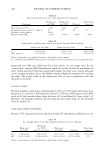
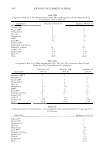
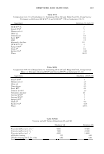
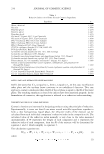
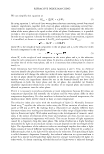
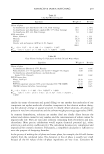
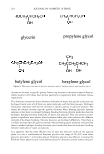
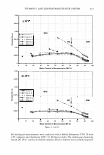
REFRACTIVE INDEX MATCHING 265 index value in the group. Glycereth-7 is also the easiest one to use in calculation since it has the least deviation from calculation. In the formulation process one has to consider, among other factors, the formulation's performance, ingredient cost, and ease of opera tion. CONCLUSIONS By using Snell's law in cosmetic formulation, a simple calculation scheme has been developed for designing clear emulsion formulas by matching the refractive indices of the water phase and the oil phase. The RI value of the water phase was adjusted by varying the ratio of water and glycols. Positive deviation and negative deviation were observed for water-glycol two-component systems. The optical density changes in glycol aqueous solutions result in RI deviation. The most effective glycols are the glycereth-7 and glycereth-26 type, which have the least deviation from calculation. The use of index calculation and deviation charts leads to more precise formulation design. REFERENCES (1) L. M. Prince, Ed., Microemulsions, Theory and Practice (Academic Press, New York, 1977), pp. 3-55. (2) Using Silicone Formulation Aids to Formulate Cosmetic System (Dow Corning, 1995), pp. 6-7. (3) N. M. Karassik, P. P. Angelone, Jr., P. R. Boyle, P. Domizio, C. W. Galante, J.C. Patel, and P.A. Patricia, US Patent 5,925J338, the Gillette Company, 1999. (4) J. Z. Sun, M. C. E. Erickson, and J. W. Parr, Refractive index matching: Principle and cosmetic applications, Cosmet. Toiletr., 118, 65-74 (2003). (5) E. Hecht, Physics (Brooks/Cole Publishing Company, 1996), pp. 935-960. (6) A. Marcin, P. Bustamante, and A. H. C. Chun, Physical Pharmacy (Lea & Febiger, Philadelphia, 1993), pp. 95-96. (7) K. Kostarelos, T. Tselepi, and A. Teknetzis, AHA and exfoliative skin diseases, Connet. Toiletr. 114, 43-52 (1999). (8) D.S. Orth, J. Widjaja, L. Ly, N. Cao, and W. B. Shapiro, Stability and skin persistence of topical products, Cosmet. Toiletr. 113, 51-64 (1998). (9) S. M. Starch, Screening silicones for hair luster, Cosmet. Toiletr., 114, 55-62 (1999). (10) M. Krenceski, R. Perry, S. Nye, M. Navarrate, and D. Riccio, Role of functionalized silicones in hair shine, SCC Annual Scientific Seminar (Washington, DC, 2003), p. 51.

]. Cosmet. Sci., 56, 267-277 (July/August 2005) The influence of ascorbic acid on the rheological properties of the microemulsion region of the SDS/pentanol/water system MARTA SZYMULA, Department of Radiochemistry & Colloid Chemistry, Faculty of Chemistry, Maria Curie Sklodowska University, M. Curie-Sklodowska Sq. 3, 20-031 Lublin, Poland. Accepted for publication April 4, 2005. Synopsis The rheological properties of the microemulsion region of the SDS, pentanol, and water micellar system have been studied experimentally. The W/0 and 0/W microemulsions behave as typical Newtonian fluids: viscosity remains constant independent of the shear rate. For the bicontinuous system the shear-thinning effect is observed. The addition of ascorbic acid to the system caused a microemulsion viscosity increase, which was the highest in the bicontinuous region and at the lowest temperature. INTRODUCTION It is well known that rheology is an excellent tool for obtaining information about changes in colloidal structures and their interactions ( 1,2). Associated colloid molecules generally form spherical aggregates in the aqueous solution above the CMC concentra tion value (2). Under appropriate conditions of concentration, salinity, and temperature, in the presence of counterions, these spherical micelles grow in size or change their shape, resulting in the formation of rodlike structures or even long flexible micelles. For the dilute ionic surfactant solution, a simple way to transform spherical micelles to cylindrical micelles is to change the packing parameter, i.e., to decrease the effective headgroup area by adding salt, which diminishes the electrostatic repulsion between the headgroups and allows them to be located closer. With the increasing salt concentration, the cylindrical aggregates grow to flexible wormlike micelles and behave like polymers (3 ). The formation of such structures modifies the rheological properties of surfactant solutions significantly. This effect is more pronounced in the systems with cationic surfactants than in those containing nonionic and anionic surfactants (3-12). In emulsions the relationship between structure and rheology has been widely investigated (13-17). As follows from these investigations, the viscosity of a mesophase 267
Purchased for the exclusive use of nofirst nolast (unknown)
From: SCC Media Library & Resource Center (library.scconline.org)