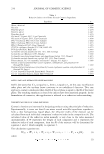
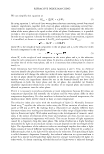
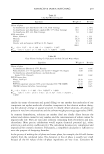
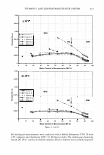
218 JOURNAL OF COSMETIC SCIENCE test article differentiation can be achieved. We speculate that it would be appropriate to have 10% of a test panel over the age of 65, and potentially more if a product is marketed to that segment of the population. CONCLUSIONS Data from both groups of test subjects similarly differentiated mild to moderately irritating chemicals. The conclusions arrived at in this study indicate that older subjects should not necessarily be excluded in comparative studies of irritancy. REFERENCES (1) B. M. Lanman, E. B. Elvers, and C. J. Howard, The role of human patch testing in a product devel opment program, joint Conference on Cosmetic Sciences, The Toilet Goods Association (currently The Cosmetic, Toiletry and Fragrance Association), Washington, D. C., April 21-23, 1968. (2) R. S. Berger and J.P. Bowman, A reappraisal of the 21-day cumulative irritation test in man, J. Toxicol. Cut. Ocul. Toxicol., l, 109-115 (1982).

J. Cosrnet. Sci., 56, 219-226 Quly/August 2005) Dissimilar effect of perming and bleaching treatments on cuticles: Advanced hair damage model based on elution and oxidation of S1 OOA3 protein KENJI KIZAWA, TAKAFUMI INOUE, MASAHITO YAMAGUCHI, PETER KLEINERT, HEINZ TROXLER, CLAUS W. HEIZMANN, and YOSHIMICHI IWAMOTO, Basic Research Laboratory (K.K., T.l.) and Cosmetics Laboratory (M. Y.), Kanebo Cosmetics Inc., 5-3-28 Kotobuki-cho, Odawara 250-0002, Japan Department of Pediatrics, Division of Clinical Chemistry and Biochemistry, University of Zurich, S teinwiesstrasse 7 5, C H-80 3 2 Zurich, Switzerland ( P. K., H. T., C. W.H.) and Beauty Care Laboratory, Kanebo Ltd., 134 Kanbe-cho, Hodogaya, Yokohama 240-0005, Japan (Y.l.). Accepted for publication April 4, 2005. Presented in part at the 23rd Congress of the International Federation of the Societies of Cosmetic Chemists, Orlando, Florida, October 24-27, 2004. Synopsis Hair treatment chemicals induce sudden and severe hair damage. In this study, we examined cuticles from untreated, permed, and bleached hair that were mechanically discriminated by shaking in water. Both perming and bleaching treatments are prone to easily delaminate cuticles. Confocal microscopy revealed that the cuticles of permed hair were delaminated with larger pieces than untreated ones. On the other hand, the cuticles of bleached hair tend to fragment into small peptides. At the minimum concentration of thiogly colate required to elute S100A3 protein from the endocuticle into the reductive permanent waving lotion, enlarged delaminated cuticle fragments were observed. Although S100A3 is retained in bleached hair, S100A3 is irreversibly oxidized upon bleaching treatment. It is likely that the oxidative cleavage of disulfide bonds between cuticle-constituting proteins, including S100A3, results in the fragile property of cuticles. Here we present a more comprehensive model of hair damage based on a diverse mechanism of cuticle delamination. INTRODUCTION Although hair damage occurs gradually due to influences of weather and oxidants (i.e., environmental factors) and daily hair care (i.e., physical factors), topical application of Address all correspondence to K. Kizawa. 219
Purchased for the exclusive use of nofirst nolast (unknown)
From: SCC Media Library & Resource Center (library.scconline.org)