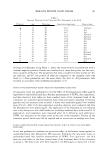
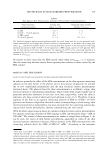
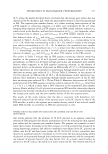
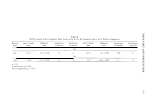
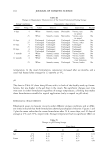
SDS MICELLES IN SKIN BARRIER PERTURBATION 127 (6,7). Using the model described above, we found that the average pore radius does not depend on the SC thickness, LiX, while the pore number density is directly proportional to LiX. The aqueous pore number density, e!T, values resulting from exposure of the p-FTS samples to contacting solutions a-d above were normalized by the e/'T value resulting from exposure of the p-FTS samples to the PBS control solution, solution (c), which served as the baseline, and have been denoted as (e/T)00rmal (see Appendix, where we illustrate how to obtain r pore and (e/T)00rmal for p-FTS samples exposed to (a)). Our deduced values of r po re and (e/'T)00rmal corresponding to solutions a-d above are reported in Table I. As can be seen, the average pore radius, r po w corresponding to (a) is 33 ± 5A, while that corresponding to (b) is 20 ± 5A, which is similar to the average pore radius corresponding to (c), 20 ± 3A. In addition, the normalized pore number density, (e!T)00rmaI, corresponding to (a), 7 ± 1, is about twice that corresponding to (b), 3 ± 1. Interestingly, we also see that a 10 wt% glycerol aqueous solution (contacting solution d) reduces r pore and (e/'T) 00rmal by about 50% relative to the PBS control. The results in Table I indicate that an SDS aqueous contacting solution containing micelles, in the presence of 10 wt% glycerol, induces a lower extent of skin barrier perturbation, as reflected in the lower average pore radius and normalized pore number density, when compared to an SDS aqueous contacting solution, in the absence of glycerol. In fact, in the absence of glycerol, an SDS micelle of 19.5 ± lA hydrodynamic radius experiences no steric hindrance in penetrating through aqueous pores in the SC that have an average pore radius of 33 ± 5A (see Table I). However, in the presence of 10 wt% glycerol, an SDS micelle of 18.5 ± lA hydrodynamic radius experiences sig nificant steric hindrance in penetrating through smaller aqueous pores in the SC that have an average pore radius of 20 ± 5A (see Table I). Moreover, the presence of 10 wt% added glycerol in the SDS aqueous contacting solution reduces the (e!T) 00 r mal value from 7 ± 1 to 3 ± 1, which is more than a 50% reduction in the normalized pore number density. Hence, adding 10 wt% glycerol to an aqueous SDS micellar contacting solution minimizes the micellar contribution to SDS skin penetration in vitro by minimizing both the average pore radius and the pore number density of the skin aqueous pores. The results of this study indicate that the data is consistent with hypothesis (iii): Glycerol reduces both the radius of the aqueous pores in the SC relative to that of the SDS micelles, as well as the aqueous pore number density, which if not reduced, would allow SDS micelles to contribute to SDS skin penetration in vitro. POSSIBLE STRUCTURAL MODES OF INTERACTION OF GLYCEROL AND SDS WITH THE SKIN BARRIER Our results indicate that the addition of 10 wt% glycerol to an aqueous contacting solution of SDS mitigates skin barrier perturbation in vitro by reducing the skin aqueous pore radius and the aqueous pore number density. We propose two scenarios to ratio nalize these results. According to the first scenario, it is well-accepted that because of its strong hygroscopic property and ability to modulate water fluxes in the SC, glycerol can diffuse into the SC and bind water within the SC (24,28,29). In fact, researchers have observed a significant positive correlation in vivo between the skin-moisturizing ability of glycerol, as determined through skin conductance measurements, and the correspond ing amount of glycerol found in the skin barrier (52). As a result, water binding by glycerol in the SC reduces the mobility of water within the SC. The limited mobility of

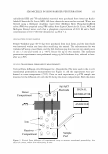
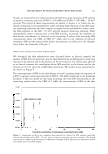
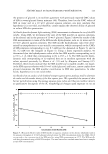
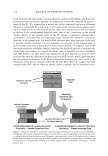
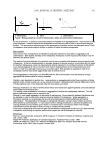
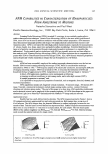
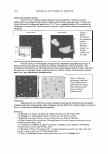
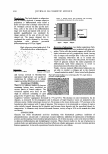
128 JOURNAL OF COSMETIC SCIENCE water within the SC may result in lacunar domains, as observed by Menon and Elias (10), losing structural continuity, partially or completely, within the extracellular lipid bi layers of the SC. \V/ e suggest that a partial loss in the structural continuity of lacunar domains is responsible for a reduction in the radius of the corresponding aqueous pores, while a complete loss in continuity of lacunar domains is responsible for the elimination or closing of the corresponding aqueous pores, that is, for a reduction in the overall number density of the aqueous pores in the SC. Figure 7 illustrates schematically a combination of lacunae that are continuous under normal skin hydration conditions, resulting in an aqueous pore, but may become discontinuous upon exposure of the skin to glycerol, thereby resulting in a size reduction, or a closing, of the aqueous pore. A second scenario describing how glycerol may result in partial, or complete, loss of the structural continuity of lacunar domains considers the ability of glycerol to maintain the intercellular lipid mortar in a liquid crystalline state, as opposed to a solid crystalline state (30). Froebe et al. have shown that addition of 10 wt% glycerol to a mixture of SC lipids in vitro inhibited the transition from liquid to solid crystals, which could maintain the intercellular lipid mortar in the SC and potentially minimize the size, as well as the continuity, of the lacunar domains within the SC (30). Most likely, we suggest that both scenarios may play a role in inducing partial, and/or complete, loss of structural conri- Aqueous Pore Radius Hydrated Skin Exposing Hydrated Skin to Glycerol Lacunar Domains with No Water Mobility Partial Elimination of Lacunar Structural Continuity - Smaller Aqueous Pore Complete Elimination of Lacunar Structural Continuity - Closed Aqueous Pore Figure 7. Schematic illustration of possible structural modes of interaction of aqueous lacunar domains in the hydrated skin barrier with glycerol. Aqueous lacunar domains, shown in grey, gain structural continuity in hydrated skin to form an aqueous pore. However, when glycerol is added to the hydrated skin barrier, lacunar domains, shown in black, lose structural continuity due to glycerol binding water and minimizing water mobility, either partially, resulting in a smaller aqueous pore, or completely, resulting in a closed aqueous pore.
Purchased for the exclusive use of nofirst nolast (unknown)
From: SCC Media Library & Resource Center (library.scconline.org)