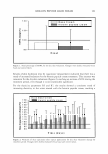
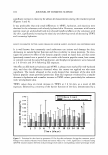
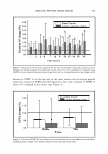
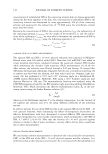
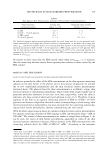
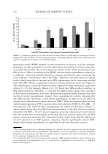
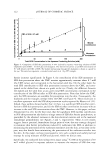
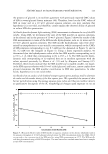
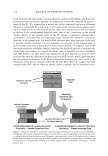
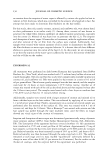
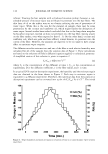
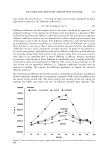
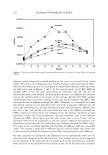
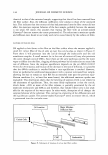
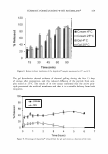
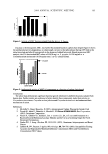
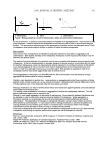
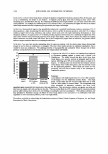
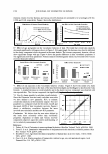
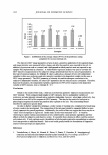
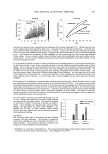
102 JOURNAL OF COSMETIC SCIENCE below), and the resultant irritation reaction was assessed after 2 h 30 min and 24 h after SLS exposure by measuring TEWL and skin capacitance (5-7). SLS exposure. Fifty microliters of an aqueous solution of 2% SLS was pipetted onto a layer of filter paper placed in each of several aluminum chambers (d = 12 mm, large Finn Chambers, Epitest Oy, Finland). The chambers were fixed to the skin for 2 h with adhesive tape. Upon the removal of the patch, the skin was gently rinsed with water and allowed to dry. DATA TREATMENT The mean values and standard deviations (SD) were calculated. Results were presented doubly evaluated as a percentage of modification with respect to the basal (initial) value and subsequently as a percentage of modification with respect to the control zone at the same time. Dixon's test was used for detecting outliers, which were excluded from the data. ANOV A variance analyses were used to determine significant differences between values obtained from different treatments (significance level accepted *p 0.05) using the Statgraphics® program. Statistics on the figures indicate the percentages (versus basal values) for the keratin peptide cream or the base cream treatments that are sig nificantly different from the percentages (versus basal values) obtained for the non treated control zone. RES UL TS AND DISCUSSION EFFECT OF KERATIN PEPTIDE HAND CREAM ON UNDISTURBED HAND SKIN A long-term study was performed to test the effect of the base hand cream formulation and the same formulation containing 3% keratin peptide. Evaluation of skin capacitance and elasticity was carried out 24 h after a daily application over two and a half weeks with a total of 12 applications, and TEWL was evaluated at the end of the treatment. Initial tests on the skin capacitance of the volunteers clearly showed that they fell into two categories. Nine volunteers had dry skin (mean initial capacitance less than 40 a.u.), and seven had hydrated skin (mean capacitance greater than 45 a.u.). This is an impor tant parameter in determining the efficacy of the keratin hand and nail cream, as will be discussed below. Transepidermal water loss, TEWL, is a sensitive index of skin barrier integrity. A lower % change in TEWL (measured as water loss in g/m2h) indicates the skin is acting more efficiently as a barrier to water loss and thus is better able to maintain its present moisture content. TEWL values before and after the treatment period for all 16 volun teers didn't show significant differences between the different treatments, indicating that for healthy skin in the absence of any disturbing treatment, variations in transep idermal water loss are too small to be taken into consideration. The test population was separated into two distinct groups to allow differences in TEWL to be observed. Although no significant results were found, evaluation of TEWL indi cated an influence of the keratin peptide cream for the group of volunteers with dry skin. A decrease in TEWL of 13 % relative to the control zone was observed for the cream containing keratin peptide (Figure 1).

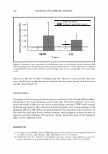
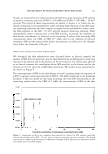
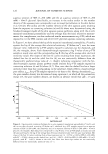
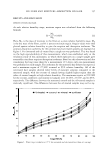
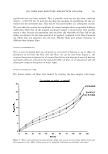
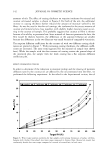
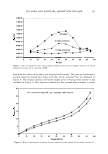
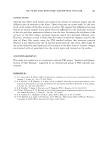
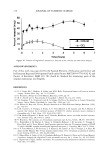
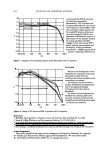
KERA TIN PEPTIDE HAND CREAM 103 140 c=l Base C ream Keratin peptide cream - � 1 2 0 - � 1 0 0 80 Fin a I Figure 1. Final percentage of TEWL for the dry skin volunteers. Changes were doubly evaluated versus basal and control values. Results of skin hydration tests by capacitance measurement indicated that there was a trend of increased hydration for the keratin peptide cream treatment. This increase was consistent for the dry skin volunteers (Figure 2), reaching an increase of 20% during the treatment period, even though it is not statistically significant. For the elasticity parameters RS and R 7, the results showed a consistent trend of increasing elasticity in the zones treated with the keratin peptide cream, reaching a 1 5 0 - 145 � - 140 � 135 130 "fi 125 t 120 = ,a 1 1 5 ·o 1 1 o � 1 05 U 100 ] 9 5 rn 9 0 c=J Base Cream Kera tin peptide cream Time (days) Figure 2. Variation of skin capacitance after topical applications for dry skin volunteers during the treatment period. Changes were doubly evaluated versus basal and control values.
Purchased for the exclusive use of nofirst nolast (unknown)
From: SCC Media Library & Resource Center (library.scconline.org)