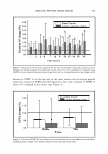
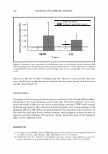
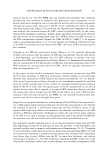
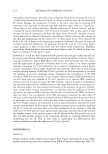
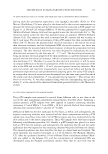
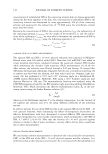
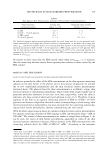
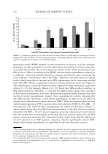
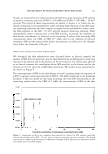
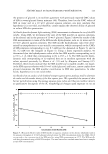
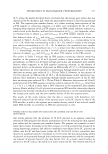
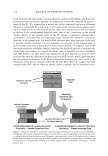
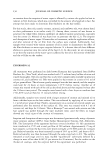
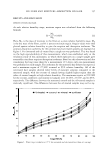
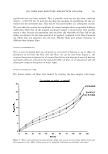
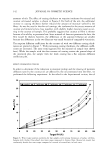
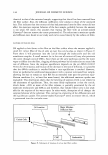
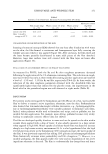
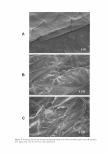
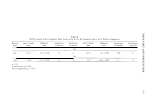
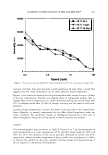
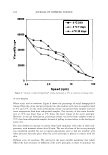
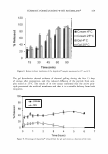
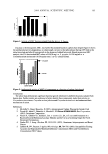
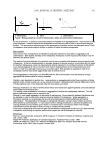
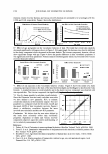
142 JOURNAL OF COSMETIC SCIENCE amounts of oils. The effect of coating thickness on sorption isotherms for mineral and coconut oil-treated samples is shown in Figure 6. For both of the oils, the additional increase in coating thickness further reduced the amount of moisture sorbed by the fibers. As was the case for the thin oil coatings, the isotherms for the excess amounts of coconut and mineral oil are close together, with slightly higher moisture regain occur ring in the coconut oil sample. This probably suggests that coconut oil film is thinner because of its ability to penetrate hair. Since mineral oil does not penetrate the hair, the film would be thicker however, the differences in the sorption behavior are smaller because the differences in the two films are very small because of comparable viscosities. The sorption diffusion coefficients for the coconut oil with two different coating thick nesses are plotted in Figure 7. With increasing coating thickness, the diffusion coeffi cients are decreased. The same trend appeared for the mineral oil sample (not shown here). While the sample with the thin coconut oil coating retains the general shape of the untreated plot, the sample with the thick coating has a flat sorption diffusion coefficient plot. EFFECT OF REMOVING THE OIL In order to determine if the reduction in moisture pickup and the slowing of moisture diffusion rates by the coconut oil are affected by the oil penetrated into the fiber, we performed the following experiment. As described in the Experimental section, the oil 30 -------------------------------------, 1---ccntrcl --¼-0.1 ml/g ccc ....._ 0.1 ml/g min -+-1.2 ml/g ccc -¾-1.2 ml/g min I 25 20 - � C 15 ·ca 10 5 0 10 20 30 40 50 60 70 80 90 100 Target RH (%) Figure 6. Water vapor sorption isotherms for hair samples with varying thicknesses of surface oil films. Samples with thicker films absorb less water vapor compared to thinner films. Mineral oil-treated hair consistently absorbs less water vapor compared to coconut oil-treated hair, in both cases.

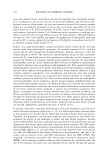
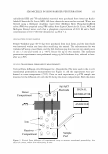
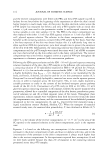
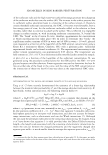
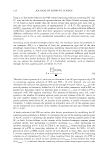
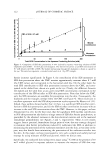
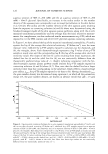
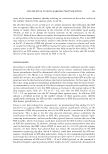
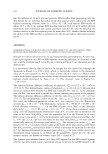
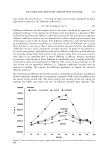
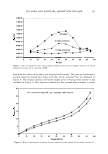
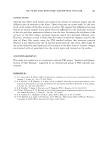
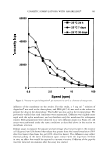
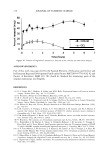
2.00E-09 1.S0E-09 1.60E-09 1.40E-09 � 1.20E-09 E 1.00E-09 8.00E-10 6.00E-10 4.00E-10 2.00E-10 0.00E+00 0 OIL FILMS AND MOISTURE ABSORPTION ON HAIR 10 20 30 40 50 RH(%) 60 70 80 143 90 100 Figure 7. Plot of calculated water vapor sorption diffusion rates for hair samples treated with various amounts of coconut oil as a function of RH. film from the surface of the fibers was removed with acetone. The sorption isotherms for acetone-wiped oil-treated hair along with that of the untreated hair are displayed in Figure 8. The original coconut oil-treated sample prior to wiping with acetone is also included in Figure 8. The sorption isotherm for the acetone-wiped sample is nearly 30 �------------------------------------. 25 20 10 5 0 ---+- coconut oil wiped-off - El-· untreated __.,_ coconut 10 20 30 40 50 60 Target RH (%) 70 80 90 100 Figure 8. Water vapor sorption isotherms for hair sample after the removal of the surface coconut oil.
Purchased for the exclusive use of nofirst nolast (unknown)
From: SCC Media Library & Resource Center (library.scconline.org)