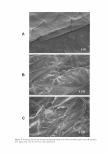
J. Cosmet. Sci.! 58, 147-155 (March/April 2007) Formulation, characterization, and efficacy of an adenosine-containing dissolvable film for a localized anti-wrinkle effect J. Y. LEGENDRE, I. SCHNITZLER, Q.-Y. LI, C. HAUSEN, M. HUART, G. S. LUENGO, M. L. ABELLA, and M. ROREGER, L'Oreal Recherche! 188-200 rue Paul Hochart! 94550 Chevilly-Larue U- Y.L.! M.L.A.)! and 1 av Eugene Schueller, 93601 Aulnay-sous-Bois (M.H.) G.S.L.), France and Skin Care Systems, Lohmannstrasse 2! 56626 Andernach! Germany (l.S., Q.-Y.L. 1 C.H., M.R.). Accepted for publication November 1, 2006. Synopsis A water-dissolvable film was developed to topically deliver adenosine for a localized anti-wrinkle effect. The polymers used to produce the film were cellulose derivatives. An aqueous mixture of the film components was made, coated on a liner, and then dried to form a solid film. No preservatives were added and the film was shown to be stable over time. The film quickly dissolves in water to form a uniform layer at the surface of the skin, as shown by scanning electron microscopy. The film layer can still be visualized on the wrinkle six hours after being applied on the skin. A randomized, placebo-controlled, investigator-blind study was conducted in female volunteers to assess the efficacy of the 1 % adenosine-containing dissolvable film. After three weeks and eight weeks, a twice daily application led to a significant decrease in the skin roughness parameters as observed using fast optical in vivo topometry (FOITS). These results demonstrate that water-dissolvable films may be used as novel, preservative-free, cosmetic delivery systems. INTRODUCTION Dissolvable, edible films have been used for years in the food industry as carriers for flavor or nutritional additives or as barriers for separation, protection, and preservation purposes (1). Usually, edible films are made of highly water-soluble polymers, such as polysaccharides or proteins (2) as well as film-forming materials such as lipids and resins or combinations of these (2,3). Recently, edible strips for breath freshening have been very successfully introduced on the market and are becoming increasingly popular. Indeed, dissolvable films can easily be carried everywhere by the consumer and represent a new type of user-friendly, single-dose formulation to administer various ingredients, ranging from food additives to over-the-counter drugs. We investigated solid, water-soluble films to deliver cosmetic ingredients to the skin. The goal of the present study was to formulate a film that can easily be dissolved with 147

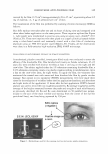
148 JOURNAL OF COSMETIC SCIENCE water on the skin, dries quickly, and leaves a continuous film on the skin surface to deliver adenosine, an active anti-wrinkle cosmetic ingredient. MATERIALS AND METHODS FILM FORMULATION AND MANUFACTURING Materials. The films were composed of hydroxypropylmethylcellulose (HPMC Metolose 60 SH 50, USP, Syntapharm) and hydroxypropylcellulose (HPC, Klucel EF, pharma grade, Hercules). Glycerol (85%, pharma grade, Brenntag) was added as the plasticizer. Panthenol (D-Panthenol, USP, Roche), adenosine (Pharma Waldhof), and magnesium sulfate (Mallinckrodt Chemicals) were used as cosmetic active ingredients. The re lease liner consisting of polyethylene terephthalate (PET, Siphan) was obtained from Siliconature, Italy. Preparation of the film. HPMC was dissolved in distilled water to produce a 12.5% w/w stock solution. HPC was dissolved in distilled water to produce a 25% w/w stock solution. For each batch (of 150 g), 83.6 g of the HPMC stock solution and 20.6 g of the HPC stock solution were mixed and stirred at 30 rpm using a propeller stirrer to avoid air bubble inclusion. Then, 10.9 g of glycerol, 0.3 g of adenosine, 5.8 g of panthenol, and 0.2 g of magnesium sulfate were added. Finally, 28.6 g of distilled water was poured into the mixture, which was then stirred for 30 min under the same conditions. The resulting mixture was spread on a siliconized PET release liner using a film casting knife with a gap of 250 µm, and then oven dried at 70°C for 45 min. The final film had an area weight of 50 g/m2 . Individual squares of 1.5 x 1.5 cm were punched out of the film and packed in aluminum/polyethylene pouches. FILM CHARACTERIZATION The dissolution of the film in water was assessed by the following method. The film (1.5 cm x 1.5 cm) was clamped with tweezers and immersed in 10 ml of water under slow stirring (20 rpm) at room temperature. The time after which no more film residue could be visually detected was recorded. The total amount of residual water contained in the film was measured by Karl Fischer titration. The water activity, which measures the vapor pressure generated by the mois ture present in the film, was determined using a Hygromer® apparatus (Rotronic, USA). The moisture sorption/desorption kinetics at 25°C was obtained using a dynamic vapor sorption apparatus comprising an ultra-sensitive microbalance (Surface Measurement Systems, UK). The films, placed on a polyethylene terephthalate release liner and packaged in alu minum/polyethylene pouches, were also stored at 45°C for one month. The weight, water content, and adenosine concentration of the films were measured and compared to values at initial time. VISUALIZATION OF THE DISSOLVABLE FILM ON THE SKIN The area around the corner of the eye (crow's feet) of volunteers was moistened with water, and the film was subsequently applied on the skin wrinkles. The skin surface
Purchased for the exclusive use of nofirst nolast (unknown)
From: SCC Media Library & Resource Center (library.scconline.org)