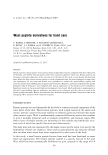
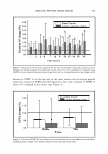
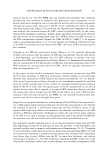
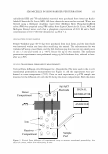
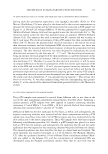
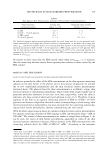
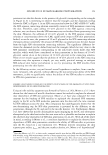
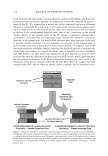
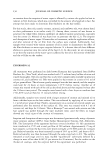
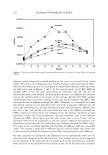
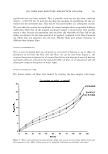
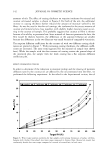
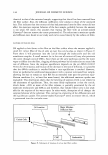
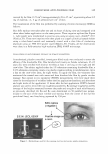
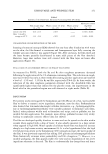
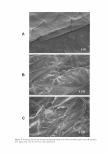
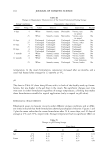
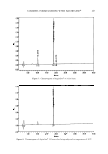
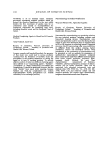
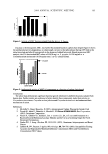
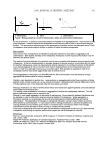
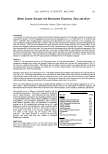
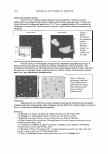
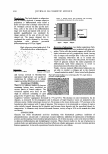
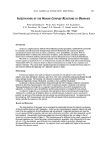
DISSOL V ABLE ANTI-WRINKLE FILM 149 covered by the film (2.25 cm2 ) was approximately 20 to 25 cm2 , representing about 0.5 mg of material, i.e., 5 µg of adenosine per cm2 of skin. The visualization of the film was performed by scanning electron microscopy (SEM) as follows: Skin Siflo replicas were taken after one and six hours of drying time and compared with those taken before application on the same person. These negative replicas (See Figure 1, right panel) were transformed to positive ones using an epoxy resin, Araldit© 2011 (Vantico, Fr). These new imprints were then glued to a copper cylindrical sample holder using a silver-based varnish and eventually coated with a thin film of conducting platinum using an HTS 010 sputter coater (Balzers, Fr). Finally, all the observations were done in a field-emission high-resolution JEOL 6300F microscope. EVALUATION OF ANTI-WRINKLE EFFICACY IN FEMALE VOLUNTEERS A randomized, placebo-controlled, investigator-blind study was conducted to assess the efficacy of the dissolvable film. One hundred and twenty-six female volunteers, 45-65 years old, were enrolled with distinct wrinkles at least 2 cm long on the right and left crow's feet. The subject applied either the 1 % adenosine-containing dissolvable film, a 0.1 % adenosine-containing cream, or a placebo cream according to randomization, twice a day on the crow's feet areas, for eight weeks. To apply the film, the volunteer first moistened the treated area with water and then dissolved the film by gentle circular massage. Fast optical in vivo topomerry (FOITS) measurements (4,5) were made three times for the evaluation of wrinkles: before the first application (baseline), and after three and eight weeks of the application 12 hours after the last application. FOITS classical analysis was used to record the two roughness parameters, Ra (average roughness) and Rz (average of the heights measured between the peaks and troughs of each relief feature), as previously described (4). Ra and Rz were determined on 50 parallel lines perpen dicular to the axis of the main wrinkle and starting from the corner of the eye (for periorbital lines), two lines being separated by 250 µm. S.E.M. JEOL 6300F Silflo replica (negative) Positive image on a resin Figure 1. Methodology used for the scanning electron microscopy sample preparation.

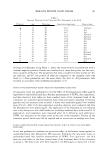
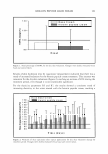
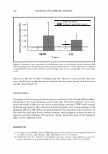
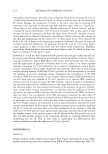
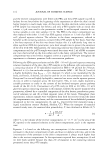
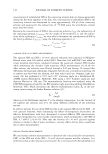
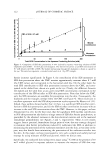
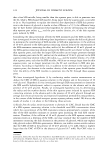
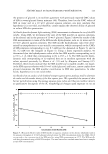
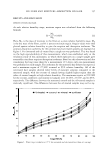
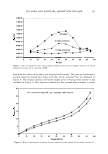
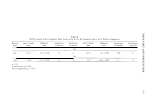
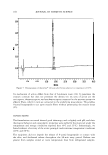
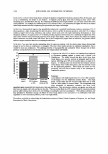
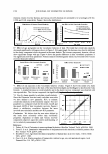
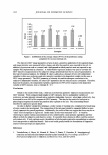
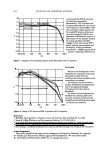
150 JOURNAL OF COSMETIC SCIENCE RESULTS FILM CHARACTERIZATION AND STABILITY In vitro dissolution of the film in water. The time needed to fully dissolve the film ranged from 10 seconds to 15 seconds. In comparison, under the same experimental setting, the dissolution of a commercial pullulan-based breath-freshening strip (Cool Mint Listerine PocketPaks™, Warner-Lambert Consumer Healthcare) took between 35 and 40 sec onds. Water content and uptake. As the films are intended to quickly dissolve in water, their sensitivity to moisture and water uptake needs to be carefully assessed. Figure 2 shows the moisture sorption/desorption kinetics of the films at 25°C. As relative humidity (RH) increases, the uptake of moisture increases the film weight. At 80% RH, a weight increase of approximately 50% was measured. However, no hysteresis was observed, i.e., the film weight decreased according to the same kinetics when the RH was brought down. This result indicates that moisture uptake at high RH does not induce any structural modification of the film or lead to any significant chemical degradation. Table I shows the weight, water content, and act1v1ty variations after one month of storage at 45°C. At initial time, the water content and activity of the films were both very low, showing that the drying conditions used during the manufacturing process was efficient. After one month at 45 °C, a slight, although non-significant, variation in weight was observed, while the overall water content and activity remained at initial values. Adenosine content over time. As shown in Table I, the adenosine content per film after one month at 45°C was equal to 96% of the value at initial time. Date: 16 Dec 2005 Time: 5:13 pm File: Loreal 5000165 - Fri 16 Dec 2005 17-13-51.xls Sample: Loreal 5000165 50 45 40 C:- 35 0 ,.:._ 30 � :lJ 25 � 20 � 15 .r. 0 10 5 -6 DVS-Th&So,pliof,Solution DVS Isotherm Plot Sample% P/Po Temp: 25.1 ·c Meth: Loreal full cyde.sao M(0): 10.3996 80 90 @ Surface Measmement Systems Ltd UK 1996-2006 Figure 2. Moisture sorption/desorption kinetics of the dissolvable film from 0% RH to 80% RH.
Purchased for the exclusive use of nofirst nolast (unknown)
From: SCC Media Library & Resource Center (library.scconline.org)