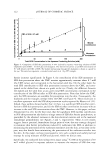
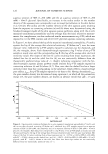
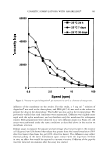
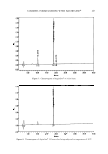
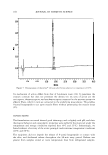
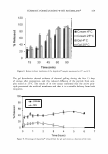
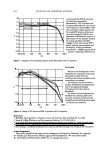
192 JOURNAL OF COSMETIC SCIENCE THE EFFECT OF VARYING THE ALKYL GROUP ON THE PERFORMANCE OF ALKYL TRIALKOXYSILANES USED TO SURFACE MODIFY COSMETIC PIGMENTS AND FILLERS Jane Hollenberg, Barry Arkles, Ph.D. and Yu-Lin Pan, Ph.D. Ge/est, Inc. Pigments and fillers treated with alkyl trialkoxysilanes are widely used in color cosmetics and sunscreens. Although hydrophobicity is the most obvious property imparted by the silanes, the effect on wetting in a variety of vehicles is most frequently the reason for the use of the surface modified pigments. Although the octyl trialkoxysilanes are the silanes best known to cosmetic formulators, alkoxysilanes having alkyl groups ranging from C1 to C24 are available. Measurement of physical properties of the treated pigments and incorporation into typical color cosmetic vehicles were performed to compare the performance of the longer and shorter chain alkoxysilanes.

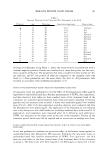
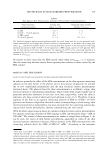
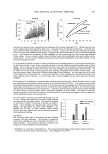
2006 ANNUAL SCIENTIFIC MEETING 193 NOVEL LINEAR ALKANES FOR DECORATIVE COSMETICS, SKIN AND HAIR Introduction Mitchell Schlossman, Nathan Ziskin and Dennis Laba Presperse, Inc., Somerset, NJ A new family of crystal clear, linear alkanes with formulator-friendly properties can fill multiple needs in the Cosmetic and Personal Care markets. The INCi designations for these three new ingredients are: Cl3-15 ALKANE, Cl5-19 ALKANE and C 18-21 ALKANE. These straight-chained, extremely pure hydrocarbons have proven themselves to be exceptional, non tacky emollients providing a dry feel and a "cushion" effect in creams and lotions not typically associated with ingredients of such low viscosity. They all have extremely low vapor pressures, and are exempt from the VOC content limits. As the product chain-length increases the emolliency increases, along with the amount of residual shine or gloss. This makes these new alkanes perfect for hair conditioners, hair sheen products, anti-aging products that help to brighten the appearance of the skin, and color cosmetics that need to provide gloss, a wet-look, a moisturizing feel and improved wear characteristics. Emulsions formulated with these new alkanes are noticeably whiter and shinier, have improved opacity and playtime and also give less of a soaping effect. They also provide slip, spreadability, gloss and emolliency, all with low viscosity. These novel alkanes are exceptionally safe, with low vapor pressures and flash points over 100 degrees centigrade. Chemistry "Alkane" is the nomenclature given to the homologous series of saturated hydrocarbons. Saturated hydrocarbons are compounds containing only carbon and hydrogen, bonded by single bonds only, and have the general formula C,H 2n +2, where the n is a positive whole number. This formula does not indicate structure and when n is greater than three the formula can represent more than one compound. e.g. when n=4 we can have either n-butane CH 3 -CH2=CHrCH 3 (linear) or 2- methylpropane-CH3- CH2-CH3 (branched). Therefore, linear alkanes are a homologous series, with ethane and larger linear alkanes represented by the structural formula: CH3 (CH2) CH3. The straight chain alkanes are so called because all the carbon atoms of the molecule are linked together in a linear fashion, similar to the links in a chain or to beads on a string. Like a chain, these linear molecules can twist and fold without breaking the bonds between adjacent atoms. Like beads on a string, the carbon atoms can rotate about the carbon-to carbon single bonds, changing the positions of the attached hydrogen atoms relative to each other. These novel linear alkanes presented today are highly purified paraffinic oils with chain lengths ranging from C13 to C21. They contain a high concentration of odd-numbered chain lengths and this may help explain the different properties and functionalities these materials exhibit when compared to other common alkanes, such as squalane, polydecane, and heptane. The principal source of alkanes is petroleum, together with the accompanying natural gas. Petroleum is separated by distillation into its various fractions. Once petroleum has been refined to remove the aromatic components, the remainder generally consists of saturated hydrocarbons: normal alkanes (paraffinics), isoalkanes (isoparaffinics), and cycloalkanes (naphthenics). These particular linear alkanes described today are synthesized by proprietary methods in an ISO certified plant involving the use of a high performance catalyst and hydrogenation using a hydrogen purity of 99.9% under a pressure of 100 bars. The result is a range of linear alkanes in the form of low viscosity, transparent liquids, very stable to both oxygen and UV changes, with unique properties. This double operation of selection and processing provides such purity that they even conform to European Pharmacopeia standards. Applications These novel linear alkanes (Cl3-15, C15-19 and Cl8-21) have proven in our laboratories to have many desirable properties that will benefit cosmetic products. INCi Name Phase A Beeswax Lipstick Formulation {29-56-4) Euphorbia Cerifera (Candelilla) Wax Copernicia Cerifera (Carnauba) Wax C18-21 alkane (and) lsohexadecane lsopropyl Palmitate Tridecyl Trimellitate Peg-4 Diheptanoate Ricinus Communis (Castor) Seed Oil Propylparaben BHT Calcium Aluminum Borosilicate PhaseB Titanium Dioxide (and) Ricinus Communis (Castor) Seed Oil D&C Red#7 Calcium Lake (and) Ricinus Communis (Castor) Seed Oil %W/W 8.00 3.00 6.50 10.00 11.00 10.00 4.00 35.85 0.10 0.05 1.50 4.00 6.00
Purchased for the exclusive use of nofirst nolast (unknown)
From: SCC Media Library & Resource Center (library.scconline.org)