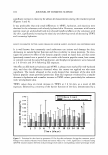
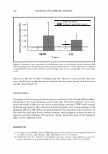
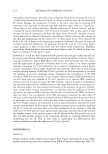
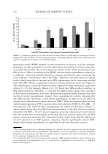
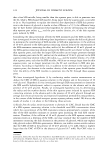
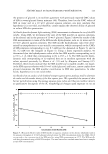
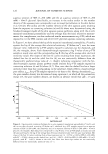
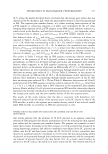
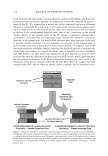
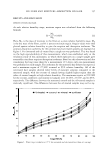
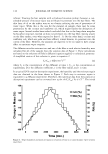
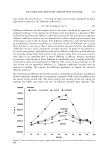
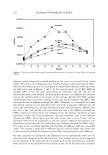
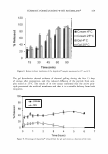
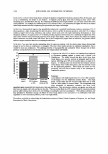
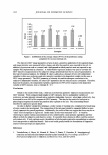
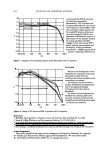
194 JOURNAL OF COSMETIC SCIENCE In Decorative cosmetics these linear alkanes increase the playtime of pigmented emulsions, plasticize films for mascaras, and act as a moistmizing, wet binder in eye shadows. In lipsticks and lip gloss, they help to bring out truer colors while increasing gloss, moisturization and slip. By combining the different chain length products, you can easily control the extent of the properties. For example, by combining the C13-15 with the CIS-21, you can balance the lighter skin feel of the shorter chain-length material with the exceptional gloss provided by the longer chain length. In Skin Care, these products improve slip, spreadability and provide a wonderful moisturizing cushion to emulsions. C13-15 alkane produces a light, moisturizing film after dry-down, which is perfect for daywear products, while the CIS-21 alkane exhibits a higher level of slip, emolliency and cushion, which works well with night replenishing formulations or more therapeutic products. As expected, the Cl5-18 alkane provides properties between these two, combining the lighter feel of the short chains with the more pronounced properties of the longer chain lengths. These novel alkanes also reduce the soaping effects sometimes seen with creams and lotions. Due to their comparatively higher index of refraction, they produce whiter and more opaque emulsions than those containing dimethicones. In the Hair Care area, they provide outstanding shine for spray-on products, with the shorter-chain alkanes feeling light enough to use for leave-in conditioners or detanglers. The other chain lengths provide the additional substantivity that is needed for wash-out conditioners. The additional benefits of manageability and combability follow through with all three products, leaving the hair not only feeling soft, but also looking natural and healthy. 90 60 fl 70 � 60 CJ 50 z 40 a: � 30 0 20 ...I c., 10 0 Control Lipstick 78 Lipstick with C15-19 alkane at 10% Lipstick with Dimethicone (20cls) at 10% A lipstick with 10% Cl5-19 alkane was formulated and subjected to glossmeter readings against a control and a lipstick with Dimethicone. The results showed that gloss levels when these linear alkanes were present, reached an unusually high level for lipstick, reflecting up to 78% of the incident light at an angle of 60 degrees. A 5-person panel test showed that the fommlas with the novel alkanes were visibly more glossy, and were favored overall for the application properties. These initial test results are very promising, and will lead to further study of the advantages of combination products. Summary Linear alkanes with chain lengths from Cl3 to C21 offer a munber of advantages over the traditional cosmetic fluids. Their high purity, crystal clarity and low viscosity make them easy to work with in a wide variety of cosmetic forms. The exceptionally high gloss achievable in decorative cosmetics sets these novel ingredients apart, along with their high levels of slip and ernolliency. They are colorless, odorless, non-greasy, non-tacky and they leave an elegant. soft, silky end feel on the skin. They are exempt from the VOC content limits for consumer products and our safety testing shows them to be non-irritating, non-allergenic and non-comodogenic. With all these attributes and their potential for functional synergy, the future for these linear alkanes to be used alone or in combination with other ingredients to solve formulation problems, looks very bright indeed. The authors would like to acknowledge the formulation assistance of Marie Yednak-Carpenter of Presperse, Inc. and Joseph Rosenstreich of Barlo Laboratories.

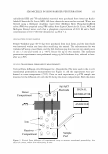
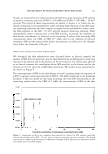
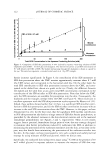
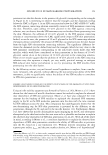
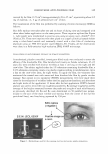
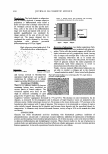
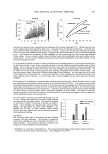
2006 ANNUAL SCIENTIFIC MEETING 195 Af M CAPABILITIES IN CHARACTERIZATION OF NANOPARTJCLES: FROM ANGSTROMS TO MICRONS Natasha Starostina and Paul West Pacific Nanotechnology, Inc., 17981 Sky Park Circle, Suite J, Irvine, CA 9261 L Abstract Scanning Probe Microscopy (SPM), invented 25 years ago, is now routinely employed as a surface characterization technique. Atomic Force Microscopy (AFM) is the most widely used form of SPM, since AFM can be used in ambient conditions with minimal sample preparation. AFM measures three-dimensional topography profiles and images with Wlprecedented resolution from micron to sub Angstrom scales. AFM is well suited for individual particle characterization, especially for measurements of volume, height, size, shape, aspect ratio and particle surface morphology. Statistical distributions for a large set of particles can be generated through single-particle analysis techniques (i.e. ensemble-like information). Single-particle analysis techniques with AFM are generally more cost and time-effective than analysis with Scanning Electron Microscopy (SEM). AFM offers resolution that is comparable to or greater than SEM or Transmission Electron Microscopy (TEM). Also, AFM directly measures parameters such as height and volume and produces images that can be displayed in a 3D format. Introduction AFM has been successfully employed for surface topography characterization over the last two decades. IBM invented scanning tunneling microscopy (SlM), which is considered the technique antecedent to AFM, in 1982. 1 '2 STM requires samples to be electrically conductive, increasing the difficulty of imaging insulating samples. AFM was invented in 1986, to overcome the limitations of STM and broadened the base of applications for SPM. Comprehensive reviews of AFM are foWld in literature. 3 • 5 In brief, AFM application capabilities can be summarized as following: a) imaging in ambient conditions, in intervening media, and in ultra high vacuum (UHV), b) sample preparation is minimal 6 and, c) it is possible to image physical properties of materials, such as magnetic, electrical, thermal, and mechanical parameters. AFM capabilities include sub-Angstrom vertical resolution, ~8 micron Z-range, ~80 microns XY range. Typically, commercial instruments include many sensing modes, such as, contact, frictional, vibrating and vibration phase modes. 7 The goal of this paper is to show how AFM capabilities traditionally used in material science can be employed in the cosmetics industry. All AFM data shown in this paper was obtained on Light Lever Nano-Rp™ and analyzed with NanRule+™ image analysis software. Application to hair - Healthy hair has a well-defined cuticle structure. The AFM images presented in Figure I show a 3D comparison between unprocessed hair and color-processed one. Both images have a scan size of 4lx4lmicrons. The AFM images show the dramatic difference in surface topography between the two strands of hair. Cuticles layers are well-defined on Wlprocessed hair. Surface roughness measurements were taken over an area of about 6 x 6 microns on a single cuticle, for each sample. The root mean square (RMS) of the surface roughness was RMSprocessed= 94.2nm and RMSunprocessed= 84.9nm. Material sensing mode reveals the material contrast of a single cuticle. i ,.� ·I !.�-------�- »=fll 2t�ttnw: l\�.ol)� ,1 :,_,.,;.to�---: !H�-:,. ."lw: l ,!H�.n ... SS.H,.SS.:tt ,:, • :.�:,=,� x,.,..,.,_o,i__..,._w,.., 4l.�!l"'I � ;li,1,11,.,1\r.'r"I-' !)�di'� l,,),_.-.,i,t Figure 1. 4lx4lmicron 3DAFM images of unprocessed (le.ft) and processed (right) human hair structure.
Purchased for the exclusive use of nofirst nolast (unknown)
From: SCC Media Library & Resource Center (library.scconline.org)