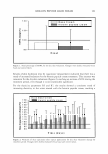
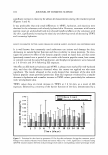
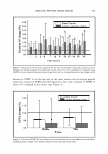
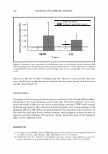
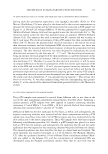
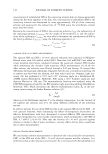
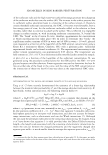
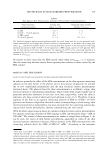
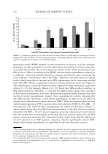
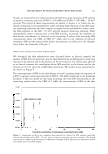
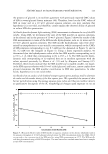
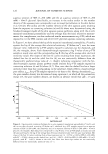
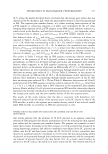
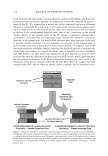
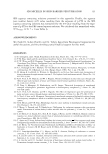
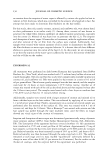
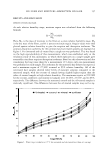
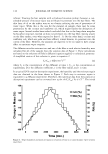
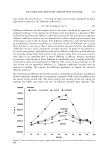
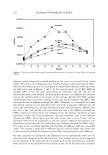
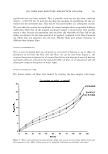
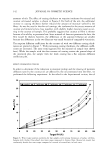
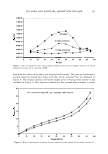
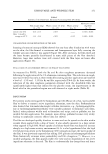
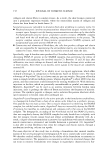
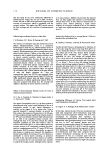
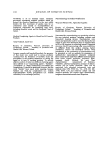
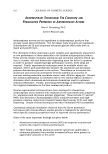
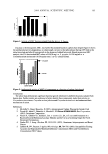
198 JOURNAL OF COSMETIC SCIENCE elasticity, elastic recovery fraction, and viscous recovery fraction are calculated to be at averages of 0.562, 0 .3 98, and O .148, respectively. Figure 2 shows the distributions. Distribution of Human Cheek Elasticity 400 0.6 Age ll!lfact on Skin Viscoelastic Properties -+-Olleral skin el851ic� --Overan skin elasti:ty 350 � I!! 0.7 t 0.6 -o- Bastic recCNery fraclial 300 250 (';' 200 C 150 100 50 o -- Bas& recovery fraction • • • • • • • Viscous recovery fraction 1!! 0.5 a. 0.4 b 0.3 � 0.2 W 0.1 tia, 0-.1 .1-.2 .2-.3 .3-.4 .4-.5 .5-.6 .6-.7 .7-.8 .B-.9 .9-1 �-� �-� �-� �-� 00-� Figure 2 Bastlcity Figure 3 Age, yea,s IV. Effect of age and gender on the viscoelastic behavior of skin. We fowid that overall skin elasticity decreased significantly with age as shown in Figure 3. Not surprisingly, the decrease was directly attributed to the elastic component which decreased in the same fashion. The viscous component, however, did not show significant change with age. Figure 4 shows the gender difference in skin viscoelastic properties. It was significant in all three parameters. Female subjects exhibited greater elastic recovery and lower viscous recovery than male subjects. Gender Bfect on Skin Viscoelastic Ftoperties Figure 4 ■ Ferrele Q/erall skin Bastic recovery elasticity frach:m a Mlle Viscous recovery fraction 0.7 0.6 � 0.5 .Q 0.4 '\ii 0.3 0.2 0.1 0.0 Figure 5 Effect of Sun Exposure CNerall skin elastictty ■ Volar Forearm Bastic recovery Viscous recovery fraction fraction V. Effect of swi exposure on the viscoelastic behavior of skin. Figure 5 shows the results of a study comparing swi-exposed skin on the back of the hand (between thumb and forefinger) to skin from the volar forearm. A marked decrease in overall elasticity and in the elastic recovey component was observed with sun-exposed skin. The viscous component was significantly higher in the sun exposed skin. VI. Use of a linear quantity to calculate overall elasticity. Since the Cutometer does not easily calculate area ratios we have defined a new parameter, RIO, to estimate overall skin elasticity in the Cutometer outputs. This new parameter is a composite result for the extent, Ua/Uf, and the speed, Ur/Uf, of skin viscoelastic recovery. Figure 6 0.8 R2 = 0.980 shows a satisfactory correlation between the more o involved area calculation and this new Rl O parameter. a: 0.4 +---+-�F--+---+-----i Conclusion: We believe that the area ratios defined in this study more accurately reflect skin viscoelastic properties. Separation of elastic and viscous recovery components improves upon the current widerstanding of in vivo elasticity measurement of skin. Reference 0 Figure 6 0.2 0.4 0.6 Area Ratio (BIA) 0.8 1. Dobrev H. Use ofCutometer to assess epidermal hydration. Skin Res Technol. Vol.6. p239-244. 2000. 2. Yoon H. S. et al. Quantitative Measurement of desquamation & skin elasticity in diabetic patients. Skin Res. Technol. Vol 8. p250-4, 2002. 3. Escoffier C. et al. Age related mechanical properties of human skin: an in vivo study. J. Inves. Derm. 93(3). p353-7. 1989. 4. Cua A 8. et al. Elastic properties of human skin: relation to age, sex, and anatomical region. Arch Dermatol Res. Vol. 282. p 283-8. 1990.

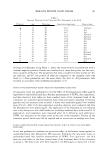
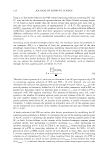
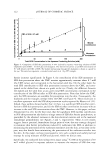
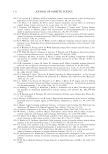
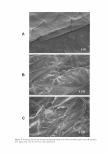
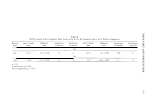
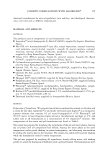
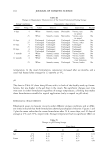
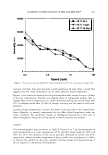
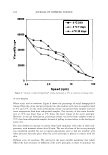
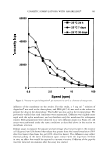
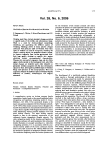
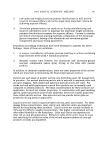
2006 ANNUAL SCIENTIFIC MEETING 199 IN VITKO MODULATION OF HUMAN ADIPOCYTE DIFFERENTIATION BY GLAUCINE: ENZVMACTIC, MORPHOLOGICAL AND FUNCTIONAL EVIDENCE OF CELL-TYPE REVERSION Karl Lintner, Ph.D., Claire Mas Chamberlin, Philippe Mondon, Ph.D. and Francois Lamy, Ph.D. Sederma, S.A.S., Le Perray en Yvelines, France Key words: lrpolysis. l,pogenesis. adipocyte morphology INTRODUCTION The prevalence of obesity is a major preoccupation for our public health institutions. Research in understanding the processes that lead to fat accumulation reaches even into the cosmetic field. The exact embryological source of adipocytes is unknown: precursor cells of various lines may differentiate in vivo into mature adipocytes (bone marrow cells, chondrocytes, subcutaneous fibroblasts). In the absence of sufficient data on the adipocyte precursor cell, it is thus appropriate to study the differentiation process. Some natural regulators of differentiation are known, but they are not as such useful in topical application. For instance, TNFa, is a differentiation inhibitor for human, rat and mouse adipocytes. In the presence of TNFa., adipocytes lose the activity of the enzymes involved in lipid metabolism they lose their spheroid morphology very fast. Another regulating factor is the calcium ion concentration whose complex role in cell differentiation has been well documented. Calcium initially plays an inhibitory role: it blocks mitosis by maintaining the c-myc regulator. OBJECTIVE OF THE STUDY: We screened non-controversial natural plant derived substances for those able to interfere with the major pathways of lipogenesis and cell differentiation. Regulation of the calcium antagonism pathway was an initial screening criterion. Among various aporphine structures, the molecule glaucine (1,2,9,10 tetramethoxyaporphine) turned out to be of particular interest. This substance was first identified in Glaucium jlavum, a native plant of the Mediterranean coast, also called yellow horn poppy. Scientific literature on glaucine indicated that it might be able to interfere with adipocyte maturation as the following properties of glaucine have been described in various models: .·/· " , inhibition of phosphodiesterase PDE4 action on calcium channels � ·· { :: ·. �- a.1-adrenergic antagonist ✓'" inhibitor of membrane protein translocation ,,.,. ·,, 'Y decoupling of mitochondrial phosphorylation «, · ..,, -,.- METHODS: .. ,, 3T3Ll as well as human pre-adipocytes were cultivated and induced to differentiation/maturation with appropriate media. Glaucine was then added to the culture for various lengths of time. Glycerine secretion, GJPDH activity, morphological changes and collagen gel contraction capacity were monitored in dose dependent manner ( I 0-100 µM). Clinical tests on panels of female subjects analyzing skin surface were conducted using interference fringe topometry (FOITS method). In parallel, the water retention of the adipose tissue using a dual-probe operating at a frequency of 300 IvlHz (Moister Meter D) and skin elasticity parameters (cutometry) were measured. RESULTS: Glaucine induced, in both matured 3T3 L l and human adipocytes, a significant, dose dependent, increase (+60 to +80%) in lipolysis (glycerol production, table 1), a decrease in G3PDH activity (50-90% depending on concentration: fig. l ), and prevented full differentiation and lipogenesis in more than 90% of the adipocytes (fig. 2). Glaucine i nitican e cone ntraton v . control 8 ppm = =24 µM +25.3 p 0.01 +46 p = 0.07 10 ppm = = 30 µM +35.8 p 0.01 +65 p0.01 15ppm=45 µM +65.2 p0.Ql 25 m= =75 +86.5 0.01 +66 p=0.08
Purchased for the exclusive use of nofirst nolast (unknown)
From: SCC Media Library & Resource Center (library.scconline.org)