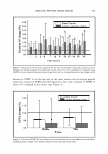
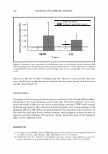
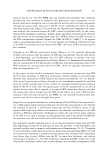
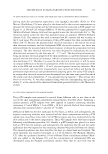
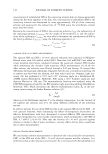
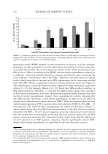
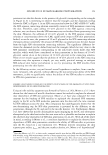
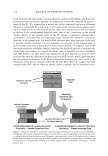
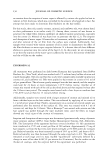
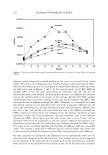
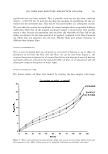
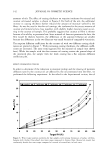
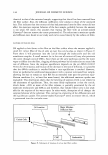
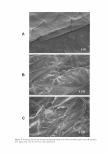
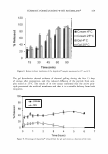
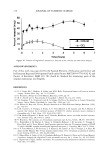
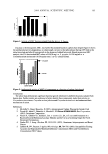
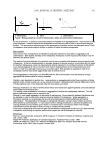
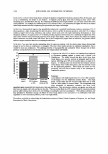
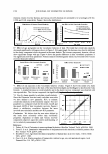
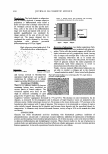
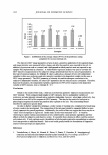
200 JOURNAL OF COSMETIC SCIENCE Mombology: The lipid droplets in adipocytes may be visually observed: A mature adipocyte population (= differentiated cells) forms a dense cell layer that is strongly colored by red oil. Immature cells do not take up this stain. Thus, cells at the end of the differentiation stage were fixed and stained with red oil. In parallel, quantification was conducted by image analysis of the area of the cell layer stained red. The images obtained (fig. 2) confinned the results obtained by the assay: incubation with glaucine prevented differentiation up to 91% (at 25ppm). Figl: adipocytes stained with red oil: 72 h of incubation with or without ldaucine Photograph 1: Control JTJ-LI culture Photograph 3: 15 ppm Glaucine: -6S% lipids Figure 1: GlPDH activity after Incubation with increasing concentrations or Glaucine in the culture medium 3ppm 10ppm 25ppm E:13T3L1 ■human adipocytes Reversion of phenotype: In a further experiment, fully differentiated adipocytes were incubated with glaucine within 72h the cells that initially appear well filled with lipids (coloration red oil), progressively shrink, leaving only an empty cell envelope after 3 days (not shown). This intriguing observation led us to extend the incubation time to 6 days: after this period, we find that 7 5 µM of glaucine induces the entire population of differentiated, lipid filled adipocytes to revert to mesenchymateous fibroblast-like cells (fig.3). Finally, whereas matured differentiated adipocytes are not able to contract a collagen gel in the classical "wound contraction model", those treated with glaucine and having reverted to fibroblast-like Fig 3: left: matured adipocy1 red oil stain after 72 h right: idem, in appearance (right picture ) are capable of presence of75fl,."l\1 glaucine contracting the collagen gel in similar manner as dermal fibroblasts (not shown). CLINICAL STUDIES: Three in vivo efficacy studies of glaucine containing lotions were conducted on various panels of female subjects. The volunteers applied twice daily on one thigh an emulsion containing 25 ppm glaucine for 28 and 56 days. Mean surface roughness ("cellulite" appearance) decreased by 17% (p0.01). The decrease in water retention by the fat deposits, as measured by the propagation and re-emission of high frequency waves on steatomery sites (Moisture meter, Delfin technology) showed a 6.4% increase in the lower dermis and a 7.5% increase in the hypodermis after treatment with 25 ppm of glaucine. This increase is to be interpreted as a release of captive water initially trapped between the fat deposits and between those deposits and the superficial dermis by compression. A cutometer study showed increased firmness, tonicity of up to 20% on the treated skin (data not shown). CONCLUSION: Glaucine has many documented act1v1t1es interfering with biochemical pathways: inhibition of phosphodiesterase, calcium and ex.I adrenergic receptor inhibition, inhibition of translocation of membrane proteins and decoupling of mitochondrial phosphorylation. All of these may play a role in the observed effects in adipocyte differentiation and morphological reversion. Three clinical studies on the use of glaucine in cosmetic body care applications indicate beneficial effects on cellulite appearance, on water retention and skin firmness parameters, in line with expectations from the observed in vitro effects.

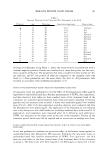
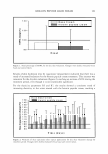
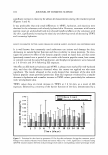
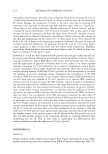
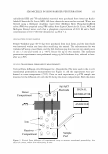
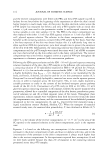
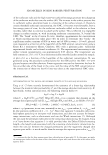
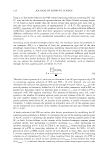
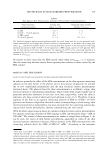
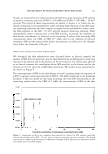
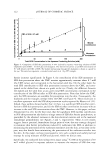
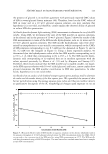
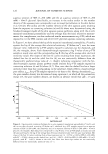
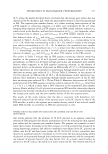
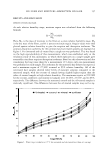
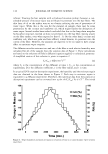
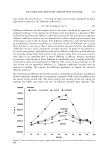
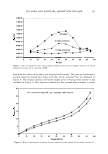
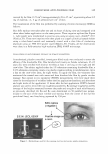
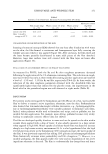
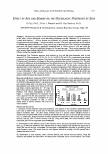
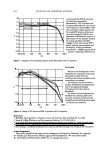
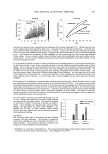
2006 ANNUAL SCIENTIFIC MEETING INVESTIGATION OF THE HUMAN COMPLEX REACTIONS TO ODORANTS Alex Vainshelboim 1, Ph.D., N.S. Priyakin2, V.A. Kuzemkin2, K.G. Korotkov2, M. Hayes?, K.S. Momoh 1 , C. Raatsi1 and K. Price1 1 The Aveda Corporation, Minneapolis, MN 55449 201 2 Saint Petersburg University of Information Technologies, Mechanics and Optics, Russia Introduction Aroma is a complex sensory attribute which influences product perception, validated both consciously by consumers and subconsciously through testing. Skincare formulation and cosmetics in general concentrate on sensory traits such as texture, consistency, color, spreadability, and aroma. With its demonstrated ability to influence the mood states of subjects, aroma should be considered a primary sensory factor in both the aesthetic and perceived consumer functional success of skincare formulations. This work is a continuation of previous research on the methodology and assessment of the human sensory response to essential oils [1]. As in the previous research, the current study utilizes Gas Discharge Visualization (GDV) as a means to obtain an objective measurement as a result of one's exposure to an olfactory stimulant. Toe current study expanded upon the investigation of a correlation between subjective and objective methods for analyzing one's olfactory response to smell. Methodology Fourteen test subjects were used to evaluate six essential oils with glycerin as the control. Toe subjects were male and female volunteers, ages 18-22, who were screened for predisposed allergies through typical allergen testing. The essential oils (odorants) evaluated in the study included the following: Olibanum, Peppermint, Roman Chamomile, Lavender, Lemon, and Blue Chamomile. In addition to objective measurements obtained through the GDV technique, subjective, descriptive methods in the form of questionnaires were used to evaluate each panelist's response to the odorants. These questionnaires, developed by two separate research facilities, allowed for each panelist to rate separately, on respective scales, the preference and the aroma intensity (or strength) for each odorant. An olfactory testing box was constructed with controlled air flow both entering and exiting the box. Additionally, a method was developed to deliver a controlled amount of odorant in such a way that the panelist was unaware of the moments when the odorant was introduced and removed. In conjunction with the testing box, GDV measurements were obtained for each panelist before (baseline measurements), during, and after the exposure to the odorant. Results and Discussion The main objective of this paper was to investigate the relationship between the subjective evaluation of the oils and the objective GDV parameters. In the two sets of questionnaires, panelists subjectively rated each of the six essential oils for both preference and odor intensity. Peppermint and lemon oils were the two oils most preferred by panelists, and were nearly identical to each other, while blue chamomile was the least preferred. Unexpectedly, the glycerin sample had a level of preference that was similar to that of several test oils ( see example in Figure 1 ). This observation may be attributed to the overall composition of the panel population ( e.g., limited age range, cultural similarities, geography, lack of familiarity with some oils, etc.). For odor intensity, most of the oils were statistically similar to each other, although some directional differences were still apparent. As expected, all oils were significantly higher in odor intensity than that of the glycerin control.
Purchased for the exclusive use of nofirst nolast (unknown)
From: SCC Media Library & Resource Center (library.scconline.org)