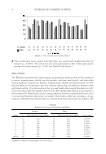
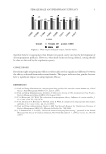
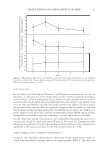
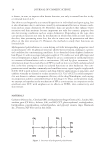
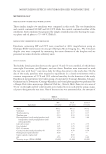
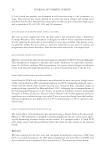
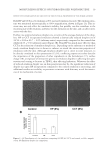
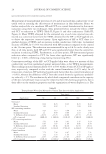
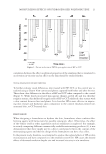
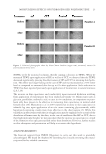
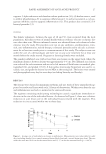
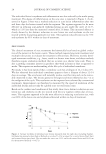
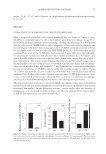
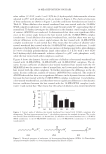
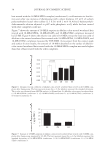
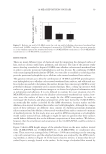
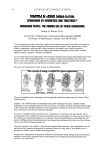
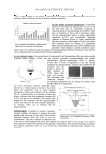
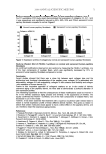
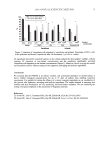
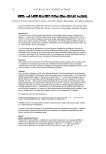
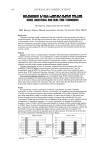
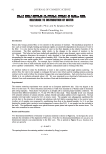
RAPID ASSESSMENT OF ANTI-ACNE PRODUCT 27 suppress 5 alpha reductase and therefore sebum production (10) (d) hoelen extract, used to inhibit phospholipase A2 to suppress infl ammation (11) and (e) resveratrol, a cycloox- ygenase inhibitor, used to suppress infl ammation (12). This product also contained 2.5% benzoyl peroxide (13). CLINICAL Ten female volunteers, between the ages of 18 and 50, were recruited from the local population. All subjects were of normal health with no evidence of acute or chronic dis- ease other than acne. Written informed consent was obtained from each volunteer before entrance into the study. The panelists were not on any antibiotic, antihistamines, retin- oids, anti-infl ammatories, steroid therapy, or benzoyl peroxide and/or salicylic acid treat- ment for at least two weeks prior to commencement of this study. The subjects were not under the care of a dermatologist and were not on any acne treatment for at least one month before the study started. Pregnant or lactating females were excluded. The panelists exhibited acne with at least four acne lesions on the upper back, where the minimum distances between lesions was approximately 4–6 cm. Two infl amed acne lesions were selected for each treatment and one to be left untreated. Each lesion was marked, pho- tographed (14), and graded (15,16). A skin surface microscope (Scopeman) was used to vi- sualize, size, and grade the lesions by two MDs at the testing lab. The lesions were treated and photographed every day for seven days (excluding Saturday and Sunday). RESULTS The lesions were chosen for maximum erythema and size. Each of these immediately ap- peared to resolve and lessen with each 24 hours of observation. Within seven days the size and infl ammation was back to normal in the untreated lesions. The regimen containing multi-prong technologies caused a signifi cant immediate re- duction in the size of the individual lesions. As observed in Figure 1, there was a distinct reduction in acne lesion size in the individual lesions treated with the regimen. This reduction in size occurred within two to three days. Figure 1. Average size of individual acne lesions in millimeters. Measurements were taken daily for eight days (excluding Sunday) for a control untreated lesion (black bars) and a treated lesion (grey bars). The area under the curve was 10.68 cm for the treated lesion and 15.37 cm for the untreated lesion (p = 0.0076).

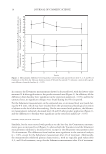
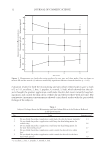
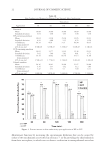
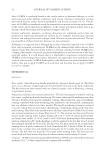
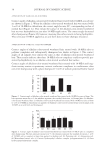
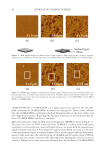
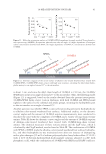
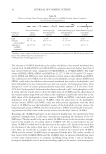
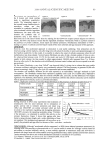
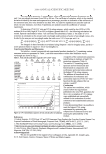
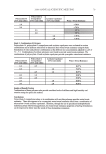
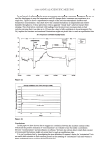
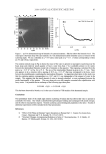
JOURNAL OF COSMETIC SCIENCE 28 The individual lesion’s erythema and infl ammation was also reduced by the multi-prong treatment. The degree of infl ammation on the acne sites is reported in Figure 2. As ob- served in Figure 2 there was a marked reduction in acne lesion infl ammation after two and three days for lesions treated with the regimen. The regimen appeared to be more effective in reducing acne-induced erythema having an area under the curve of 14.37, which is 11% less than the untreated control after 24 hours. This increased effi cacy is clearly shown by the distinct reduction in acne lesion size and erythema on the site treated with the four-prong approach over time. The regimen reduced lesion size by 70% and erythema by 65% within six days of treatment. DISCUSSION The clinical assessment of acne treatments has historically been based on global evalua- tion of the patient or the lesion counts. These methods require long-term treatment and multiple time points to evaluate the treatment’s effectiveness. However, recently devel- oped treatment modalities, e.g., lasers, work in a shorter time frame, and these methods therefore require evaluation methods that are accurate on a shorter time scale. There is also a growing consumer interest in products that work in hours or days as opposed to weeks. This requires an understanding of the life cycle of individual comedones. Previously it has been reported that a comedone cycle has a lifespan of 12–14 days (17). We also observed that individual comedones appear to have a lifespan of about 12–14 days on average. The acne lesion will naturally resolve over this time and can be notice- ably improved in days. The lesions appear to be largest and most infl amed at day 7 or at the midpoint of the cycle. This resolution can be improved or accelerated by conventional treatments. Improvement can therefore be measured by the speed of resolution of the individual lesions and not only by a global score or total lesion count. Based on the confi nes and conditions of this study, there was a distinct reduction in acne lesion size and erythema on the site treated with the new regimen within days of treat- ment. This regimen appeared to be the most effective in reducing acne lesion size, with over 80% of the lesion size and erythema alleviated within six days of treatment. Figure 2. Average erythema of individual acne lesions measured daily for eight days (excluding Sunday). Erythema was assessed as described in Methods on a scale of 1–3 by an expert for a control lesion (black bars) and a treated lesion (grey bars). The area under the curve was 12.41 cm for the treated lesion and 16.09 cm for the untreated lesion (p = 0.0271).
Purchased for the exclusive use of nofirst nolast (unknown)
From: SCC Media Library & Resource Center (library.scconline.org)