RAPID ASSESSMENT OF ANTI-ACNE PRODUCT 29 CONCLUSION We have developed a method to evaluate acne treatments that can reduce individual lesions in days as opposed to weeks. This method will help to assess new treatments and thereby improve the treatment design. REFERENCES (1) H. Gollnick, Current concepts of the pathogenesis of acne: Implications for drug treatment, Drugs, 63(15), 1579–1596 (2003). (2) S. A. Buchner, Acne and its drug treatment, Ther. Umsch., 47(8), 670–674 (1990). (3) J. J. Leyden, Antibiotic resistance in the topical treatment of acne vulgaris, Cutis., 73(Suppl 6), 6–10 (2004). (4) R. A. Bojar and K. T. Holland, Acne and Propionibacterium acnes, Clin. Dermatol., 22(5), 375–379 (2004). (5) J. J. Leyden, Effect of topical benzoyl peroxide/clindamycin versus topical clindamycin and vehicle in the reduction of Propionibacterium acnes, Cutis, 69(6), 475–480 (2002). (6) A. M. Kligman, The growing importance of topical retinoids in clinical dermatology: A retrospective and prospective analysis, J. Am. Acad. Dermatol, 39(2 Pt 3), S2–S7 (1998). (7) C. C. Zouboulis, Acne and sebaceous gland function, Clinics Dermatol., 22, 360–366 (2004). (8) A. Jeremy, D. Holland, S. Roberts, K. Thomson, and W. Cunliffe, Infl ammatory events are involved in acne lesion initiation, J. Invest. Dermatol., 121, 20–27 (2003). (9) B. S. Allen and J. G. Smith, Jr., Various parameters for grading acne vulgaris, Arch. Dermatol., 118(1), 23–25 (1982). (10) S. Lidén, K. Göransson, and L. Odsell, Clinical evaluation in acne, Acta Derm Venereol. (Stockh.), 89(Suppl.), 47–52 (1980). (11) B. M. Burke and W. J. Cunliffe, The assessment of acne vulgaris—The Leeds technique, Br. J. Dermatol., 111(1), 83–92 (1984). (12) T. J. Wilt, A. Ishani, G. Stark, R. MacDonald, J. Lau, and C. Mulrow, J.A.M.A., 280(18), 1604–1609 (1998). (13) H. Nukaya, H. Yamashiro, H. Fukazawa, H. Ishida, and K. Tsuji, Isolation of inhibitors of TPA- induced mouse ear edema from hoelen, Poria cocos, Chem. Pharm. Bull., 44(4), 847–849 (1996). (14) M. Jang, L. Cai, G. O. Udeani, K. V. Slowing, C. F. Thomas, C. W. Beecher, H. H. Fong, N. R. Farnsworth, A. D. Kinghorn, R. G. Mehta, R. C. Moon, and J. M. Pezzuto, Cancer chemopreventive activity of resveratrol, a natural product derived from grapes, Science, 275(5297), 218–220 (1997). (15) A. M. Kligman, J. J. Leyden, and R. Stewart, New uses for benzoyl peroxide: A broad spectrum antimi- crobial agent, Int. J. Dermatol., 16(5), 413–417 (1977). (16) J. S. Samuelson, An accurate photographic method for grading acne: Initial use in a double-blind clini- cal comparison of minocycline and tetracycline, J. Am. Acad. Dermatol., 12(3), 461–467 (1985). (17) J. A. Witkowski and L. C. Parish, The assessment of acne: An evaluation of grading and lesion counting in the measurement of acne, Clin. Dermatol., 22(5), 394–397 (2004). (18) C. H. Cook, R. L. Centner, and S. E. Michaels, An acne grading method using photographic standards, Arch. Dermatol., 115(5), 571–575 (1979). (19) W. Cunliffe, D. Holland, and A. Jeremy, Comedone formation: Etiology, clinical presentation, and treatment, Clinics Dermatol., 22, 367–374 (2004).

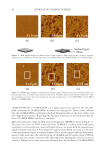
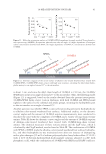
J. Cosmet. Sci., 60, 31–44 (January/February 2009) 31 Deposition of 18-MEA onto alkaline-color-treated weathered hair to form a persistent hydrophobicity HIROTO TANAMACHI, SHIGETO INOUE, NORIYUKI TANJI, HISASHI TSUJIMURA, MASASHI OGURI, MIO ISHITA, SHINICHI TOKUNAGA, and FUMIKO SAZANAMI, Beauty Research Center, Kao Corporation, 2-1-3, Bunka, Sumida-ku, Tokyo 131-8501, Japan (H. T., S. T., F. S.) Analytical Science Research Laboratories, Kao Corporation, 1334 Minato, Wakayama-shi, Wakayama, 640-0112, Japan (S. I., N. T.) and Analytical Science Research Laboratories (H. T., M. O.) and Biological Science Research Laboratories (M. I.), Kao Corporation, 2606 Akabane, Ichikai, Haga, Tochigi 321-3497, Japan. Accepted for publication September 29, 2008. Synopsis A technology for the deposition of a persistent hydrophobicity to alkaline-color-treated weathered hair sur- faces using 18-MEA (18-methyleicosanoic acid) is presented. Two approaches were examined in order to make 18-MEA bind tightly to the alkaline-color-treated weathered hair surface. One was to apply 18-MEA as an acid form and the other was to apply 18-MEA as a salt or complex. It was found that the combination of 18-MEA with specifi c cationic surfactants [stearoxypropyldimethylamine (SPDA) and docosyldimethyl- amine (DSDA)] makes the alkaline-color-treated weathered hair surface hydrophobic and that its hydropho- bicity is maintained even after shampooing. Characterization of adsorbed layers of 18-MEA/SPDA on a mica surface, as a possible hydrophilic surface model, was performed using atomic force microscopy (AFM) and angle-resolved X-ray photoelectron spectroscopy (AR-XPS). The results revealed that 18-MEA/SPDA formed a layer with high wear resistance, with an alkyl chain, the hydrophobic moiety, oriented at an angle of around 25° to the air interface. INTRODUCTION 18-MEA has been subjected to study for years in hair research science since the dis- covery of its presence on keratinous fi bers (1–3). 18-MEA is thought to be covalently bound, probably via a thioester or ester linkage, to the outer surface of the cuticle (4–7) and is located specifi cally in the cuticle, not in the cortex (6). It is also known that 18-MEA makes the surface hydrophobic and acts as a boundary lubricant to decrease friction resistance (8–11). The precise role of 18-MEA remains unclear, but the large segmental volume of the anteiso-moiety is expected to provide molecular mobility and exhibit liquid-like behavior compared with a straight-chain fatty acid (12,13).
Purchased for the exclusive use of nofirst nolast (unknown)
From: SCC Media Library & Resource Center (library.scconline.org)