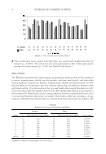
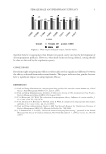
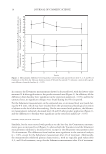
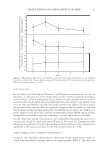
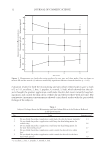
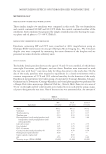
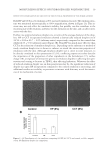
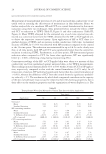
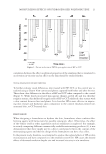
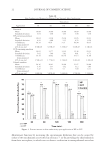
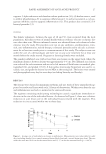
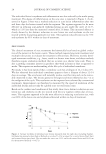
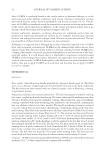
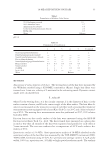
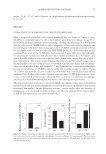
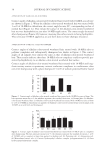
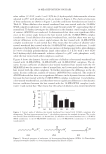
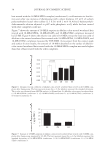
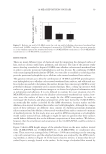
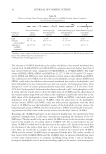
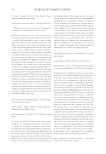
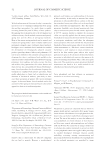
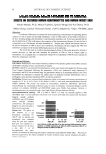
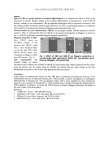
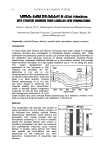
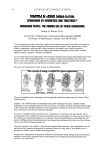
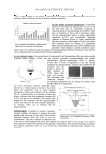
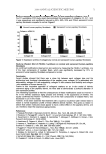
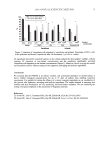
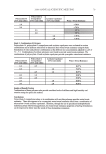
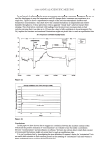
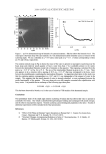
JOURNAL OF COSMETIC SCIENCE 4 O The overall mean sweat output from the males was signifi cantly higher than that for females (p = 0.0001). This result was also seen individually in fi ve of the eight studies reviewed for sweat output (p 0.05). See Table II and Figure 2. DISCUSSION The FDA has mandated that when testing antiperspirant products that will be marketed to males, manufacturers should test the product utilizing male panels, and that when testing products marketed to females, manufacturers should use female panels (5). The data available in the literature does not indicate a physiological difference between male and female axillae. Our data indicate that in some female/male panels the male test sub- jects sweat more than the females however, we have shown that effi cacy is not related to sweat output (6). Historically, in the testing industry, female test panels have been easier to recruit and maintain than male test panels. Our results, while not conclusive, do not indicate a difference between the effi cacy achieved from male and female test subjects. We Table II Baseline Sweat Output for Females and Males. Females Males Study n Mean baseline sweat output n Mean baseline sweat output t-test p-value 1 32 405 11 657 0.0035* 2 24 476 18 478 0.5000 3 20 384 20 453 0.1864 4 21 451 20 605 0.0957 5 30 388 30 633 0.0006* 6 20 393 19 539 0.0411* 7 23 431 27 522 0.0442* 8 22 421 20 585 0.0217* Overall 192 407 165 559 0.0001* *Signifi cant difference (males higher in sweat output). Figure 1. Percent reduction (females–males).

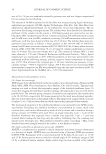
FEMALE/MALE ANTIPERSPIRANT EFFICACY 5 therefore believe it appropriate that female test panels can be used in the development of all antiperspirant products. However, when fi nal claims are being defi ned, testing should be done as directed by the regulatory agency. CONCLUSIONS Data from eight antiperspirant effi cacy studies indicated no signifi cant difference between the effi cacy achieved from males versus females. This paper indicates that gender does not have a signifi cant impact on antiperspirant effi cacy. REFERENCES (1) Food and Drug Administration, Antiperspirant drug products for over-the-counter human use, Federal Register, Final Monograph (68 FR 34273, June 9, 2003). (2) Food and Drug Administration, Guidelines for Effectiveness Testing of OTC Antiperspirant Drug Products, Dockets Management Branch {HFA-305} (August 1982). (3) P. A. Majors and J. E. Wild, The evaluation of antiperspirant effi cacy: Infl uence of certain variables, J. Soc. Cosmet. Chem. 25, 139 (1974). (4) F. H., Dietrich J. P., Bowman, G. M. Fath, and J. E. Wild, A comparison of antiperspirant data analysis methods, J. Soc. Cosmet. Chem., 44, 13–21 (1993). (5) Food and Drug Administration, Reply to Hill Top Research Request for Clarifi cation, Division of Dockets Management (HFA-305), Material for Docket No. 78N-0064. (6) J. P. Bowman and L. O. Oddo, “Historical review of antiperspirant vesting,” presented at the Annual Meeting of the Society of Cosmetic Chemists, New York (December 6–7, 2006), J. Cosmet. Sci., 58, 186 (2007). Figure 2. Sweat output (milligram output, females–males).
Purchased for the exclusive use of nofirst nolast (unknown)
From: SCC Media Library & Resource Center (library.scconline.org)