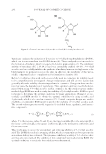
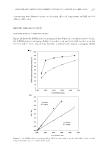
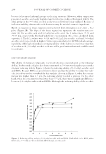
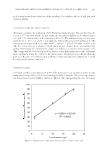
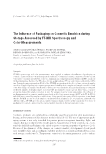
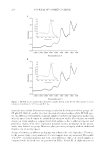
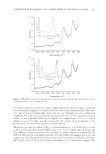
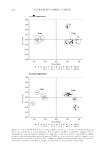
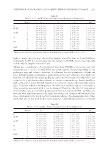
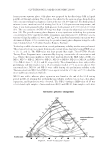
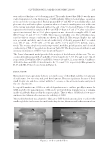
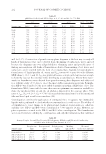
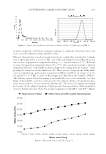
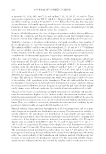
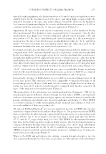
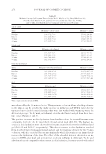
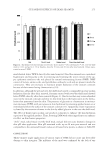
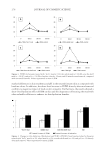
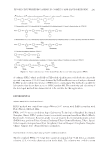
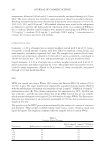
JOURNAL OF COSMETIC SCIENCE 234 Tyrosinase catalyzes the oxidation of L-tyrosine to 3,4-dihydroxyphenylalanine (DOPA), which can in turn transform into DOPAchrome (8). These catalyzed reactions result in the formation of melanin, which is responsible for skin pigmentation (9). The inhibitory activity of tyrosinase (EC 1.14.18.1) has been extensively studied (10-13). 3-O-ethyl ascorbic acid successfully inhibits the synthesis of melanin however, its high water solu- bility hampers its permeation across the skin. In addition, the instability of this water- soluble compound leads to complications for formulation chemists (14). Before 3-O-ethyl ascorbic acid can be successfully used in cosmetics, its stability needs to be comprehensively investigated. Storage temperature and pH are two factors that generally affect the stability of active ingredients in cosmetics. Changes in these two fac- tors may cause the degradation of ingredients. Thus, optimal conditions need to be deter- mined when using 3-O-ethyl ascorbic acid in cosmetics. In this study, response surface methodology (RSM) was used to study the stability of 3-O-ethyl ascorbic. RSM is a good technique to determine the optimal conditions for many applications. Huang et al. suc- cessfully used RSM models to obtain the optimal conditions for using ascorbic acid 2-glucoside, which is also used in cosmetics (15). Central composite design was used to establish a second-order RSM model to predict the stability of 3-O-ethyl ascorbic acid. The second-order regression model (equation 1) included linear, quadratic, and interac- tive components. 2 0 =1 =1 =1 = + + + + C C C F, C k k k k i i ii i ij i j i i i i j Y X X X X (1 ) where Y is the response value Xi and Xj are the input variables β0 is the intercept βi is the linear coeffi cients βii is the square coeffi cients βij is the interaction coeffi cients and ε is an error term. This study aims to assess the antioxidant and reducing abilities of 3-O-ethyl ascorbic acid. The DPPH free radical scavenging ability, which is commonly used to represent the antioxidant ability, was evaluated. The tyrosinase inhibitory activity of 3-O-ethyl ascorbic acid was also investigated. The stability of this compound was studied using RSM. The optimal conditions to retain the best stability were determined. F igure 1. Chemical structures of (A) ascorbic acid and (B) 3-O-ethyl ascorbic acid.

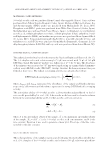
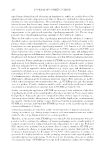
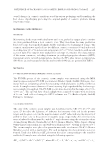
ANTIOXIDANT ABILITY AND STABILITY STUDIES OF 3-O-ETHYL ASCORBIC ACID 235 MATERIALS AND METHODS 3-O-ethyl ascorbic acid was purchased from Cosmol (Gyeonggi-do, Korea). Citric acid was purchased from Nihon Shiyaku Reagent (Osaka, Japan). Methanol (High performance liq- uid chromatography (HPLC) grade) was purchased from Mallinckrodt (St. Louis, MO). Phosphoric acid (HPLC grade) was purchased from Wako Pure Chemical (Osaka, Japan). Methylparaben was purchased from Ueno (Hyogo, Japan). 2,2-Diphenyl-1-picrylhydrazyl, ascorbic acid, sodium phosphate monobasic, sodium phosphate dibasic anhydrous, butyl- ated hydroxyanisole (BHA), and mushroom tyrosinase were purchased from Sigma-Aldrich (St. Louis, MO). Potassium ferricyanide (K3Fe(CN)6), iron (III) chloride (FeCl3), and trichloroacetic acid (TCA) were purchased from Merck (Darmstadt, Germany). L-3,4- dihydroxyphenylalanine (L-DOPA) and kojic acid were purchased from Acros (Morris, NJ). DPPH FREE RADICAL SCAVENGING ABILITY The analytical method was based on the reports by Singh and Rajini and Chan et al. (16,17). The 3-O-ethyl ascorbic acid solution sample (50 μL) was mixed with 50 μL of 160 μM DPPH in ethanol. The mixture was kept in a dark room at 25°C for 30 min. The absorbance of the mixture was measured at 517 nm wavelength using an enzyme-linked immuno- sorbent assay (ELISA) reader (TECANR, Grödig, Austria). Each measurement was per- formed at least twice. The radical scavenging activity was calculated as follows: ¬ ×100% 1– Sample Blank DPPH radical scavenging activity (%)= , A A (2) where ASample and ABlank represented the absorbance of the sample and blank solutions, respectively. A low measured absorbance represented a strong DPPH radical scavenging activity. The antioxidant ability of 3-O-ethyl ascorbic acid was further analyzed based on the ki- netic model provided by Lai et al. (18). A fi rst-order model was used to show the relation between the antioxidant ability and 3-O-ethyl ascorbic acid concentration. dA = – – , dC A k A* (3) – ln(1– )= , A X kC (4) wher e A is the antioxidant ability of the sample, A* is the maximum antioxidant ability of the sample, XA = A/A*, C is the 3-O-ethyl ascorbic acid concentration, and k is the rate constant. Equation 4 was used to generate a linear plot. The slope of the line corre- sponded to the rate constant. REDUCING ABILITY ANALYSIS The reducing ability of the samples was measured following the method described by Lee et al. (19). Samples of the 3-O-ethyl ascorbic acid solution (100 μL each) were placed into
Purchased for the exclusive use of nofirst nolast (unknown)
From: SCC Media Library & Resource Center (library.scconline.org)