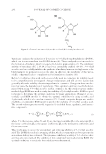
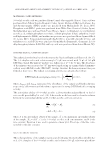
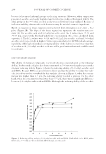
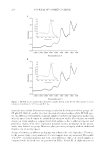
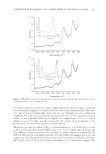
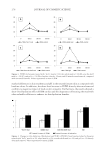
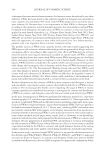
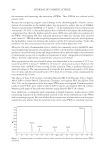
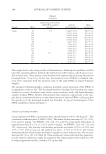
JOURNAL OF COSMETIC SCIENCE 238 because it has more hydroxyl groups on the ring structure. However, when oxygen was presented, ascorbic acid easily degraded and resulted in a reduced biological ability. The ethyl group in the 3-O-ethyl ascorbic acid prevented it from being oxidized. Because of its better stability, this ascorbic acid derivative may be an ideal cosmetic ingredient. Based on equation 4, linear equations were achieved from the regression of -ln(1 - XA) plots (Figure 2B). The slope of the linear regressions represents the reaction rate con- stant (k). For ascorbic acid and 3-O-ethyl ascorbic acid, the k values were 59.70 and 30.03 L/g, respectively. The half-inhibitory concentration (IC50) was calculated from equation 4. The IC50 values were 0.014 and 0.032 g/L for ascorbic acid and 3-O-ethyl ascorbic acid, respectively. A higher k value represented a better DPPH radical scaveng- ing ability. Although the radical scavenging ability of the derivative was lower than that of ascorbic acid, 3-O-ethyl ascorbic acid was still a good antioxidant and could be used in cosmetics. REDUCING ABILITY ANALYSIS The ability of chemical compounds to provide electrons was indicated as the reducing ability. In this study, a higher absorbance measured at 700 nm wavelength represented a stronger reducing ability. Figure 3 shows the reducing ability of 3-O-ethyl ascorbic acid and BHA. Because BHA is a good electron donor and has the ability to reduce free radi- cals, it is often used as a standard for this analysis. As seen in Figure 3, when the concen- tration was higher than 1.5 g/L, the reducing ability reached a plateau. On the other hand, when the concentration was lower than 0.75 g/L, there was no signifi cant difference between 3-O-ethyl ascorbic acid and BHA. Although the reducing ability of the ascorbic Fig ure 3. Reducing ability analysis of 3-O-ethyl ascorbic acid and BHA (black fi lled circle: BHA white fi lled circle: 3-O-ethyl ascorbic acid black fi lled triangle: ascorbic acid).

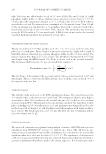
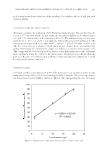
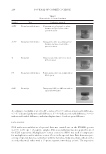
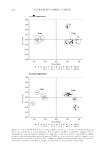
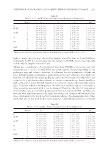
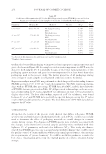
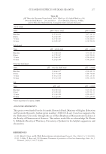
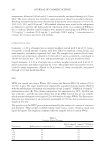
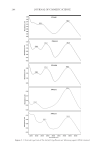
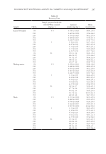
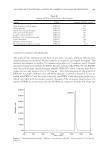
ANTIOXIDANT ABILITY AND STABILITY STUDIES OF 3-O-ETHYL ASCORBIC ACID 239 acid derivative was lower than that of the standard, 3-O-ethyl ascorbic acid still had good reducing ability. TYROSINASE INHIBITORY ABILITY ANALYSIS Tyrosinase catalyzes the formation of DOPAchrome from tyrosine. The product was de- tected at 475 nm wavelength. In this study, the tyrosinase inhibition rate when using a 20.0 g/L 3-O-ethyl ascorbic acid solution was 88.63%. The inhibition rate was also ana- lyzed for 16.0, 10.0, 6.0, and 1.5 g/L solutions. The results are plotted in Figure 4. The linear regression was used to calculate the IC50 value (7.5 g/L) of 3-O-ethyl ascorbic acid. The IC50 value of kojic acid was 0.04 g/L (data are not shown). Kojic acid inhibits the ability of tyrosinase by chelating the copper ion, which is a cofactor of the enzyme (23). This compound has been widely used in Asia as a skin-lightening agent (24). Although kojic acid had a lower IC50 value, it has safety issues, which have been discussed in the past (25). Because 3-O-ethyl ascorbic acid was a stable and effective component, it could be safely used in most cosmetics. STABILITY ANALYSIS 3-O-ethyl ascorbic acid solutions (3 g/100 mL) were kept in an incubator under specifi c temperature and pH for 24 h before running the HPLC analysis. The entire experimen- tal design based on the RSM is shown in Table I. Two independent factors, including Figu re 4. Inhibition rate of tyrosinase activity using 3-O-ethyl ascorbic acid.
Purchased for the exclusive use of nofirst nolast (unknown)
From: SCC Media Library & Resource Center (library.scconline.org)