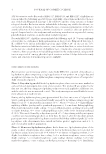
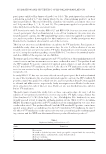
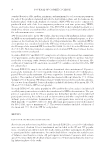
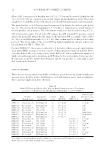
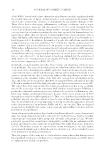
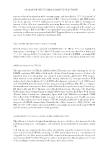
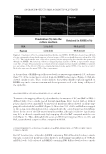
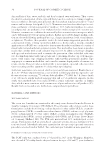
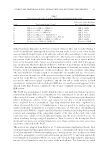
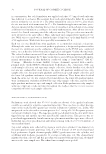
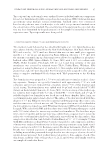
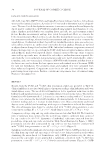
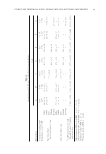
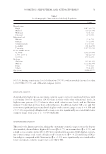
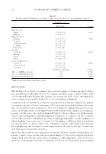
JOURNAL OF COSMETIC SCIENCE 10 data for the test product or P2 positive control (n = 1) and for technical reasons (n = 1). Separate baseline demographics were determined for the FDA fi nal rule cohort and the ISO 24444 cohort. Participants enrolled for the FDA fi nal rule protocol were all white, more than half (69.2%) were female, and the mean age was 41.2 years. Participants had a skin type of Fitzpatrick grade I (30.8%), II (53.8%), or III (15.4%), with a mean ITA of 50.9° (Table II). All participants enrolled for the ISO 24444 protocol were Caucasian, the majority (75.0%) were female, and the mean age was 42.2 years. Participants had a skin type of Fitzpatrick grade I (37.5%), II (50.0%), or III (12.5%), with a mean ITA of 51.6° (Table II). EFFICACY AND EXPLORATORY ENDPOINTS Barrier function and moisturizing abilities study. Dry-skin leg model. Statistically signifi cant changes in TEWL at 1, 3, and 6 h post–lip balm application indicated an improvement in barrier function (decreased water loss) with test product B and all four comparator/ reference products versus untreated dry leg skin (p 0.0005) (Table III). Test product B also showed a statistically signifi cant reduction in TEWL, indicating an improvement in barrier function, versus three of the four comparator lip balms at all three time points (comparators A, B, and D p 0.0001) the fourth comparator (comparator C) showed signifi cantly lower TEWL compared with test product B at all three time points (p 0.0004 Table III). Skicon data indicated a statistically signifi cant improvement in skin hydration (moistur- izing ability) for test product B and three of the four comparator lip balms (A, C, and D) versus untreated dry leg skin (p 0.0001) at all three time-points (Table III). Improve- ment in skin hydration was signifi cantly greater for test product B relative to comparators Table III Study RH02116: Dry-Skin Leg Model Barrier Function, and Skin Hydration Data for Test Lip Balm, Four Comparator Products, and Untreated Skin Time point Test product B Comparator A Comparator B Comparator C Comparator D Untreated skin (control) Means for TEWL measurements (g m-2 h) Baseline 5.72 5.83 5.81 5.69 5.77 5.62 1 h 3.40 4.51 4.31 2.61 4.32 5.13 3 h 3.42 4.44 4.36 2.94 4.29 4.92 6 h 3.30 4.32 4.18 2.79 4.16 4.78 Means for Skicon measurements (μS) Baseline 38.21 36.82 34.97 35.29 35.46 35.23 1 h 129.37 196.44 52.72 150.68 133.08 41.43 3 h 127.93 179.89 51.52 142.81 118.08 44.14 6 h 131.57 159.03 51.23 126.94 103.75 47.93 Means for Corneometer measurements (au) Baseline 12.88 13.56 13.41 12.55 12.89 12.65 1 h 30.99 23.53 16.29 20.33 15.24 14.20 3 h 31.83 24.53 18.04 21.86 16.99 14.60 6 h 31.62 26.89 20.11 25.34 19.77 15.46 μS: micro-siemens.

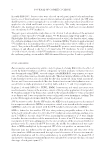
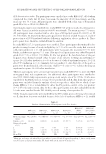
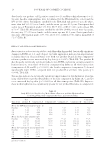
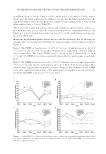
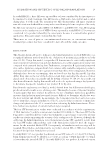
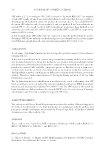
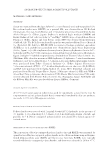
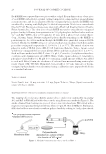
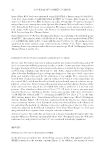
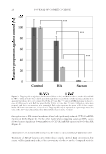
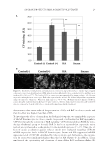
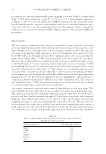
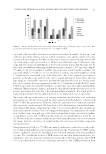
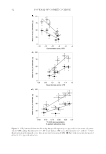
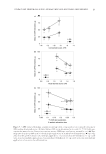
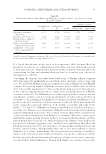
HYDRATION AND SPF TESTING OF LIP BALM FORMULATIONS 11 A and B at 1 h (p 0.0001), 3 h (p 0.0001), and 6 h (p = 0.001 and p 0.0001, respec- tively) post–lip balm application. In addition, test product B demonstrated statistically signifi cant improvement in skin hydration compared with comparator D at 6 h post–lip balm application (p = 0.0064 Table III). The Corneometer data indicated a statistically signifi cant improvement in skin sur- face hydration for test product B compared with all four comparator/reference lip balms (p 0.0009) and untreated dry leg skin (p 0.0001) at all time points postap- plication (Table III). Home-use lip hydration phase. Barrier function and skin hydration data for the four par- ticipants who used test product B during the home-use phase of the study are shown in Figure 1. Mean ± SD TEWL at baseline was 54.60 ± 17.34 g m-2 h and decreased to 43.58 ± 4.61 g m-2 h after 12 d of test product B application, suggesting a slightly reduced level of water loss. The lowest TEWL score occurred at day 8 (mean ± SD 15.34 ± 4.74 g m-2 h). TEWL scores were consistent between the four participants at each time point. Mean ± SD DMM at baseline was 61.00 ± 13.25 arbitrary units (au) and increased to 63.90 ± 27.62 au by day 12, with a maximum score of 88.30 ± 82.34 au on day 8. This small increase suggests that there was no overall change in skin hydration levels. DMM scores were consistent between three of the participants the exception was one participant for whom the DMM score was 210.60 au on day 8. Figure 1. Study RH02116: Home-use lip-hydration phase barrier function and skin hydration data for four participants over the 11-d study period. Scores and mean values for (A) TEWL, (B) DMM, (C) Corneometer, and (D) visual P2 assessment.
Purchased for the exclusive use of nofirst nolast (unknown)
From: SCC Media Library & Resource Center (library.scconline.org)