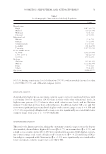
JOURNAL OF COSMETIC SCIENCE 8 standard deviation (SD), median, minimum, and maximum for each assessment parameter for each of the products evaluated, in both the leg hydration phase and the home-use lip hydration phase of the study. Analysis of covariance (ANCOVA) was used to compare test product B with each of the four comparator products at each time point using TEWL, Skicon, and Corneometer measurements. The ANCOVA model included treatment as a fi xed effect, subject as a random effect, and baseline values on a site level and subject level for each measurement as covariates. SPF determination studies. In the SPF studies, data were rejected if irradiation did not achieve an MED or an erythemal response, if all subsites showed an erythemal response, or if re- sponses on the treatment site were absent 20–24 h postirradiation. The calculated SPF for a test product was considered valid if the SPF value of the positive control P2 fell within the SD range of the intended SPF, for either ISO 24444 (16.4 ± 2.4) or the FDA fi nal rule (16.3 ± 3.43). No formal statistical comparisons of calculated SPF values between the fi ve test products were conducted. In studies RH01927 and RH02117, sample size calculations determined that a minimum of 10 participants, and no more than 13, were required per product to produce valid test results for a screening study. Statistical analyses included calculation of the mean, SD, coeffi cient of variation (CV), and lower one-sided 95% confi dence interval (CI) of the SPF for each product. In study RH01928, sample size calculations determined that a minimum of 10 partici- pants and a maximum of 25 were required per product. A minimum of 10 valid partici- pant SPF results and a maximum of 20 were required to determine the mean SPF of each product. The number of valid SPF results was deemed suffi cient when the 95% CI was within ±17% of the mean SPF. If more than 20 results were needed to reach this criterion, the test was deemed invalid. Statistical analysis included calculation of the mean, SD, CV, SE, and 95% CI of the SPF for each product. In study RH02385, the safety population (SP) used for the safety analysis included all enrolled participants who received the fi rst irradiation for MEDu determination. The per- protocol population used for effi cacy analysis was defi ned per product and included all participants meeting the inclusion and exclusion criteria and who completed the study without protocol violations. A minimum of 10 participants were recruited as per the FDA fi nal rule (5) and ISO 24444 (6), with additional participants recruited if required for ISO 24444, up to a maximum of 25. The statistical analyses included calculation of the mean and 95% CI of the SPF for each product. RESULTS DISPOSITION AND BASELINE CHARACTERISTICS Barrier function and moisturizing abilities study. In study RH02116, a total of 39 individuals were screened, of whom 24 were randomized and included in the SP and ITT popula- tions 12 participants did not meet the study criteria and three participants decided not to participate before randomization. One individual did not complete the study because of failure to meet baseline criteria. All participants were female Caucasians with a mean age of 38.2 years (Table II). A subset of participants (n = 4) were enrolled into the home-use lip hydration phase of the study.

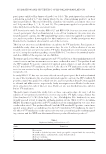
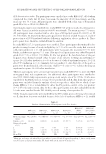
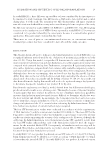
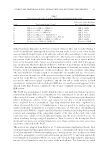
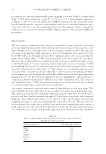
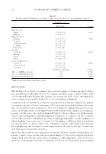
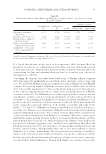
HYDRATION AND SPF TESTING OF LIP BALM FORMULATIONS 9 SPF determination studies. Ten participants were enrolled into study RH01927, all of whom completed the study. All 10 were Caucasian, the majority (8/10) were female, and the mean age was 53.6 years. All participants were classifi ed with a skin type of Fitzpatrick grade II (6/10) or III (4/10) (Table II). Sixteen participants were enrolled into study RH01928 with no study discontinuations. All were Caucasian and the majority (68.8%) were female. The mean age was 57.0 years. All participants were classifi ed with a skin type of Fitzpatrick grade II (68.8%) or III (31.3%) (Table II). Data from three participants were deemed invalid because of a lack of protection at all UV-irradiated subsites following application of test product A. These participants were therefore excluded from the analysis. In study RH02117, 16 participants were enrolled. Three participants discontinued before product testing because of study ineligibility (n = 2) or because the study had recruited suffi cient numbers (n = 1). All participants were Caucasian, the majority (87.5%) were female, and the mean age was 55.1 years. Skin type for all participants was either Fitzpatrick grade II (37.5%) or III (62.5%) (Table II). For test product B, data from four of the par- ticipants were deemed invalid either because of all subsites showing an erythemal re- sponse 20–24 h after irradiation (n = 3) or because of a lack of erythemal response 20–24 h after UV irradiation (n = 1). Similarly, for test product C, data from fi ve of the partici- pants were deemed invalid, either because of all (n = 4) or no (n = 1) subsites showing an erythemal response 20–24 h after irradiation. Thirteen participants were screened and enrolled into study RH02385 to meet the FDA monograph fi nal rule requirements. An additional three participants were enrolled to meet ISO 24444 study requirements, giving a total sample size of 16. Of the 13 who were enrolled for the FDA protocol testing of test products D and E, data from three partici- pants were excluded from the analysis of each test product, either due to a lack of ery- thema MED (n = 2) or invalid data for either the P2 positive control or the test product (n = 1). For the same reasons, data for these three participants were also excluded from the 16 who were enrolled for the ISO 24444 protocol testing of test product D. Of the 16 participants who were enrolled for the ISO 24444 protocol testing of test prod- uct E, data from four were excluded because of the lack of erythema MED (n = 2) invalid Table II Baseline Characteristics of Participants in the Five Studies RH02116, n = 24 RH01927, n = 10 RH01928, n = 16 RH02117, n = 16 RH02385 (FDA), n = 13 RH02385 (ISO 24444), n = 16 Mean age, range (years) 38.2 (24–45) 53.6 (44–66)a 57.0 (43–70)a 55.1 (35–70)a 41.2 (20–59) 42.2 (20–59) Female, n (%) 24 (100) 8 (80.0) 11 (68.8) 14 (87.5) 9 (69.2) 12 (75.0) Fitzpatrick grade, n (%) I NA 0 (0) 0 (0) 0 (0) 4 (30.8) 6 (37.5) II NA 6 (60.0) 11 (68.8) 6 (37.5) 7 (53.8) 8 (50.0) III NA 4 (40.0) 5 (31.3) 10 (62.5) 2 (15.4) 2 (12.5) Mean ITA, NA NR NR NR 50.9 51.6 a Mean age and range calculated based on subjects’ year of birth Fitzpatrick grading: I, burns easily, never tans II, burns easily, tans minimally III, burns moderately, tans moderately (13).
Purchased for the exclusive use of nofirst nolast (unknown)
From: SCC Media Library & Resource Center (library.scconline.org)