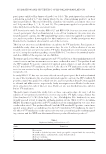
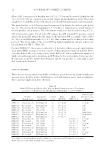
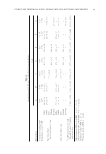
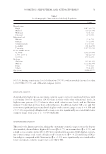
JOURNAL OF COSMETIC SCIENCE 6 In study RH02385, four test sites were selected on each participant’s back and random- ized to one of four treatments: one site was an untreated negative control, the SPF stan- dard P2 positive control was applied to a second test site, and test products D and E were applied to the third and fourth test sites, respectively. The study investigators were blinded to the treatment allocation for each of the test sites. Each test site was divided into six subsites for UV irradiation. The participants attended the study clinic on 4 d. At visit 1, all six subsites of the untreated control site were exposed to UV light, using a 300 W Xenon arc lamp (Solar Light Co., Inc., Philadelphia, PA). Irradiated sites were visually assessed at visit 2, the day after visit 1, using the erythema grading criteria (Table I) (17) to determine MEDu. Treatment application and UV irradiation at the remaining three test sites were conducted at visit 3, within a week of visit 1. Test products D and E and the SPF standard P2 positive control were applied using a fi nger cot and allowed to dry for 15–30 min before UV irradiation. At visit 4, within 16–24 h of visit 3, the effect of the UV irradiation on the various test sites was assessed using the erythema grading criteria and the MED determined for test product D and test product E. STUDY ASSESSMENTS Barrier function and moisturizing abilities study. In phase 1 of study RH02116, the effect of a new lip balm formulation and four comparator lip balm products on barrier function was determined using TEWL, assessed using a cyberDERM RG1 evaporimeter, as a mea- sure of barrier function in a dry-skin leg model. The moisturizing abilities of the fi ve lip balm formulations were also assessed in the dry-skin leg model, using visual assessment, Skicon, and Corneometer methods. Baseline barrier function and skin hydration were as- sessed before a single application of each lip balm, and at 1, 3, and 6 h postapplication. In phase 2 of study RH02116, TEWL, DMM, Corneometer, and visual assessment were used to measure changes in the moisture content of the lips after application of test product B. Visual assessment of lip dryness was carried out by a trained evaluator: 0 was categorized as no dryness and 4 was categorized as severe scaling with severe fi ssuring or cracking. Test product B was applied six times daily by the participants over an 11-d period. SPF determination studies. For the SPF studies, the MED for each participant was determined for an unprotected test site (MEDu) as a negative control, a site treated with the test product (tpMEDp), and a test site treated with the SPF standard control product (ssMEDp). MED is defi ned as the smallest UV dose that produces perceptible redness of the skin with clearly defi ned borders 20–24 h after UV irradiation using erythema grading crite- ria (17) (Table I). A series of six UV doses increasing by increments of 25% were admin- istered to the six test subsites of the untreated site. A series of six UV doses increasing by increments of 20% were administered to the six test subsites of the sites treated with test products or the P2 control. In all UV dose series, the middle dose administered was equiv- alent to MEDu multiplied by the expected SPF of the test product on untreated skin. Exposure time was infl uenced by the participant’s skin phototype and the power of the solar simulator. MED was measured through visual observation of the test site immedi- ately after irradiation and 16–24 h postirradiation. In study RH02385, the mean ITA of six repetitive chroma meter measurements was calculated to categorize the skin color and skin type of each participant (15).

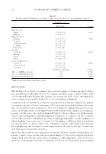
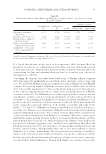
HYDRATION AND SPF TESTING OF LIP BALM FORMULATIONS 7 STUDY OUTCOMES Barrier function and moisturizing abilities study. The primary endpoint for study RH02116 was to determine the effect of fi ve lip balms (one test formulation and four comparator products) on barrier function 1, 3, and 6 h postapplication using the dry-skin leg model. The secondary endpoint was to determine the moisturizing abilities of the fi ve lip balms 1, 3, and 6 h postapplication, using the dry-skin leg model. Additional exploratory objectives included the following: to explore the effect of test product B on barrier function on dry lips during home use to explore the moisturizing abilities of test product B on dry lips using DMM, Corneometer, and clinical visual assessment of lip dryness during home use. SPF determination studies. The primary effi cacy endpoint for the four SPF studies was the individual SPF value (SPFi) of the test lip balm formulations 20–24 h after UV irradiation, determined by SPFi = MEDp/MEDu. An additional primary endpoint for studies RH02117 and RH01927 was label SPF, defi ned as the largest whole number less than SPF - (t* SE), where t is taken from the subjects’ t distribution table corresponding to the upper fi ve percent point with n - 1 degrees of freedom and SE is the standard error of the SPF value. The secondary endpoints were the safety and tolerability of the lip balm formulations. SAFETY ASSESSMENT In all fi ve studies, AEs were defi ned as any untoward medical occurrence in a patient or clinical investigation subject temporally associated with the use of an investigational product, whether or not considered related to the investigational product. Serious AEs (SAEs) were defi ned as any AE that results in death, is life-threatening, requires inpatient hospitalization or prolongation of existing hospitalization, results in persistent or sig- nifi cant disability/incapacity, or is a congenital anomaly/birth defect. In study RH02116, AEs and SAEs were collected from the start of investigational product use until 5 d fol- lowing last application of the investigational product. In the SPF studies, AEs and SAEs were recorded from the start of UV irradiation until 5 days following last application of the investigational product. SAEs related to study participation were recorded from the time the participant consented up to and including any follow-up contact. Subjects were asked about AEs at each study visit. In study RH02116, AEs were listed by treatment phase. Prior and concomitant medication use and concomitant nondrug treatment/proce- dures were recorded for each participant in all fi ve studies. Assessment of the relationship between the investigational product and the occurrence of each AE or SAE was performed by the respective investigator. STATISTICAL ANALYSES Barrier function and moisturizing abilities study. Study RH02116 was an exploratory study and no formal sample size calculation was undertaken however, 20 participants was considered adequate. All valid data from each of the four objective measurements (TEWL, Skicon, DMM, and Corneometer) of either barrier function or skin hydration were used in the intent-to-treat (ITT) analysis. All participants enrolled in this study were also considered evaluable for the determination of SPF. Statistical analyses included calculation of the mean,
Purchased for the exclusive use of nofirst nolast (unknown)
From: SCC Media Library & Resource Center (library.scconline.org)