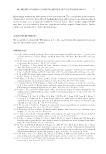
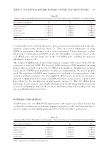
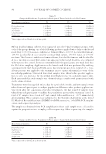
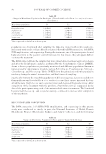
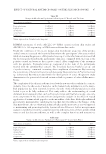
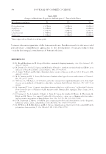
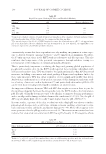
JOURNAL OF COSMETIC SCIENCE 88 Table XIII Changes in Microbiome Population for Participant 15 Treated with Water Microbiome population T0 T2 T3 Propionibacterium 2.07E+03 5.09E+03 4.12E+02 Staphylococcus 2.00E+00 7.00E+00 0.00E+00 Aerobacillus 6.10E+01 1.28E+02 1.20E+01 Corynebacterium 1.38E+02 3.51E+02 1.80E+01 Streptococcus 1.30E+02 1.50E+01 0.00E+00 Values expressed in cfu/mL at each timepoint. between the microorganisms of the skin microbiome. Further research in this area could provide more comprehensive approaches to the development of topical products that consider the integral contributions of skin microbiome. REFERENCES (1) D. Erturk-Hasdemir and D. Kasper, Resident commensals shaping immunity, Curr. Opin. Immunol., 25, 450–455 (2013). (2) M. Danaher, D. Scholz, E. Segura, and M. Darley, Natural vs. synthetic antimicrobials and HDAC as an indicator of microfl ora health, Cosmet. Toiletries, 130, 22–34 (2015). (3) A. Cogen, V. Nizet, and R. Gallo, Skin microbiota: a source of disease or defence? Br. J. Dermatol., 158, 442–455 (2008). (4) M. R. Yeaman and N. Y. Yount, Mechanisms of antimicrobial peptide action and resistance, Pharmacol. Rev., 55, 27–55 (2003). (5) T. Prince, A. J. McBain, C. A. O’Neill, Lactobacillus reuteri protects epidermal keratinocytes from Staph- ylococcus aureus-induced cell death by competitive exclusion, Appl. Environ. Microbiol., 78, 5119–5126 (2012). (6) N. Izawa and T. Sone, “Cosmetic ingredients fermented by lactic acid bacteria,” in Microbial Production: From Genome Design to Cell Engineering, H. Anazawa and S. Shimizu. Eds. (Springer, Tokyo, Japan, 2014), pp. 233–242. (7) J. Ouyang, Z. Pei, L. Lutwick, S. Dalal, L. Yang, N. Cassai, K. Sandhu, B. Hanna, R. Wieczorek, M. Bluth, and M. Pincus, Case report: Paenibacillus thiaminolyticus: a new cause of human infection, induc- ing bacteremia in a patient on hemodialysis, Ann. Clin. Lab. Sci., 38, 393–400 (2008). (8) J. M. Janda and L. Abott, 16S rRNA gene sequencing for bacterial identifi cation in the diagnostic laboratory: pluses, perils, and pitfalls, J. Clin. Microbiol., 45, 2761–2764 (2007). (9) K. H. Wilson, R. B. Blitchinton, and R.C. Greene, Amplifi cation of bacterial 16S ribosomal DNA with polymerase chain reaction, J. Clin. Microbiol., 28, 1942–1946 (1990).

J. Cosmet. Sci., 70, 89–105 (March/April 2019) 89 Clinical Skin Mildness Evaluations of Direct and Indirect Exposure to Two Commercial Laundry Detergents with Markedly Different pH Designed for Sensitive Skin Using a Hand-Laundering Model SUSANNA BRINK, YU WANG, BEATRICE BLUM, MEKHINE BACCAM, ALEX VARBANOV, VINCE BOEH, YUEXI WANG, JEREMY CHRISTMAN, CYNTHIA ELAINE CELLA, MARY B. JOHNSON, and MIRANDA A. FARAGE, Procter & Gamble Germany GmbH & Co Operations oHG, Schwalbach am Taunus 65824, Germany (S.B., B.B.), The Procter & Gamble Company, Winton Hill Business Center, Cincinnati, Ohio (Y.W.), The Procter & Gamble Company, Fabric & Home Care Innovation Center, Cincinnati, Ohio (M.B., A.V., V.B., Y.W., J.C., C.E.C., M.B.J.), The Procter & Gamble Company, Mason Business Center, Mason, Ohio (M.A.F.) Accepted for publication March 13, 2019. Synopsis The skin mildness of two commercial laundry detergents designed for sensitive skin, Tide Free and Gentle® (TFG) versus All Free Clear® (AFC), was compared in clinical studies, and the role of marked product pH differences was assessed. Two double-blind randomized human studies were conducted. Study 1 was a 1-day repeat insult forearm test, in which four exposures to solutions of TFG or AFC were performed to mimic direct exposure to dilute detergent during hand-laundering. Corneometer, erythema and dryness grading, transepidermal water loss (TEWL), and skin surface pH evaluations were carried out. Study 2 was a 21-day arm patch test of fabrics washed with TFG or AFC to mimic indirect contact to skin of detergent residues, with erythema grading. Separately, pH and reserve alkalinity were determined for each detergent. In Study 1, TFG was signifi cantly milder than AFC in all measures except TEWL (no signifi cant difference). In Study 2, the detergents were approximately equivalent in erythema grading. Analysis showed AFC was substantially more alkaline (pH 10.8) than TFG (pH 7.9) with higher reserve alkalinity. TFG was signifi cantly milder than AFC in Study 1, which may be due in part to the increased skin surface pH seen with direct exposure to AFC’s high alkalinity. Address all correspondence to Mary B. Johnson at johnson.mb.3@pg.com. This work has been presented in part at the 2018 and 2019 Annual Meeting of the American Academy of Dermatology (February 16–20 San Diego, CA, and March 1–5 Washington, D.C.).
Purchased for the exclusive use of nofirst nolast (unknown)
From: SCC Media Library & Resource Center (library.scconline.org)