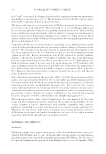
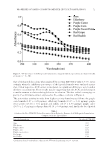
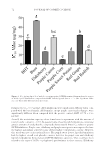
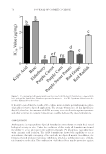
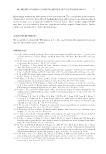
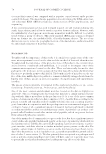
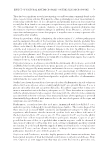
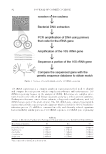
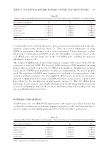
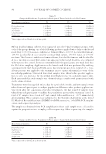
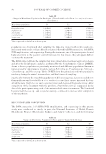
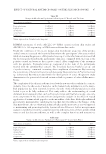
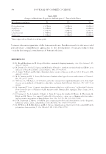
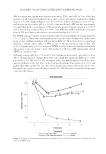
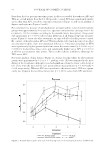
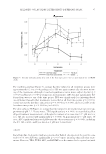
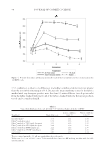
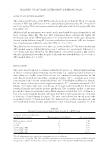
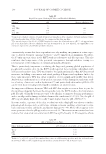
JOURNAL OF COSMETIC SCIENCE 86 population was determined after sampling the skin area treated with sterile swabs pre- moistened with sterile sodium chloride solution followed by DNA extraction, 16S rRNA PCR amplifi cation, and sequencing. During the treatment, one of the participants showed high sensitivity to the positive control triclosan for this reason, the participant did not continue the treatment. The DNA extracted from the samples that were taken before treatment application began and after the bioinformatic analysis, performed by the bioinformatics team at DMRHI, shows a diverse population as previously mentioned and different populations known as transient and/or opportunistic invaders, such as Escherichia sp., Pseudomonas sp., Vibrio sp., Clostridium sp., and Neisseria sp. Tables II–XIII show the general microbiome population tendency during the initial, intermediate, and fi nal times of sampling. Lactobacillus ferment decreased the population of all bacteria genus Leuconostoc radish root ferment fi ltrate and Lactobacillus & Cocos nucifera (coconut) fruit extract increased the ben- efi cial bacteria (Staphylococcus and Corynebacterium) and decreased Propionibacterium. After completion of the treatment with the products, Propionibacterium sp. reappeared in the skin of the participants using each of the antimicrobial extract treatments. The benefi cial bacteria Staphylococcus sp., and Corynebacterium sp. continued to increase after completion of the treatments. DISCUSSION AND CONCLUSION The DNA extraction, 16S rRNA PCR amplifi cation, and sequencing in this present study were conducted to satisfy, in part, the National Institutes of Health Human Microbiome Project: Microbiome Analysis and Sample Collection, and the following Table IX Changes in Microbiome Population for Participant 9 Treated with Lactobacillus & Cocos nucifera (Coconut) Fruit Extract Microbiome population T0 T2 T3 Propionibacterium 9.40E+03 8.42E+03 1.74E+03 Staphylococcus 1.48E+02 1.28E+03 4.30E+02 Aerobacillus 1.17E+02 1.05E+02 1.60E+01 Corynebacterium 0.00E+00 8.73E+02 9.50E+01 Streptococcus 5.38E+02 5.38E+02 1.92E+02 Values expressed in cfu/mL at each timepoint. Table X Changes in Microbiome Population for Participant 10 Treated with Triclosan Microbiome population T0 T2 T3 Propionibacterium 2.13E+04 1.49E+04 3.52E+03 Staphylococcus 4.00E+03 1.37E+03 6.97E+02 Aerobacillus 1.78E+02 7.40E+01 3.40E+01 Corynebacterium 0.00E+00 6.52E+02 3.44E+02 Streptococcus 4.30E+01 1.30E+02 2.60E+01 Values expressed in cfu/mL at each timepoint.

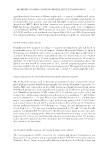
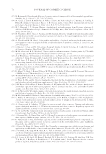
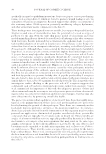
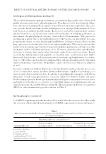
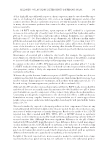
EFFECT OF NATURAL ANTIMICROBIALS ON THE SKIN MICROBIOME 87 Table XI Changes in Microbiome Population for Participant 12 Treated with Triclosan Microbiome population T0 T2 T3 Propionibacterium 1.82E+04 5.34E+03 8.31E+03 Staphylococcus 3.66E+03 8.27E+02 1.86E+03 Aerobacillus 1.07E+02 2.20E+01 8.00E+01 Corynebacterium 4.54E+02 1.22E+02 5.17E+02 Streptococcus 1.07E+03 1.58E+02 8.70E+02 Values expressed in cfu/mL at each timepoint. Table XII Changes in Microbiome Population for Participant 13 Treated with Water Microbiome population T0 T2 T3 Propionibacterium 1.93E+04 2.56E+03 1.18E+03 Staphylococcus 4.40E+01 0.00E+00 2.80E+01 Aerobacillus 4.28E+02 2.80E+01 2.10E+01 Corynebacterium 1.07E+03 1.80E+02 3.70E+01 Streptococcus 1.35E+03 2.37E+02 4.90E+01 Values expressed in cfu/mL at each timepoint. DHMRI statements of work: ALCLLC-105 DNA extraction from skin swabs and ALCLLC-106 16S sequencing on DNA extracted from skin swabs. Under the conditions of this in vivo human skin microbiome assay, two of the antimi- crobial extracts increased the benefi cial bacteria in the participants’ skin area studied, while decreasing the presence of Propionibacterium sp. Lactobacillus ferment decreased all the bacteria genus found in the participants’ skin area, compared with triclosan as the positive control and water as the negative control. After completion of the treatment with the products, Propionibacterium sp. reappeared in the skin of the participants treated with the antimicrobial extracts. The benefi cial bacteria Staphylococcus sp. and Corynebacterium sp. continued increasing after completion of treatment. By increasing the populations of benefi cial bacteria and decreasing the population of Propionibacterium sp. (commensal bacteria associated with the development of acne), this present study demonstrates the potential of natural antimicrobials to promote a balanced skin micro- biome. The complexity of the skin microbiome is a relatively new area of research in the cosmetic industry. Since the discovery of microbes on the human body, information on the micro- bial population has been reported however, the role of microbial population in skin health is yet to be fully understood. This study adds to the understanding of several dominant microorganisms that, such as Propionibacterium and Staphylococcus spp., are com- mon components of the skin microbiome and provides insight on the effect of topical application of antimicrobial peptides on the microfl ora of the skin. Although traditional preservatives may introduce inhibiting factors that directly infl uence the balance of the skin microbiome, the use of natural antimicrobial peptides may serve as a novel approach to maintaining and promoting healthy skin microbiota. However, further metagenomics analysis is needed to reveal the complex functions and interactions of these antimicrobial extracts and the skin microbiome, as well as the complex functions and interactions
Purchased for the exclusive use of nofirst nolast (unknown)
From: SCC Media Library & Resource Center (library.scconline.org)