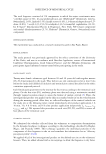
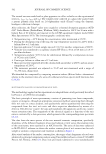
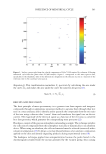
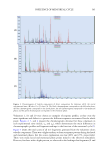
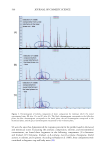
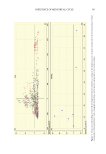
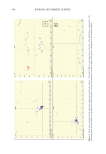
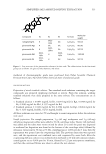
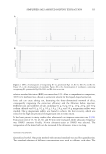
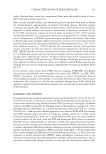
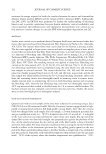
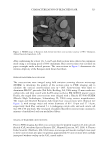
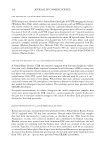
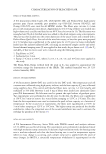
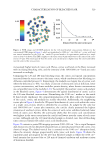
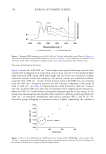
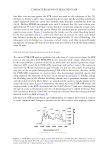
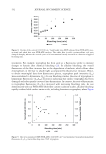
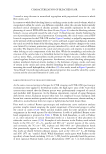
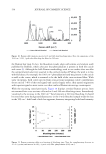
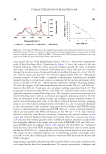
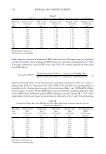
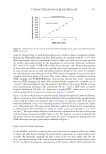
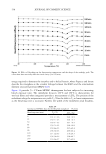
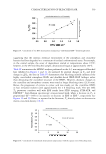
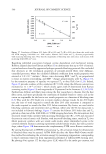
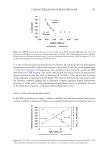
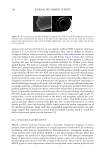
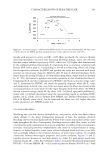
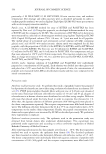
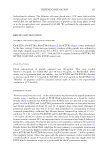
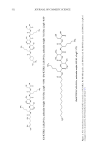
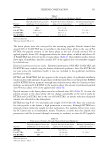
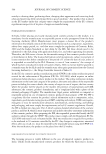
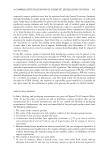
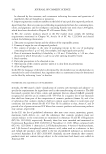
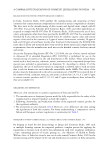
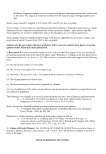
Figure 6. Total scores obtained in the principal components analysis for subject 1 (A) and 19 (B) for each menstrual cycle phase. Ovu (light blue) corresponds to the ovulatory phase Fol (dark blue) corresponds to the follicular phase Lut (red) corresponds to the luteal phase Men (green) corresponds to the menstrual phase. 508 JOURNAL OF COSMETIC SCIENCE

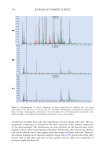
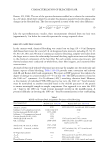
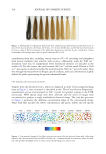
509 INFLUENCE OF MENSTRUAL CYCLE Several factors like participants’ nutrition, metabolite release, and biotransformation products in the skin (sweat), might have interfered in the analysis causing the high variability detected among the individuals. Sweat was one of the most important interferents in the analysis, mainly for subject 20 during the luteal phase. A large part of the fragrance components for subject 20 were masked by fatty acid peaks (data not shown). When we analyzed the chromatograms separately by individual, a specific pattern in the aromatic compounds release could be observed for each subject associated with the menstrual cycle. An example of these internal cycles is presented in Figure 6. Subject 1 showed a clear pattern for fragrance emission segmented according to the cycle phase, in which the follicular and ovulatory phases showed similar responses, while the luteal and menstrual phases showed a distinct emission pattern (Figure 6A). On the other hand, for subject 19 no defined pattern could be identified with the menstrual phase. In this case, there was a slight similarity between the follicular and luteal phases and between the menstrual and ovulatory phases. The final results led us to understand that the menstrual cycle induces differences on skin conditions, influencing the behavior of applied fragrances. Still, we could not detect which exact ingredients were more susceptible to hormone oscillations. There was a distinct pattern in aromatic compounds release specific to each subject and associated with the menstrual cycle phase. Therefore, we can infer that sex hormones exert a unique effect on each participant’s skin without a generic model concerning population (behavior was found to be individual). ACKNOWLEDGMENTS This work was sponsored by Givaudan® do Brazil and the University of São Paulo. REFERENCES (1) Brasil G do. Curso de perfumaria, letter, São Paulo (2002). (2) R. Schueller and P. A. Romanowski, Essência das composições aromáticas, Cosmet Toilet, 17, 50–5 (2005). (3) C. S. Pereira, A. R. Baby, T. M. Kaneko and M. V. R. Velasco, Sensory approach to measure fragrance intensity on the skin, J Sens Stud, 24, 871–901 (2009). (4) C. S. Cortez-Pereira, A. R. Baby and M. V. R. Velasco, Review article: Fragrance technology for the dermatologist - a review and practical application, J Cosmet Dermatol, 2, 230–41 (2010). (5) C. S. Cortez-Pereira, “Study of the substantivity of an aromatic composition on the skin as a function of the menstrual cycle.” Master Dissertation, School of Pharmaceutical Sciences, University of Sao Paulo, 2009. (6) A. Shah, K. H. Sathyanarayana Rao, B. Ruedi, and G. Magrini, Determination of fertility interval with ovulation time estimation using differential skin surface temperature (DST) measurement, Fertil. Steril, 41, 771–774 (1984). (7) T. Hummel, R. Gollisch, G. Wildt, and G. Kobal, Changes in olfactory perception during the menstrual cycle, Experientia, 47, 712–5 (1991). (8) J. Haryell, I. Hussona-Saeed, and I. Maibach, Changes in transepidermal water loss and cutaneous blood flow during the menstrual cycle, Contact Dermatitis, 27, 294–301 (1992). (9) M. G. Shah and H. I. Maibach, Estrogen and skin, Am J Clin Dermatol, 2, 143–50 (2001). (10) R. L. Doty, W. E. Brugger, P. C. Jurs, M. A. Orndorff, P. J. Snyder, and L. D. Lowry, Intranasal trigeminal stimulation from odorous volatiles: Psychometric responses from anosmic and normal humans, Physiol Behav, 20, 175–85 (1978).
Purchased for the exclusive use of nofirst nolast (unknown)
From: SCC Media Library & Resource Center (library.scconline.org)