510 JOURNAL OF COSMETIC SCIENCE (11) T. Schemper, S. Voss, and W. S. Cain, Odor identification in young and elderly persons: sensory and cognitive limitations, J Gerontol, 36, 446–52 (1981). (12) J. C. Stevens and W. S. Cain, Old-age deficits in the sense of smell as gauged by thresholds, magnitude matching, and odor identification, Psychol Aging, 2, 36–42 (1987). (13) D. A. Leopold, D. E. Hornung, and S. L. Youngentob, “Olfactory loss after upper respiratory infection,” in Smell and taste in health and disease, (Raven Press, New York, NY, 1991), pp. 731–734. (14) J. M. Weffenbach, “Chemical senses in aging,” in Smell and taste in health and disease, (Raven Press, New York, NY, 1991), pp. 369–378. (15) L. M. Nováková, J. Havlíček, and S. C. Roberts, Olfactory processing and odor specificity: a meta- analysis of menstrual cycle variation in olfactory sensitivity, Anthropol Rev, 77, 331–45 (2014). (16) C. Allen, J. Havlíček, and S. C. Roberts, Effect of fragrance use on discrimination of individual body odor, Front Psychol, 6, 1–7 (2015). (17) M. Schudel and C. Quellet, Givaudan Memorandum Perfume Substantivity, (2004). (18) A. Baydar, T. Mcgee, and K. L. Purzicky, Skin odor value technology for fragrance performance optimization, Perfum Flavorist, 20, 45–53 (1995). (19) S. C. Matos, “Analysis of chemical composition and sensory acceptance of fragrance of male Buritizeiro flower (Mauritia flexuosa L.f. Arecaceae).” Master Dissertation, Dom Bosco Catholic University, 2017. (20) M. R. B. Franco and N. S. Janzantti, “Avanços na metodologia instrumental da pesquisa do sabor,” in Aroma e sabor de alimentos: temas atuais, (Varela, São Paulo, Brazil, 2003), pp. 17–28. (21) S. A. Saraiva, “Characterization of raw materials and derived products of fatty origin by mass spectrometry.” Master Dissertation, Campinas State University, 2008. (22) J. H. Gross, Mass Spectrometry - A Textbook. (Springer Berlin Heidelberg, Berlin, 2004). (23) S. Wold, K. Esbensen, and P. Geladi, Principal component analysis, Chemom Intell Lab Syst, 2, 37–52 (1987). (24) M. T. Scotti, Estudo de CADD com vistas a Proposição de Farmacóforo de um conjunto de Flavonóides como agentes Antichagásicos e Leishmanicidas Potenciais, internal document, (2008). (25) W. Wardencki, M. Michulec, and J. Curylo, A review of theoretical and practical aspects of solid-phase microextraction in food analysis, Int J Food Sci Technol, 39, 703–17 (2004). (26) C. S. C. Costa, “Study of the instrumental and sensorial correlation of an aromatic composition applied to the skin as a function of the menstrual cycle.” Doctorate Thesis, School of Pharmaceutical Sciences, University of Sao Paulo, 2013.

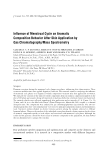
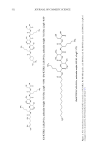
511 Address all correspondence to Miao Chen, 530611671@qq.com Simplified Salt-Assisted Solvent Extraction for the Determination of Five Saponins in Toothpastes Using High Performance Liquid Chromatography with Ultraviolet Detector MIAO CHEN, SHIXIONG ZHOU, KUNYUN HE AND YING GAO Technology Research Center, Health Product Division, Yunnan Baiyao Group Co., Ltd., Kunming, Yunnan 650217, China (M.C., Y.G.) Analysis and Testing Center, Pharmaceutical Division, Yunnan Baiyao Group Co., Ltd., Kunming, Yunnan 650500, China (S.Z., K.H.) Accepted for publication July 13, 2021. Synopsis An analytical method for the simultaneous determination of notoginseng R1 (R1), ginsenoside Rg1 (Rg1), ginsenoside Re (Re), ginsenoside Rb1 (Rb1), and ginsenoside Rd (Rd) in different types of silica matrix toothpaste samples has been developed. The determination was performed by high performance liquid chromatography (HPLC) with ultraviolet (UV) detector. The best chromatographic separation was obtained under the following conditions: C18 column was set at 30°C and gradient elution of acetoni- trile with water as mobile phase pumped at 1 mL·min−1. The detection wavelength was set at 203 nm. Toothpastes were vortex-extracted by methanol with anhydrous magnesium sulfate, ultrasonic extraction was set for 30 min at 35 Hz, centrifugation was set at 4,000 rpm for 5 min, and then the supernatant was poured into the evaporating dish. The previous extraction was repeated once, the supernatant was com- bined twice and evaporated by water bath. Quantification was carried out by using the external standard one point method. The method was satisfactorily applied to 17 samples from different manufacturers and batches containing saponins. The spiked recoveries of the five saponins were 84–89%, 91–101%, 85–89%, 89–96%, and 89–96%, respectively. Good repeatability (1.6–5.6%) was obtained. Good analytical features, as well as handleability, make the presented method suitable to carry out the quality control of the finished toothpaste products. INTRODUCTION Panax notoginseng is a traditional Chinese medicine, native to the subtropical mountain forests of Yunnan and Guangxi provinces (1). Modern studies have shown that the saponins in Panax notoginseng are one of its main medicinal ingredients, among which five saponins, namely notoginseng R1, ginsenoside Rg1, Re, Rb1, and Rd, are the main components of Panax notoginseng, accounting for about 80% of the total saponins content (2). J. Cosmet. Sci., 72, 511–518 (September/October 2021)
Purchased for the exclusive use of nofirst nolast (unknown)
From: SCC Media Library & Resource Center (library.scconline.org)