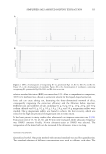
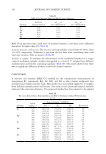
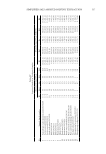
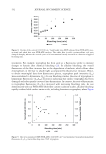
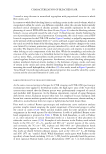
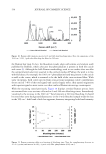
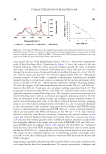
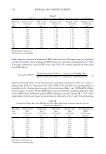
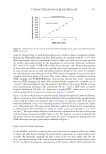
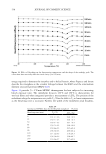
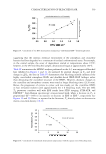
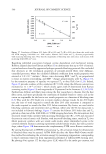
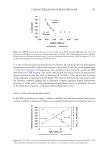
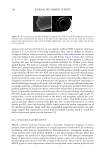
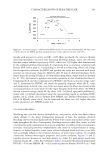
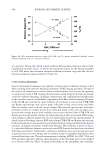
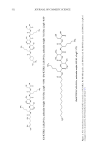
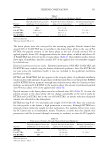
554 JOURNAL OF COSMETIC SCIENCE barrier. Pal-KTTKS (cLogP: 3.72) is a peptide conjugate with more lipophilicity in comparison to KTTKS. However, its molecular weight (802 Da) is more than that of KTTKS (18) and its permeation across the SC can still be hindered by diffusion. Our results showed that Pal-KTTKS was lost from the donor phase and did not appear in the receptor phase, whereas the number of other peptides in the donor phases did not change considerably. Since there was no sign of peptide in the receptor phase, it might be concluded that Pal-KTTKS was trapped in the epidermis and, considering its lipophilicity and membrane model data, it was possibly trapped in the SC intercellular lipids. The results are in good agreement with the membrane model data as described earlier. Estimated peptide retentions by n-hexadecane and epidermis were about 20% and 48% of the applied dose respectively. Palmitic acid, a long-chain fatty acid with a linear structure, is a component of intercellular lamellar lipid matrix of human SC (19) and fits well into this structure. KTTKS also has a linear structure, making entrapment of Pal-KTTKS in the lamellar structure of the SC is a possibility. This finding agrees with the suggestion by Moghimi et al. about the accommodation of fluorouracil and straight-chain alcohol terpene complexes within the lipid bilayers (13). Choi et al. also showed that Pal-KTTKS was trapped by mouse skin in the amount of 14.6% of the applied amount (4), which is in reasonable agreement with the present study. In addition to tendency (lipophilicity), diffusion also affects the permeation of compounds through skin. Diffusion depends on different parameters including molecular weight and structure. Cit-KTTKS was the only peptide that was detected in the receptor phase with estimated permeability coefficient of about 7.3 × 10⁻⁴ cm/h that is more than its estimated kp in the membrane model study. It possesses a molecular weight of 715.9 Da and cLogP of −0.08. This conjugate is less lipophilic than Pal-KTTKS, but smaller in size. Citronellic acid has a 10-carbon chain and is shorter than palmitic acid (16 carbons in length). This lower molecular weight (around 90 Da) could make this conjugate a better candidate for permeation, considering that diffusion through skin is non-Stokesian and is highly sensitive to molecular weight and structure. Finally, much data are available on enhancement effects of terpenes toward permeation of drugs across the skin (12,13) or other biological barriers including burn eschar (20,21) and tumor cells (22) by different mechanisms such as membrane disruption and complexation. Enhancement effects of terpenes toward permeation of 5-fluorouracil (a hydrophilic molecule) across human skin depends on degree of complexation and solubilization enhancement of terpenes (13). Considering these and our present results, it seems that terpenes are good candidates for increasing permeation of peptides across the skin either by conjugation or other strategies. CONCLUSIONS These results suggest that terpene conjugation might be a good approach to increase peptide skin permeation. Data also suggest that lower molecular weight conjugates with optimized polarity and proper structure might offer a better choice than conjugates in which only polarity is considered. Our data also show that PVDF-filled hexadecane might provide a good model for the screening of peptide permeation and SC retention.

555 TERPENE CONJUGATION ACKNOWLEDGMENT This paper is a part of a PhD thesis by Seyedeh Maryam Mortazavi at the School of Pharmacy, Shahid Beheshti University of Medical Sciences (SBMU), Tehran, Iran and was financially supported by SBMU. REFERENCES (1) F. Gorouhi and H. I. Maibach, Role of topical peptides in preventing or treating aged skin, Int. J. Cosmet. Sci., 31, 327–345 (2009). (2) M. P. Lupo and A. L. Cole, Cosmeceutical peptides, Dermatol. Ther., 20, 34–349 (2007). (3) R. R. Jones, V. Castelletto, C. J. Connon, and I. W. Hamley, Collagen, Stimulating effect of peptide amphiphile C16–KTTKS on human fibroblasts, Mol. Pharm., 10, 1063–1069 (2013). (4) Y. L. Choi, E. J. Park, E. Kim, D. H. Na, and Y. H. Shin, Dermal stability and in vitro skin permeation of collagen pentapeptides (KTTKS and palmitoyl-KTTKS), Biomol. Ther., 22, 321–327 (2014). (5) C. Lu, B. M. Kim, D. Lee, M. h. Lee, J. h. Kim, H. b. Pyo, and K. Y. Chai, Synthesis of lipoic acid- peptide conjugates and their effect on collagen and melanogenesis, Eur. J. Med. Chem., 69, 449–454 (2013). (6) H. I. Choi, H. j. Kim, J. I. Park, E. H. Shin, D. W. Kim, and S. S. Kim, Design and efficient synthesis of novel ascorbyl conjugated peptide with high collagen biosynthesis stimulating effects, Bioorg. Med. Chem. Lett., 19, 2079–2082 (2009). (7) M. S. Kim, E. J. Park, and D. H. Na, Synthesis and characterization of monodisperse poly(ethylene glycol)-conjugated collagen pentapeptides with collagen biosynthesis-stimulating activity, Bioorg. Med. Chem. Lett., 25, 38–42 (2015). (8) D. A. Guglielmi, A. M. Martinelli, N. C. Rissi, E. M. Cilli, C. P. Soares, and L. A. Chiavacci, Synthesis of the peptide ac-wahx-kttks and evaluation of the ability to induce in vitro collagen synthesis, Protein. Pept. Lett., 23, 544–547 (2016). (9) J. P. Atkinson, H. I. Maibach, and N. Dragicevic, “Targets in dermal and transdermal delivery and classifi cation of penetration enhancement methods,” in: Percutaneous Penetration Enhancers Chemical Methods in Penetration Enhancement, N. Dragicevic-Curic, H. I. Maibach. Eds. (Springer-Verlag Berlin Heidelberg, Berlin 2015), pp. 102. (10) H. Moghimi, A. Williams, and B. Barry, A lamellar matrix model for stratum corneum intercellular lipids IV. Effects of terpene penetration enhancers on the permeation of 5-fluororacil and oestradiol through the matrix, Int. J. Pharm., 145, 49–59 (1996). (11) H. Moghimi, A. Williams, and B. Barry, A lamellar matrix model for stratum corneum intercellular lipids. V. Effects of terpene penetration enhancers on the structure and thermal behaviour of the matrix. Int. J. Pharm., 146, 41–54 (1997). (12) H. R. Moghimi, A. C. Williams, and B. W. Barry, A lamellar matrix model for stratum corneum intercellular lipids III. Effects of terpene penetration enhancers on the release of 5-fluorouracil and oestradiol from the matrix, Int. J. Pharm., 145, 37–47 (1996). (13) H. R. Moghimi, A. C. Williams, and B. W. Barry, Enhancement by terpenes of 5-fluorouracil permeation through the stratum corneum: model solvent approach. J. Pharm. Pharmacol., 50, 955–64 (1998). (14) S. M. Mortazavi, F. Kobarfard, H. I. Maibach, and H. R. Moghimi, Effect of palmitic acid conjugation on physicochemical properties of peptide KTTKS: A preformulation study. J. Cosmet. Sci., 70, 299–312 (2019). (15) F. Wohnsland and B. Faller, High-throughput permeability pH profile and high-throughput alkane/ water log P with artificial membranes, J. Med. Chem, 44, 923–930 (2001). (16) V. Kassis and J. Søndergaard, Heat separation of normal human skin for epidermal and dermal prostaglandin analysis, Arch. Dermatol. Res., 273, 301–306 (1982). (17) ACDLabs. ACD/ChemSketch.12.01 edn. Advanced Chemistry Development, Inc., Toronto, ON, Canada, www.acdlabs.com, 2009. (18) P. Palladino, V. Castelletto, A. Dehsorkhi, D. Stetsenko, and I. Hamley, Conformation and self-association of peptide amphiphiles based on the KTTKS collagen sequence, Langmuir, 28, 12209–12215 (2012). (19) H. R. Moghimi, A. C. Williams, and B. W. Barry, A lamellar matrix model for stratum corneum intercellular lipids. I. Characterisation and comparison with stratum corneum inter-cellular structure. Int. J. Pharm., 131, 103–115 (1996).
Purchased for the exclusive use of nofirst nolast (unknown)
From: SCC Media Library & Resource Center (library.scconline.org)