562 JOURNAL OF COSMETIC SCIENCE be observed by the consumer and a statement indicating the names and quantities of ingredients that are hazardous or poisonous. 8. Import registration certificate number on the label of unit pack (for imported products). Apart from that, there are some special labeling requirements for hair dyes containing dyes, colors, and pigments, and for toothpaste containing fluoride (not more than 1,000 ppm), which have been described in Chapter VI of Cosmetic Rules, 2020. In EU, the cosmetic products placed in the EU market must comply the labeling requirements mentioned in Chapter VI, Article 19 of EC No. 1223/2009 and should include the following information: 1. The name or registered name and the address of the responsible person. 2. Country of origin (in case of imported product). 3. Net content of product at the time of packaging (except in the case of packaging containing less than 5 g or 5 mL, free samples, and single-application packs). 4. Date of minimum durability (if durability is 30 mo.). If durability is 30 mo., then duration for which the product is safe to use after opening should be listed. 5. Batch number. 6. Particular precautions to be observed in use. 7. The function of the cosmetic product unless it is clear from its presentation. 8. A list of ingredients. In the EU, the language of the label is determined by the member state in which product is intended to be used or marketed. Any ingredient that is a nanomaterial must be mentioned on the label by indicating “nano” in bracket. PROHIBITED AND ALLOWED LIST OF INGREDIENTS In India, the BIS issued a draft “classification of cosmetic raw materials and adjuncts” to specify the requirements for ingredients used in the manufacturing of cosmetics. The BIS has issued a positive list of dyes, colors, and pigments that are allowed (GRAS: generally recognized as safe) for use in cosmetics (IS: 4707 Part I) a negative list of raw materials that shall not form part of the composition of cosmetic products (Annex A) and a list of substances that cosmetic products shall not contain except subject to restrictions and conditions laid down (Annex B) (IS: 4707 Part II). In addition to that, Annex C and D provide a list of preservatives and UV filters that cosmetic products and sunscreen products may contain, respectively. In the EU, the list of prohibited substances that may cause cancer, mutations, genetic mutations, birth defects, etc., and the substances that cosmetic products must not contain (subject to the restrictions) are mentioned in Annexure II and III of Regulation (EC) No. 1223/2009, respectively. Recently, these lists were amended and mentioned in Commission Regulation (EU) 2020/1683 of November 12, 2020. When compared with (EC) No. 1223/2009, 3 chemicals (1,2,4-Trihydroxybenzene, 4-Amino-3-hydroxytoluene, and 2-[(4-Amino-2-nitrophenyl)-amino]-benzoic acid), when used as a substance in hair and eyelash dye products, were added to the list of prohibited substances as mentioned in revised Annexure II of (EU) 2020/1683. Similarly, six new chemicals that cosmetic products must not contain (except subject to the restrictions laid down) were added in Annexure III.

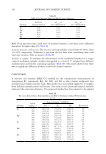
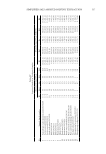
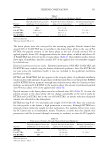
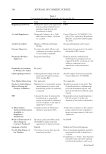
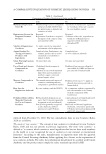
563 A COMPARATIVE EVALUATION OF COSMETIC LEGISLATIONS IN INDIA REGULATIONS FOR THE USE OF HEAVY METALS IN COSMETICS In India, Cosmetics Rules, 2020 prohibit the manufacturing and importing of those cosmetics that contain mercury compounds as such lead or arsenic compounds as colorants. The dyes used in the manufacturing of skin creams and lipstick must comply with IS 4707 (Part I) as per the Schedule Q of Cosmetics Rules, 2020 and other ingredients are required to comply with IS 4707 (Part II). Cosmetics Rules, 2020 restricts the use of dyes, colors, and pigments other than those specified by the BIS (IS: 4707 Part I as amended) and Schedule Q. It also indicates the permissible limits for synthetic organic colors and natural organic colors used in the cosmetics as 2 ppm of arsenic (from arsenic trioxide), 20 ppm of lead, and 100 ppm of total heavy metals other than lead. Unfortunately, the IS 6608:2004 states that if all the raw materials have been tested for heavy metals and comply with the requirements, then the manufacturer need not test the finished cosmetic for heavy metals and arsenic. As per the European Regulations (EC) No. 1223/2009, the use of heavy metals enlisted in Annexure II of amended Regulation (EU) 2020/1683 is prohibited for use in the manufacturing of cosmetics for sale and distribution in EU market. These include heavy metals such as lead, mercury, cadmium, arsenic, antimony and its compounds (except those special cases included as preservatives in Annexure V). According to Article 17 of the regulation, the use of such heavy metals or compounds is allowed only to such an extent that is safe for human use and technically unavoidable under GMPs. The safety of the product must be demonstrated in the safety assessment part of the PIF. It is reported that if the content of lead, cadmium, mercury, and arsenic is more than 2.0, 0.1, 0.1, and 0.5 ppm in various cosmetic products and 0.5, 0.1, 0.1, and 0.5 ppm in toothpaste, then, technically, they are avoidable (11). SIMILARITIES AND DIFFERENCES There are a few similarities in cosmetic regulations of India and the EU: 1. The manufacturer or designated person would be fully responsible for the safety of the manufactured or imported product in both the markets. 2. Follow-up, observation, and verification of safety of the registered cosmetic product by the regulatory authority. 3. No restrictions on sales channels (12,13). However, a few differences also exist among the legislations of both the countries. For better understanding, a comparative view of Indian and European cosmetic regulations is summarized in Table I. HIGHLIGHTS OF NEW COSMETIC RULES, 2020 VERSUS DRUGS AND COSMETIC RULES, 1945 By keeping in mind the few shortcomings in Drugs and Cosmetics Rules, 1945 such as multiple licensing systems for imported products complex process for applying for registration or licenses lack of safety data information with state regulatory authorities a time consuming process of license grating etc., the Ministry of Health & Family Welfare, Govt. of India has issued a new set of rules named Cosmetic Rules, 2020 for the manufacturing and the import for the sale and distribution of cosmetics in India separately,
Purchased for the exclusive use of nofirst nolast (unknown)
From: SCC Media Library & Resource Center (library.scconline.org)