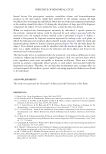
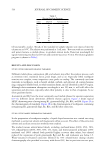
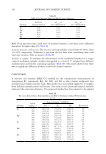
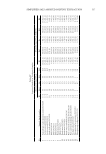
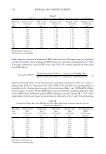
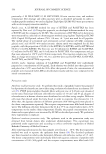
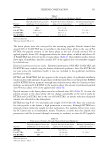
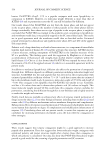
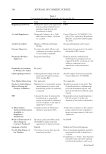
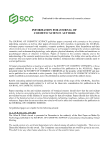
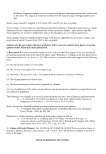
564 JOURNAL OF COSMETIC SCIENCE (Continued) Table I Comparison of Cosmetic Regulations in India and the EU India EU Regulating Authority CDSCO for import and registration State Licensing Authorities for manufacturing for sale and distribution in India. EMA Act and Regulations Drugs and Cosmetics Act, 1940, and Cosmetics Rules, 2020 wef. 15.12.2020 Council Directive 76/768/EEC (27th July 1976), replaced by Regulation (EC) No. 1223/2009 on November 30, 2009 Under/Created By Ministry of Health and Family Welfare European Parliament and Council Primary Objective To ensure the safety, efficacy, and conformity of cosmetic products to state quality standards High-level of protection for the safety and health of EU citizens Premarket Product Approval Required (from SLA) Products must be notified before marketing, but preapproval is not required (with the exception of color additives, sunscreen active ingredients, and preservatives) Premarket Assessment of Product for Safety Required Required Labeling Requirements Labeling should comply with the provisions of Cosmetics Rules, 2020 and the BIS Should comply declarations issued by Council Directive 76/768/EEC Post-Market Reporting Not applicable Not applicable Product’s Safety Report (Before Placing the Product in Market) Manufacturer or responsible person should maintain a report with himself and produce to authority, if required Should be prepared in two parts: Part A (detailed product’s information), & Part B (assessment report), and must be provided to authority upon request PIF A dossier file must be prepared by manufacturer or responsible person and should be submitted to State authority at the time of applying for a license Responsible person should maintain a PIF till at least 10 y after the dispatch of last batch in the market Is There Safety/ Technical Information Available to Regulatory Authorities? Complete technical information should be provided to SLA A full technical dossier on the cosmetic product must be kept available for inspection upon request of the local authorities Mode of Information of Any Change in Cosmetic Product/S By online portal and offline mode (SUGAM: an online portal for registration of imported items) By CPNP Language of Label English English and National Language Use By Date/Expiry of the Product Use before or use by date must be mentioned on label Date of minimum durability should be mentioned on label if durability is 30 mo. If durability is 30 mo., then duration should be mentioned after opening for which the product is safe to use

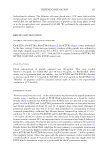
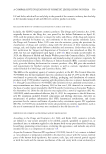
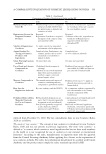
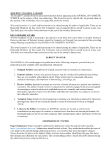
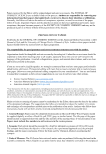
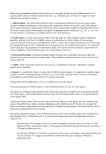
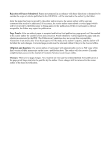
565 A COMPARATIVE EVALUATION OF COSMETIC LEGISLATIONS IN INDIA enforced from December 15, 2020. The key amendments done in new Cosmetic Rules, 2020 are as follows. The concept of “new cosmetics.” The concept of new cosmetics is introduced in new Cosmetic Rules, 2020 and was not present in previous regulations. The term “new cosmetic” is defined as “a cosmetic which contains a novel ingredient that has not been used anywhere in the world or is not recognized for use in cosmetics in any national or international literature.” According to the rules, manufacturers or importers must seek the approval from the Central Licensing Authority before applying for a license or the registration of new cosmetics in India. The safety data information should made be available with Central Authority and the product must comply the safety standards specified by BIS. Table I (Continued) Comparison of Cosmetic Regulations in India and the EU India EU Manufacturing License Given By Manufacturing license is compulsory and given by SLA (CDSCO does not grant license to manufacture cosmetics in India) “Certificate of manufacture” equivalent to “Certificate of free sale” is given by state member country Registration License for Imported Cosmetic Products Required Registration Certificate is required for import of all cosmetic items and issued by CDSC Required ‘Certificate of free sale’ (equivalent to Certificate of Manufacture) is required to freely distribute throughout EU Validity of Registration Certificate 5 y unless canceled or suspended and remains valid in perpetuity — Animal Studies For Testing of Cosmetic Products And Ingredients Completely ban. Furthermore, any cosmetic product that is tested on animals is not allowed to import in India Completely ban (in vitro studies are allowed) Safety Warning/Cautions on Label On inner label only On inner and outer label Use of Lead and Arsenic Compounds in Cosmetics -Prohibited (for the purpose of coloring) -Allowed in traces with maximum limit when used as permitted synthetic organic colors and natural organic colors Prohibited, but traces are allowed if unavoidable by GMPs and does not pose any risk to human health Mercury Compounds in Cosmetics The manufacturing and import of cosmetics containing mercury compounds is prohibited in India Prohibited, but traces (≤1 ppm) are allowed does not pose any risk to human health How Are the Regulations Enforced? By state authority and the CDSCO By a competent authority appointed by each state member in its country with the cooperation of EU Commission Prohibited/Allowed Raw Materials Chemicals for Use in Cosmetic Products BIS has divided chemicals in two parts: Part I Colorants (generally recognized as safe and allowed) Part II enlist generally recognized as safe chemicals, allowed preservatives and UV filters 2,442 substances are banned and listed in Annexure II of cosmetic regulations Restricted and allowed ingredients (Colorants, conservative agents and UV filters) are listed in Annexure III and IV-VI, respectively
Purchased for the exclusive use of nofirst nolast (unknown)
From: SCC Media Library & Resource Center (library.scconline.org)