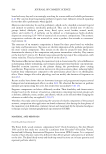
566 JOURNAL OF COSMETIC SCIENCE Import and registration of cosmetics. Though no major change was made to the registration process of imported items, a significant reduction in registration fees was made. Additionally, the new rules streamline the process for applying for a registration certificate. The importer can make a single license application and seek a single registration certificate for the import of one or more cosmetics manufactured by the same manufacturer in a single manufacturing unit. The new rules also prohibit the import of cosmetics if: 1. The manufacturing, sale, or distribution of the cosmetic in question is prohibited in the country of origin. 2. The “use before” or “use by” date is less than 6 mo. from the date of import. 3. The cosmetic contains hexachlorophene. 4. The cosmetic has been tested on animals after November 12, 2014. The manufacturing of cosmetics for sale or distribution. Under new rules, a self-declaration needs to be furnished by the applicant confirming compliance with GMPs and other prescribed requirements. The licensing process remain the same in the case of manufacturing of cosmetics for sale and distribution in India. Quality of cosmetics and recall. The new rule prohibits the manufacturing or import of cosmetics that do not comply with the safety and quality standards set by Cosmetics Rules, 2020 and BIS. If the manufacturer or responsible person believes that the product placed in the market is likely to pose a health risk to humans, the product must be recalled immediately, and the same information should be reported to the state or the Central Licensing Authority with valid reasons. CONCLUSION Despite the difference in Cosmetic Regulation of India, EU, or any other country, the main objective of all remains the same, human safety. Unlike in the EU, premarket approval is required for all the cosmetic products in the Indian market. The new cosmetics rules have consolidated, streamlined, and upgraded the safety and regulatory requirements to import or manufacture cosmetic products for sale and distribution. The new rules improved the accountability and responsibility of importers and manufacturers to ensure the safety and quality of their cosmetic products. The registration and licensing system became more user-friendly with reduced fees and more validity. SUGAM, an online portal for the registration to import and sell cosmetics in India, has made the overall process easy, more efficient, and more transparent with a tracking system. There have been continuous efforts to harmonize and align regulations globally through the International Cooperation on Cosmetic Regulation (ICCR), which is the continuation of CHIC. REFERENCES (1) S. K. Chaudhri and N. K. Jain, History of cosmetics, Asian J. Pharma., 3, 164–167 (2014). (2) S. Stewart, Painted Faces: A Colourful History of Cosmetics, (Amberley Publishing Limited, UK, 2017). (3) L. C. Parish and J. T. Crissey, Cosmetics: a historical review, Clin. Dermatol., 6(3), 1–4 (1988). (4) F. Blanco-Dávila, Beauty and the body: the origins of cosmetics, Plast. Reconstr. Surg., 105(3), 1196–1204 (2000). (5) J. A. Witkowski and L. C. Parish, You’ve come a long way baby: a history of cosmetic lead toxicity. Clin. Dermatol., 19(4), 367–370 (2001).

567 A COMPARATIVE EVALUATION OF COSMETIC LEGISLATIONS IN INDIA (6) The Drugs and Cosmetics Act, 1940 and the Drugs and Cosmetics Rules, 1945. Published by the Ministry of Health and Family Welfare (Department of Health and Family Welfare), Government of India, accessed February 08, 2021, https://cdsco.gov.in/opencms/export/sites/CDSCO_WEB/Pdf- documents/acts_rules/2016DrugsandCosmeticsAct1940Rules1945.pdf. (7) European Council Directive 76/768/EEC on the approximation of the laws of the Member States relating to cosmetic products. Official Journal of the EU, July 1976 (L262, pp. 169–200), accessed February 08, 2021, https://eur-lex.europa.eu/LexUriServ/LexUriServ.do?uri=CONSLEG:1976L0768:20100301:en:PDF. (8) European Council, Regulation (EC) No. 1223/2009. Official Journal of the EU, December 2009 (L342/59), accessed February 08, 2021, https://ec.europa.eu/health/sites/default/files/endocrine_disruptors/docs/ cosmetic_1223_2009_regulation_en.pdf. (9) Cosmetic Rules, 2020. Published by the Ministry of Health and Family Welfare (Department of Health and Family Welfare), Government of India, accessed February 08, 2021, https://thc.nic.in/Central%20 Governmental%20Rules/e%20Cosmetics%20Rules,%202020.pdf. (10) B. J. Abdullah, R. Nasreen, and N. Ravichandran, A comparative study of cosmetic regulations in different countries of the world with focus on India, Int. J. Curr. Res. Rev., 4(11), 130–143 (2012). (11) B. Bund, Technically avoidable heavy metal contents in cosmetic products, J. Consum. Prot. Food Saf., 12, 51–53 (2017). (12) T. Srikanth, S. S. Hussen, A. Abha, S. G. Vasantharaju, and S. Gummudavelly, A comparative view on cosmetic regulations: USA, EU and INDIA, Der. Pharmacia. Lettre., 3(1), 334–41 (2011). (13) R. K. Raj and K. K. Chandrul, Regulatory requirements for cosmetics in relation with regulatory authorities in India against US, Europe, Australia and Asean countries, Int. J. Pharma. Res. Health Sci., 4(5), 1332–1341 (2016).
Purchased for the exclusive use of nofirst nolast (unknown)
From: SCC Media Library & Resource Center (library.scconline.org)