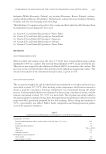
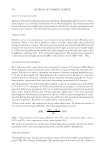
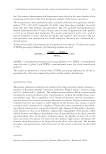
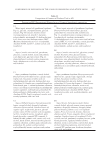
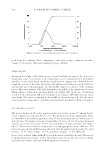
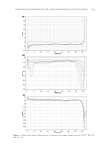
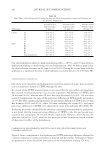
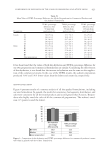
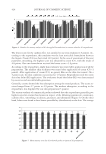
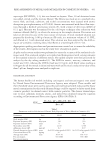
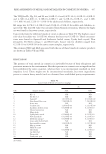
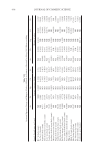
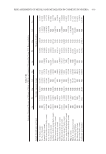
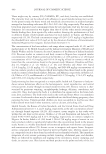
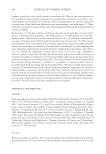
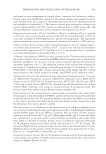
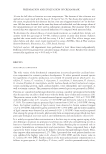
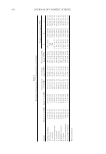
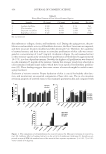
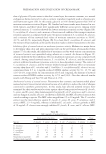
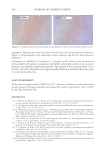
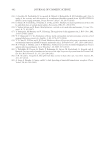
JOURNAL OF COSMETIC SCIENCE 420 good dispersion stability. Time, temperature, and other storage conditions can affect changes in the system, thus maintaining the proper stability. TURBISCAN TEST Analyzing the results of the Turbiscan test, it was found that the samples A—stored in a refrigerator—and C—stored at room temperature—were characterized by the highest stability. On the other hand, signifi cant destabilization changes were observed for the sample B—stored in the heater. Backscattered light intensity values decreased in the bot- tom and the top of the measuring cell. This profi le suggests occurrence of the creaming process. Moreover, variance of BS light intensity in the middle of the sample was observed, which indicates variation in emulsion droplet size (Figure 2B). In the case of emulsions stored at room temperature and in the refrigerator, the changes of BS light intensity curves were slight. The curves overlapped in the middle of the measuring cell thus the emul- sions showed no change due to coagulation and resizing of the droplets (Figure 2A and C). SKIN HYDRATION ANALYSIS The longest hydration effect after application was observed for cream (C5) among the fi ve tested commercial creams for AD (C1–C5). The hydration level was signifi cantly differ- ent from that of the remaining products after 30 min from application as well as after 60 and 120 min. The highest value was obtained after 30 min—74.6%. The value decreased over the successive test points: 99.3% was noted after 60 min, and after 120 min— 84.1%. These results indicate a high protection and appropriate atopic skin care. The lowest increase in skin hydration was observed after the application of cream (C4), after 30 min—27.3%, after 60 min—30.9%, and after 120 min—26.2% (Table III). In case of the analyzed balms, balm (B5) proved the most benefi cial for the skin. The increase in skin hydration was 68.4%, 72.8%, and 64.2%, respectively. The effect of the remain- ing balms was weaker, although without signifi cant variations. Figure 1. Droplets’ size and their distribution in own formulation.

COMPARISON OF EMULSIONS IN THE CARE OF DEMANDING AND ATOPIC SKINS 421 Figure 2. Delta backscattered light intensity as a function of a sample height stored at (A) 8°C, (B) 40°C, and (C) 23°C.
Purchased for the exclusive use of nofirst nolast (unknown)
From: SCC Media Library & Resource Center (library.scconline.org)