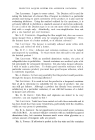
20 JOURNAL OF THE SOCIETY OF COSMETIC CHEMISTS silicon oxide or silica, (SiO2), boric oxide (B203) and phosphorus pentoxide (P•Os). Germanium oxide (GEO,) is an excellent glass former and if it were not so expensive it might have commercial use. Vanadium pentoxide (V•Os), arsenious oxide (As•O•.) and tellurium dioxide (TeO•.) a/so form glasses. While a large number of substances and mixtures can be obtained as glasses by proper manipulation, only a comparatively few compositions are suitable for glass manufacture on a commercial scale. All such contain a large proportion of the glass forming oxides mentioned above. Of these, phosphoric oxide is little used, because its glass forming properties are not so marked as those of the other two, and because glasses containing a high proportion of it are susceptible to attack by water or weak acids. Boric oxide is used extensively, but only as a constituent of silicate glasses, because when used without silica or in too high a proportion, the resulting glasses lack chemical durability. Commercial glasses are then almost exclusively silicate glasses, and the natural glasses are all silicates. The essential requirements of a commercial glass composition are that it be fluid enough at an industrially accessible temperature to be melted on a commercial scale, viscous enough to be worked above its freezing point, so that devitrification cannot take place, so viscous at its freezing point that it will not devitrify and that the resulting glass has physical properties and chemical durability suitable for the purpose for which it is intended. Silica is the outstanding glass forming oxide, for silica glass possesses in the highest degree the desirable qualities of freedom from devitrification, resistance to attack by water and acids, and low coefficient of expansion, leading to its well known resistance to thermal shock. If it were not so difficult to melt quartz, to free it from bubbles and work it, silica glass would be the most suitable material for most of the purposes to which •lass is put. The difficulty and cost of manufacture makes silica glass impossible to use for general purposes, however, and other oxides must be added to flux the silica and reduce the viscosity. It might be thought that natural glasses would repay imitation, obsidian, for example, being highly resistant to weathering and devitrification, but this cannot be reproduced by the glass manufacturer for various reasons, including the enormous viscosity of the melt. The most effective flux for silica is sodium oxide, usually added to the glass making batch in the form of anhydrous sodium carbonate. Sodium silicate glass (i.e., glass consisting of silica and sodium oxides only) is made in large quantity in the "soluble silicate" industry. It is readily dissolved by water, and some other oxide must be added to give it better chemical durability if a permanent glass is to be obtained. The oxide commonly added is calcium oxide ("lime") because it is cheap and efficacious. If too

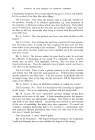
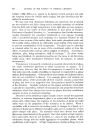
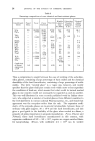
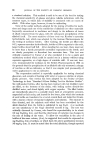
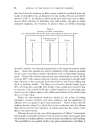
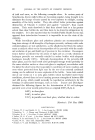
PRODUCTION AND PROPERTIES OF GLASS CONTAINERS 21 little lime is added, the glass is easy to melt but has poor chemical durability. Much of the Ancient Egyptian glass which has survived, probably represents their best product, yet their best was of so poor a quality as to be rejected by discriminating users today, because of its high content of sodium oxide. Greater durability is obtained by adding more lime, but too much results in a glass hard to melt and sure to devitrify. Increasing the quantity of silica has the same effect. The best composition for a pure soda-lime-silica glass is 73--74% Si02, 7--13% CaO, rest Na20. The glass manufacturer is, however, never dealing with pure soda-lime- silica glasses, but always with glasses containing small amounts of other constituents, which are introduced either deliberately, or accidentally by impurities in the batch ingredients or by corrosion of the refractories used in the melting furnaces. (Table 1.) Table 1 Percentage compositions of typical container and other glasses Soft Colourless Soda High Containers Constituent Window Tubing Press. Electric Thermometer Oxides Glass and Mercury Lamp Stem British U.S.A. U.S.A. Electric Vapour Tubing Tubing* Bulbs Lamp __ SiO2 73-400 72-10 71-82 70.12 54-25 56.60 55-700 13aOa -- 0.20 -- 0.78 7.50 0.20 -- T10• 0.040 -- -- } '( 22.00 • 0-80 0.030 AI20 a 0.750 1.90 1.40 2-58 f 0.220 FeaO a 0.045 0-05 0.07 -- 0'05 0.016 MnO ....... CaO 8.900 '( 10.40 8-90 5-40 13.25 -- 0-150 MgO 0-100 f 3-31 3.60 -- -- -- t3aO -- 0.30 -- -- 3-00 -- -- PbO ..... 30-20 31.400 Na•O 15.900 14-40 14.27 16-82 -- 5.10 0.100 1K•O 0.400 0-40 -- 0.35 -- 7'20 12.040 As•O• 0.010 ...... SO a -- 0-20 0.31 0.20 -- -- -- F• -- 0'20 ..... Coefficient of linear •---- probably 8-10 --• 9.60 4.60 9.10 probably expansion ca.9 x 10 • *This glass (or slight modifications of it) is the "English Lead Crystal Glass". Alumina (aluminium oxide), in small amounts, is a frequent constituent of glass and always has been, as one of the most important materials derived from refractory corrosion. It gives greater chemical durability, lower coefficient of expansion and greater freedom from devitrification. The deliberate addition of alumina was the result of research in 1887 by O. Schott,
Purchased for the exclusive use of nofirst nolast (unknown)
From: SCC Media Library & Resource Center (library.scconline.org)