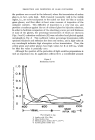
30 JOURNAL OF THE SOCIETY OF COSMETIC CHEMISTS yellow in circumstances where it would remain pink were the samples kept upright. The volume of the container is also a factor not taken into con- sideration, so that a small container is subjected to a more severe test. The same glass may fail in a small bottle and pass in a large one. This appears illogical at first sight, but it is a test of service conditions. The Swiss Pharmocopoeia, on the other hand, directs that the interior surface area of the container be calculated and a quantity of standard acid and indicator per unit area of surface added. Thereby, the quality of the glass itself is tested and the effect of container size eliminated. The International Pharmocopoeia 1959 "Rapid Test for Glass Containers. for Injection" attempts to overcome these objections by going into greater detail regarding the specification of the autoclave, of the distilled water and of the method of raising and lowering temperature, etc. Containers filled with distilled water are heated for one hour at top temperature, and supported in a rack in an upright position above the water level. Not less than three containers are treated from each batch, so that the total volume of water is not less than 250 ml. 100 ml from each container (or group of containers) is transferred, after the test, to a conical flask and titrated with sulphuric acid, using methyl red indicator. Two limits of alkalinity are given, depend- ing on whether the containers are of capacity up to or above 100 mi. Tests for the absence of arsenic and lead can also be carded out on the aqueous extract. The use of powders as a means of accelerating the attack on glass has much to recommend it, and powder methods have been adopted as standard tests by the English and German Societies of Glass Technology, and the American Society for Testing Materials and the National Formulary. Earlier editions of the British Pharmocopoeia, from 1932 onwards, included both the "surface test" previously described and a "crushed test", with the latter as final. (This was the result of the Report of a Sub-Committee of the Pharmocopoeia Commission, which had considered and tested the various methods used in foreign countries.) Later editions of the B.P. do not include the "crushed test", however, presumably owing to the introduction of surface treated glass. This has a resistant skin of silica or other material which enables the container to pass the surface test (thereby giving an indication of its behaviour under service conditions) but not necessarily the "crushed test". In the powder test, the preparation of the sample requires close attention to details of procedure, if results obtained in different laboratories are to be comparable. As with other methods, the attacking medium may be water, acid or alkali, and the amount of action by the solvent may be estimated by complete analysis of the solution, by evaporation of the solution to dryness and weighing the residue, by titrating the solution with acid thus estimatinõ

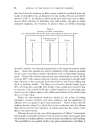
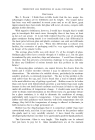
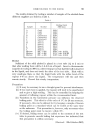
PRODUCTION AND PROPERTIES OF GLASS CONTAINERS 31 the amount of alkali that has been extracted, or by filtering and weighing the glass powder remaining undissolved. The latter has sometimes, however, shown, especially in the case of inferior glasses, a loss in weight smaller than the amount of dissolved alkali as determined by titration, thus confirming the conclusion that glass tends to absorb a considerable quantity of water. One of the A.S.T.M. powder tests is carried out as follows: The glass is crushed and 10 g, between 40 and 50 mesh screens, selected. This is autoclaved for 30 •ninutes at 121øC with distilled water, being contained in an Edenmeyer flask. The extract is titrated with sulphuric acid and methyl red, results being usually expressed as the volume of dilute acid required to neutrai/se. This may be converted to the amount of alkali extracted, expressed as a percentage of the original weight of the glass. It appears to be generally agreed that the powder test is a convenient method of comparing chemical durability of soda-I/me-silica types used for bottles and sheet glass, but it may give misleading results when applied to other types of glass. This is illustrated in Table $, which shows some results of Taylor and SmithL A series of commercial glasses, each of which appeared satisfactory as to .durability under the respective service conditions to which they were sub- jected, were placed in different orders of durability by each testing method employed. Glasses B and C were bottle glasses, D of lead tubing type (22% PbO), E a high lead containing glass (58% PbO), and F a high boric oxide glass (28ø,/0 B•O•). The fogging test consisted of exposing pieces of glass in the form of tubing alternatively to moist and dry air. The lower part of Table $ shows that even where glasses of a similar type, in this case Table 3 (a) x Durability Rating v Glass Type Powder Tests* B C D E F N/50 H•SO• 25øC 2 1 4 5 3 Water 25øC 5 2 3 1 4 Water 90øC 4 2 3 1 5 Fogging Test 5 1 4 3 2 *Sufficient 40/50 mesh powder to give 7,000 sq. cm. surface in contact with reagents for 4 hours. Table 3 (b) x Powder Tests on Lime Glasses Glass No. U.S.P. XIV U.S.P. XIV Acid Water 17 8.1 7.O 34 8.6 11.3 16 3.8 7.O
Purchased for the exclusive use of nofirst nolast (unknown)
From: SCC Media Library & Resource Center (library.scconline.org)