FLEXIBLE PACKS 53 runs. Do laboratory filled sachets suffice rather than production line samples ? THE LECTURER: It is not necessary to fill production line samples. In a static condition in the laboratory, it is possible to carry out tests on three- sided sachets which are sealed off on top and then evaluated, but it is important to carry out transit tests before embarking on a commercial production. The suitability of the sachets can only be determined if they have been transported through the country or submitted to an organization like PATRA, for transit tests. Packs can be subjected to pressure tests, and in these a 2" x 4" sachet should satisfactorily stand up to a static pressure of 100 lb. To give an indication of whether a sachet will stand up to travel or misuse, an impact test can be applied. In the early days, it was assumed because sachets were flexible and not brittle, that they did not require the same amount of packing care as one would give to a glass bottle. If you were to drop a container holding these sachets 3-4 feet, they would burst, unless there is some cushioning. Sufficient packing is therefore quite an important aspect commercially. MR. D. N. DAVIES: Polyethylene has excellent sealing properties, but heat sealing is critical. Have you any experience of high density poly- ethylene, and has it any advantages over ordinary polyethylene ? THE LECTURER: This material is applied on an extruder and there is some variation of performance. Once a suitable sealing temperature for high density polyethylene has been arrived at, this material retains its strength to a greater extent than low density polyethylene, but I am afraid that I cannot comment more fully since we have no actual experience. Trials are in hand. MR. R. H. CocKs: Regarding static pressure tests for evaluating efficiency of sealing when sachets are fresh, is there any degree of correlation to be established between results from such a test, and from the much longer term shelf tests ? THE LECTURER: These tests are only of real value in determining quality control. If they are conducted at regular intervals, they should show any variation which is occurring in the performance of the machine. They cannot, however, be taken as an indication of subsequent performance. Any very small flaws in sachets would probably not show up for three or four days, so the above tests are merely for quality control and usually indicate whether a machine is performing to a reasonable standard. Any build-up on the platens can certainly give an insulating effect, and a local area of bad sealing would be shown up in static tests.

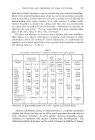
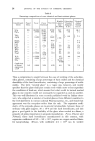
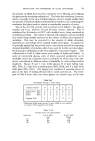
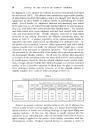
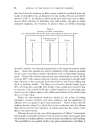
54 JOURNAL OF THE SOCIETY OF COSMETIC CHEMISTS, COMMUNICATION TO THE EDITOR A simple test to differentiate between Cetyl• Cetostearyl and Stearyl Alcohols G. E. MAPSTONE, M.S½., PH.D., F.iR.I.C.* CETYL and stearyl alcohols and their mixture--cetostearyl alcohol, are used extensively in the manufacture of cosmetic creams and emulsions. Whereas these materials can usually be interchanged with only small differences in the texture and properties of the product, e.g. stearyl alcohol usually gives a somewhat firmer cream at ordinary temperatures than does cetyl alcohol, it has been found that the composition of the alcohol can sometimes be critical for the development of the required properties of the product. In such cases, it is necessary to test different shipments of raw material for composition, particularly if from different suppliers. The close similarity between cetyl and steary! alcohols renders the analysis of their mixtures difficult. Accurate analyses are possible by vapour phase chromatography of the acetates, or by fractional distillation under vacuum, with an efficient column. These methods require special and expensive equipment which may not be available, and they also require considerable time and skill for their operation. At first a survey of the published properties did not suggest any rapid method for distinguishing between the two alcohols and their mixture. It was found, however, that they were sufficiently stable for their boiling points to be determined at atmospheric pressure, and that these could be used both to differentiate between the alcohols and their mixture, and to give a measure of the composition of the latter since the temperature of the boiling liquid was approximately a linear function of the composition. The variations in the boiling points of the cetyl and stearyl alcohols listed in Table 1 are due to differences in the compositions of these commercial materials. For example, small amounts of lauryl alcohol will lower the boiling point of cetyl alcohol while the presence of a few per cent of stearyl alcohol will raise it. Similarly the 5øC range in the boiling points of the stearyl alcohols indicates that they were not all chemically pure, though they were all high grade materials. It is for this reason that no attempt has been made to make the test quantitative in the absence of reliable boiling point data for thc pure alcohols. The procedure described takes less than five minutes to carry out. *Dermacult S.A. (Pry.) Ltd., Johannesburg, South Africa. At present with African Explosives and Chemical Industries, Johannesburg.
Purchased for the exclusive use of nofirst nolast (unknown)
From: SCC Media Library & Resource Center (library.scconline.org)