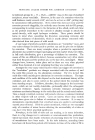
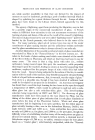
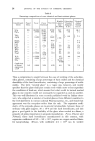
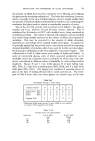
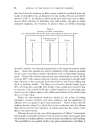
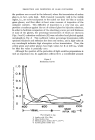
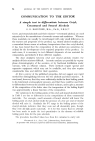
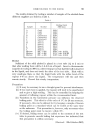
COMMUNICATION TO THE EDITOR The results obtained by testing a number of samples of the alcohols from different suppliers are listed in Table 1. Table 1 Boiling Point Sample Alcohol (620 mm) A Cetyl 305 øC B Cetyl 305 øC C Cetyl 306 øC D Cetostearvl 316 øC E Cetostear•l 321 øC F Cetosteary 1 317 øC G Stearyl 329 øC H Stearyl 332 øC I Stearyl 333 øC J Stearyl 331 øC K Stearyl 332 øC L Stearyl 328 øC Mixture 50C q- 50S 318øC (calc. 317.5) Mixture 55C -1- 45S 317øC (calc. 316.35) Mixture 60C q- 40S 315øC (calc. 315.2) Method Sufficient of the solid alcohol is placed in a test tube (1« to 2 cm) so that after melting there will be 1.0-0.3 cm of liquid. Insert a thermometer (capable of reading to 360 ø) in a slotted stopper so that half the bulb is inserted in the liquid, and does not touch the sides of the test tube. Heat with a very small gas flame so that the liquid boils with the reflux level of the vapour 4-6 cm above the liquid. The temperature will rise and then remain steady. Record this steady temperature. Precautions (i) It may be necessary to use a draught guard to prevent interference. (ii) If too much heat is applied, the vapours will tend to be superheated and so give a high reading. This can be controlled by keeping the amount of refluxing vapour within the recommended limit. (iii) Variations in the barometric pressure can influence the observed boiling point. This effect is of the order of 1 øC for 20 mm mercury. If necessary, this can be allowed for by keeping a sample of known boiling point as a standard which can be tested at the same time as the unknown. This precaution is, however, only necessary when the boiling point must be known xvithin 2øC. (iv) If desired, boiling stones can be added to the contents of the test tube to promote smooth boiling but experience has indicated that this precaution is seldom necessary. (Received: 23rd October 1961)

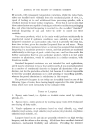
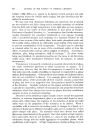
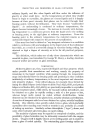
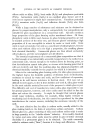
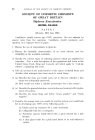
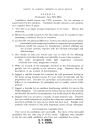
JOURNAL OF THE SOCIETY OF COSMETIC CHEMISTS SOCIETY OF COSMETIC CHEMISTS OF GREAT BRITAIN Diploma Examination BRUNEL COLLEGE PAPER I (Monday, 26th June 11161) Candidates should answer any FIVE questions. Do not attempt to answer more than five questions. Candidates should commence each question on a separate sheet of paper. 1. Discuss the use of antioxidants in lipsticks. 2. Discuss the desirable characteristics of an eosia solvent, and the suitability of the available materials. 3. Classify the various types of colouring matters which are employed in cosmetics. Give a brief description of the regulations laid down in the United States Food, Drug and Cosmetic Act which apply to "coal-tar colours", explaining this term. 4. Give an account of the main theories of the causes of dental decay and describe what attempts have been made to arrest decay. 5. (a) Describe the tests you would carry out to discover whether a face cream was adequately preserved. (b) How would you select a suitable preservative for a face cream ? 6. (a) Describe the general structure, reproduction and main growth require- ments of bacteria. (b) Describe the Gram Stain and define "Gram positive" and "Gram negative" 7. Describe the storage tests you would do, and the defects you would look for in developing any TWO of the following packs :. (a) Plastic push-up container for a stick deodorant. (b) Collapsible tube for a toothpaste. (c) Polythene squeeze bottle fitted with a spray fitment for a hair lacquer. (d) A clear glass bottle for a pink hand lotion to be sold without a carton.
Purchased for the exclusive use of nofirst nolast (unknown)
From: SCC Media Library & Resource Center (library.scconline.org)