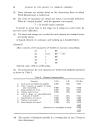
THE PRINCIPLES OF WORK STUDY 15 Determination of the number of Titrations per day at Standard Working day = 7 hours : 420 minutes. Less stop/start and cleaning allowance of 25 minutes. Net available working time : 395 minutes. 395 Number of titrations at standard -- -- 108 (at 80r' 144) 3.647 Allowances ß 50 min. approx for rest. 25 min. stop/start and cleaning up. 81 min. for calculation of result (built in). 156 min. This procedure can be adopted for any human work. Work Measure- ment can also be used for comparison of methods. Care must be taken, however, that the new and improved method is given a fair trial by a trained operative. It will be appreciated that having derived the standard time for a number of operations, the mixed number of these which can be carried out in a work- ing day can be calculated. One Set of Mixed Operations Calculated per day Output If Standard Time for titration ---- 3.647 S.W.M. and Standard Time for a weighing • 5-000 S.W.M. To calculate the allowed time at standard for 10 weighings and five titrations: For 10 weighings 5-000 X 10 = 50 min. For 5 titrations 3.647 x 5 = 18-235 min. Total time allowed at standard = 68-235 min. Conversely, by taking the operations performed by a worker in a day, it is possible to compare his performance with that of another. Mixed Operations per 7 hour day. Calculation of Rating Suppose assistant does 10 weighings and 5 titrations in 55 minutes. At what rating has he worked ? Formula: Time allowed X 60 = rating Time taken 68.235 -- x 60 •- 74 55 It must be emphasised that although, in this last example, work has been taken from the laboratory, it is obviously undesirable that a laboratory

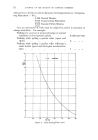
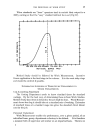
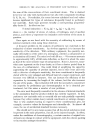
16 JOURNAL OF THE SOCIETY OF COSMETIC CHEMISTS assistant's ability should be assessed only on speed. Laboratory examples have been selected merely to illustrate the subject. INCENTIVE BONUS Consultants have long used a combination of Work Measurement, with the application of Incentive Bonus schemes, to show rapid returns. The installation of an Incentive Bonus scheme is rather like having a driverless car at the top of a very steep hill with the engine off, and the hand brake released. The car is given a good push. At first the results may be impressive but unless the scheme is carefully controlled, and applied with integrity, disaster may ensue. If the method to be used is not completely described the operator may take short cuts, thereby achieving a high output at the expense of quality. The method of payment of bonus is shown in the following example ß Operator's performance for week = 80 Weekly wage = • 9 80--60 Bonus payable =• x 9 =• 3 60 Total pay = oe 12 Where individual bonus payments are made, payments when plotted against numbers earning them should follow a Gaussian Distribution Curve (Fig. 10). I I I ' ' ' ' ' ' I I, I ,, I I I I I •... ..-- z • __ •' - O' _ -- INDIVIDUAL BONUS PAID. Figure 10
Purchased for the exclusive use of nofirst nolast (unknown)
From: SCC Media Library & Resource Center (library.scconline.org)