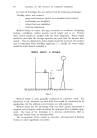
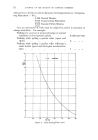
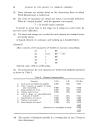
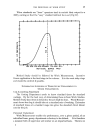
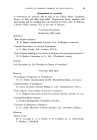
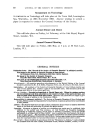
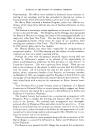
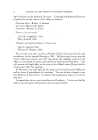
SYNTHESIS AND OLFACTIVE PROPERTIES OF 11-OXAHEXADECANOLIDE 9,3 and structure. In our opinion the rules about macrocyclic ring structures containing one functional group are well-founded. The osmophoric effect decreases down the range of lactone-, ketone-, carbonate-, arthydride- and hetero atoms (O, NH, Sp 3, but matters are more complicated if two functional groups are present in the ring. It is generally found in the literature that the introduction of a second functional group causes a decrease in odour intensity. In the series of the oxalactones this fact was accepted up to now. Exceptions to this rule are known. For instance, civettone, with a ketone group and an olefinic bond, has a much stronger odour intensity than the hydrogenated product with only one functional group. The same may be said about ambrettolide and hexa- decanolide, although to a lesser degree. The observation of Beets and v.d. Dool • that the introduction of an oxygen atom in macrocyclic ketones should increase the intensity of the odour is disputable. If the hetero atom is placed in the lactone position (exaltone y pentadecanolide) then their observation is correct. In 6-oxacyclohexadecanone •5, in our opinion, the odour intensity is definitely lower. We also synthesized this compound in our laboratory. (CH•) 11. C =O C =O CI-I (CI-I •) 5 C=O pentadecanolide dihydrocivettone H,)9' O O CH , (CH,) 7 O hexadecanolide ambrettolide c =o CH (CH•)7 C=O (CH•ho. C=O CH (CH,), O. (CH,h civettone 6-oxacyclohexadecanone C=O C=O O=C (CH,)n C=O o (CH,)• O O (CH,), O 11-oxahexadecanolide exaltone ethylene brassylate Little is said in the literature about the olfactive effect caused by relative positions of two functional groups. For this reason we wish to carry out a systematic investigation of the olfactive properties of the oxahexadecano- lides. In our opinion, the place of a second osmophore may be just as important as the nature of the group.

24 JOURNAL OF THE SOCIETY OF COSMETIC CHEMISTS The synthesis of these lactones led to the isomers 10-, 11-, 12-, 13- and 14-oxahexadecanolide. The fact that the 11-isomer proved to be a very strong musk compound was most unexpected. We base our arguments on the fact that 11-oxahexadecanolide, in character as well as in intensity, is at least equal to pentadecanolide. This remarkable fact upsets a number of theories and conclusions. Stoll •a and, more recently, Nesmeyanov et al ø stated that the introduction of an oxygen atom decreases the intensity of a macrocyclic lactone. This applied to the hitherto known oxalactones, but the discovery of 11-oxahexadecanolide upsets this theory. Another conclusion that is based upon too little facts is that given by the Russian authors ø, when they stated that the odour is stronger if the hetero atom in the macrocyclic lactones is further removed from the carbonyl group. Their statement was based on the difference in intensity observed between the weak 6-oxahexadecanolide and the stronger 10-oxahexadecanolide. In our series, 11-oxahexadecanolide gives a stronger odour than the isomers 12-, 13- and 14-oxahexadecanolides. The phenomenon, reported by Beets •6, that macrocyclic diesters" have a higher intensity if the two ester groups are near to each other (ethylene brassylate), is an acceptable conclusion according to the data available to us. If this could be taken as a general rule for two functional groups, then the odour of 14-oxahexadecanolide would have to be stronger than the odour of 11-oxahexadecanolide, but the reverse applies. We cannot explain why the intensity of 11-oxahexadecanolide is so much stronger than the intensity of the other isomers. Our knowledge of the minute differences in molecular structure is insufficient and there are more indeterminate factors that play a part when the molecule approaches the receptor surface. It is thus evident that one may only draw conclusions if the amount of systematical data is sufficient. Basing our opinion on available data, we conclude that the introduction of an oxygen atom into pentadecanolide does not necessarily decrease the olfactive properties. Perhaps surprising olfactory discoveries will be found in other bifunctional macrocyclic systems. (Received: 20th september 1962) REFERENCES Mignat, S. Dragocoberichte 7 27, 51, 71 (1960) Kerschbaum, M. Ber. deut. chern. Ges. 60 902 (1927) Carnduff, J., Eglinton, H., McCrae, W. and Raphael, R. A. ½hern. and Ind. London 559 (1960) Ruzicka, L. and Stoll, M. Helv. Chirn. Acta 11 1159 (1928) Klouwen, M. H. and Kok, J. G.J. tarfitmerie und tfosrnetik 45 35 (1962) Klouwen, M. H. and Kok, J. G.J. Dutch Patent application 276.351 (1962)
Purchased for the exclusive use of nofirst nolast (unknown)
From: SCC Media Library & Resource Center (library.scconline.org)