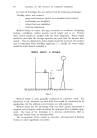
THE PRINCIPLES OF WORK STUDY Fig. 2 shows a sketch of a factory building. The lines show the flow of work through the factory. In this case the ladies' powder room was in the right-hand building and the operators, chiefly women, worked in the left-hand building. For special reasons the ladies' powder room could not be sited inside the left-hand building in the normal way. It will be seen that the operators had to descend from the second to the ground floor, walk to the door, discover if it were raining, walk to their lockers and put on their raincoats if it were, walk outside and down the road, up to the second floor either by lift or staircase, along a corridor. They then returned along the path by which they had come. Figure 3. Path followed in improved layout It was found possible to site the powder room in a corner of the left-hand building with access from the outside, as illustrated by Fig. 3. It resulted in an economy in labour amounting to, at least, in current values, .•3,000 a year. This is an illustration of one type of Method Study. One major fault that this type of analysis throws up is backtracking, that is, where the line of flow doubles back on itself. It is surprising how often an examination of flow lines reveals inefficiencies. Another factor of importance in flow is the frequency with which a route is followed. It may be found, for instance, that a route of 240 feet has to be followed 100 times a day, whilst

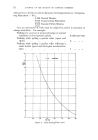
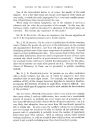
6 JOURNAL OF THE SOCIETY OF COSMETIC CHEMISTS one of 120 feet is followed once a day. If these are associated with the same job, then obviously the job should be re-laid out so that the flow is reversed. The siting of a kitchen in relation to a dining room in a restaurant is illustrative also of this principle. KITCHEN 120' _..•! .... .cI 14.1' 14.1 ' -" .__: :-.._----- - ' - ...... 60.8' 60.8' t.,-.t- 40' I IO, 4' II 0.4' I DINING ROOM 185.,3' 185.3' TOTAL 370.6 t 120' DINING ROOM ' '"•. 58.3 ' :30' ß KITCHEN Figure OUT BACK 30.0' 30.0' 58.3' 5B.3' 58.3' 58.3' 146.6' 14 6,•6' TOTAL 293.2 r , SAVING 77_4 Fig. 4 shows the route followed by a waitress in two circumstances. It will be seen that in one case she walks 26.4 % further than in the other. This may not seem much but it may mean a great deal to the waitress. If she walks these distances 200 times a day she has walked nearly 3 miles further, carrying heavy loads in the badly laid-out restaurant, and the management have wasted that amount of labour multiplied by the number of waitresses employed. A corollary to this in the laboratory is indicated by the following, as well as by other, questions: Is most used apparatus nearest to hand ? Are most used materials nearest to hand ? What is the position of the store room and balance room in relation to the laboratory or laboratories they serve ? What is the path followed by Laboratory Reports ? Are they typed or written ? Who does it ? When completed where do the various copies go ? How are they transmitted ? Is good use made of every copy ? Obviously, in this review of large scale Method Study the Questioning Attitude has been adopted. Briefly, this is the achieving of economies in cost by taking nothing for granted, questioning the reason for everything. _In their simplest form the questions asked about an operation are: What is the purpose of the operation ? Why is it necessary to do it ?
Purchased for the exclusive use of nofirst nolast (unknown)
From: SCC Media Library & Resource Center (library.scconline.org)