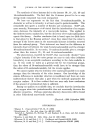
SYNTHESIS AND OLFACTIVE PROPERTIES OF 11-OXAHEXADECANOLIDE 21 EXPERIMENTAL The isomeric oxahexadecanolides are usually obtained by reaction of to-halogenocarboxylic acids (esters) upon the monosodium compounds of a,to-diols, followed by cyclisation, except in case of 15-oxahexadecanolide. We synthesized five of them, viz. 10-, 11-, 12-, 13- and 14-oxahexadecanolide. The 11- and 14-isomers have not yet been described in literature. Another isomer, 6-oxahexadecanolide, has been synthesized by Nesmeyanov et al 6. The detailed descriptions are as follows: Synthesis of 11-oxahexadecanolide. HO- (CI-I•),- O-I Na q- C1 I- (CHz)9-COOCHa--I-IO-(CI-Iz)•- O- (CH•)9-COOCH a ItO - (CI-I•) 5 - O - (CH•) 9 - COOCH a. •- •-(CH•)• - O - (CH•)9 - COO-• (1) saponification (2) cyclisation We prepared 11-oxahexadecanolide from 10-hydroxydecanoic acid, obtained by alkaline fission of castor oil*. Esterification with methanol and reaction with thionyl chloride gave us the methyl 10-chlorodecanoate6 n-20 b.p. 112ø/3 mm --•- 1.4488. The ester was condensed in 6 hours with an equimolar quantity of monosodium pentanediolate at 150 ø in an excess of pentanediol. Saponification of the reaction product yielded 76% 11-oxa-16-hydroxy- hexadecanoic acid. Purification was carried out by crystallisation from benzene m.p. 65 ø , neut. equiv. 275 (theoretically 274). Cyclisation was effected according to Ogorodnikova et al 9 by converting the oxa-acid into its polymer and transesterification in vacuo at 200 ø. The lactone was isolated from the reaction mixture by co-distillation with glycerol. Fractionation yielded 80% pure 11-oxahexadecanolide, m.p. 35 ø. C•H,80a* Calc. C 70,26% H 11,01% 0 18,72% Found ,, 70,53% ,, 11,13% ,, 18,38%. Synthesis of 10-, 12-, 18- and 14-oxahexadecanolide. I-IO-(CH,)n-Oq Na q- Br l-(CH,)m-COOCHa----I-IO-(CH,)n-O-(CH,)m-COOCH, HO- (CH •) n-O- (CI-I •) m-COOCI-I a -•-(CH•) n-O- (CH •)m-COO-I In all instances the required oxa-acids were obtained by reaction between the •o-bromocarboxylic esters and the monosodium compounds of the corresponding diols according to Stoll and Rouv• •ø. Cyclisation was carried out in the same manner as described above.

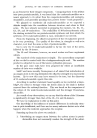
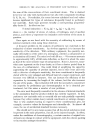
22 JOURNAL OF THE SOCIETY OF COSMETIC CHEMISTS Table 1 shows the lactones with their refractive indices. Table 1 Refractive indices of some oxahexadecanolides n-20 D lactone structure found literature 10-Oxahexadecanolide n=6 m= 8 1.4681 1.46806 12-Oxahexadecanolide n_--4 m----10 1.4679 1.4678 n 13-Oxahexadecanolide n---- 3 m = 11 1.4676 1.4644 •2 14-Oxahexadecanolide n = 2 m •-- 12 1.4683 -- *Micro-analyses by the Organic Chemistry Laboratory, University of Amsterdam, Department of Microanalysis, headed by J. P. Hubers. OLFACTIVE PROPERTIES Pentadecanolide has superior olfactive properties in the group of macro- cyclic lactones, having a strong musk odour with a flowery note. All oxalactones synthesized in our laboratories, and 6-oxahexadecanolide, des- cribed by Nesmeyanov et al ø, give similar but weaker odours than penta- decanolide with the exception of 11-oxahexadecanolide. Apart from this,- the 12-, and especially the 13- and 14-isomers have a fatty note, which shows up very clearlywhen the substances have been on paper test strips for some time. Curiously enough, 11-oxahexadecanolide has an odour, and other pro- perties, which are equal to pentadecanolide in all respects. Observation of the olfactive properties of the plain substance and compositions in which it is used, underline this. This similarity will be discussed in detail in another paper that will deal with its application and properties in perfumes. Table 2 shows the lactones and their odour descriptions. Table 2 Olfactive properties of some oxahexadecanolides and pentadecanolide Compound Olfactive properties pentadecanolide musk, strong, flowery note 10-oxahexadecanolide musk, rather strong, flowery 11-oxahexadecanolide musk, strong, flowery note 12-oxahexadecanolide musk, medium, weak fatty 13-oxahexadecanolide musk, medium, fatty note 14-oxahexadecanolide musk, medium, fatty note DISCUSSION In the field of macrocyclic compounds, conclusions have been drawn and rules have been made, based on observation of correlation between odour
Purchased for the exclusive use of nofirst nolast (unknown)
From: SCC Media Library & Resource Center (library.scconline.org)