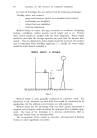
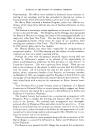
THE PRINCIPLES OF WORK STUDY' 7 How is it done ? Can it be simplified ? Where is it done ? Who does it ? When is it done ? At what stage in the sequence of operations ? These questions can be asked almost indefinitely. Thus the second question could be enlarged to: Can the operation be eliminated ? Can it be combined with another operation ? Can it be sub-divided and the parts worked in with other operations ? Can it be done whilst the operator is forced to wait on another job ? As an illustration of this second question consider the man-machine chart illustrated by Fig. 5. MAN - MACHINE CHART S.W.M.'S Figur• 5 PA • PROCESS ALLOWANCE If part of the man's-work is eliminated, consideration can be given to the man's working of two machines. It may well be that if routine work in the laboratory is considered it will be found that a fair amount of effort may be eliminated if the organisation of the laboratory is considered in relation to the principles which have been expressed. Method Study on the micro-scale is applied chiefly to the lay-out of the workplace. The workplace must be arranged to suit the needs of the worker. The basic theory underlying Method Study is that if the workplace is arranged so that everything is to hand, and if the work is made as easy as possible then the worker will respond by a high rate of output. This arrangement has been reduced to a few simple laws:

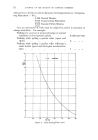
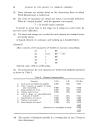
8 JOURNAL OF THE SOCIETY OF COSMETIC CHEMISTS 1. The workplace should be arranged so that the work is positioned within easy reach of the operator. Thus, Method Study has been used in the surgery. The operating table is re-designed so that the instruments feed towards the surgeon's hands and everything is within easy reach of the assistants' hands. 2. Maximum output is obtained when both hands are used throughout the work cycle. When one hand only is working, the idle hand is not rested. The pianist is an example of this. 3. Operator movements should be symmetrically designed and only the hands and forearm should require to be used. Rowing is, perhaps, a good example of this. Scaffolding which rises with the house, thereby enabling the builders to be always at the correct working height, is another satisfactory example. Historically, this type of Motion Study was developed by the Gilbreths. Frank Gilbreth was an engineer and his wife, Lilian, a psychologist. They had twelve children. Life was only possible by strict adherence to scientific management. One of their sons wrote a book "Cheaper by the Dozen" which may be familiar to some readers. Their work was directed towards the building industry. They were responsible for the smaller type of scaffolcling which rose with the building, the work of the bricklayers therefore always conforming with the Laws of Motion Economy. A higher rate of bricklaying was therefore possible. The secret of their success was the analysis of movement into detail, and they listed sixteen basic movements. Of these, or some of them, any operation could be synthesised. These detailed movements they called Therbligs. How these should be treated is indicated in parentheses. Table 1 Therbligs St. Select (eliminate) P(lan) Plan (eliminate) G. Grasp (minimise) PP. Pre-position (eliminate) TL. Transport loaded (minimise) RL. Release load P. Position (minimise) TE. Transport empty (minimise) A. Assemble (simplify) R. Rest for overcoming fatigue lJ. Use (minimise) DA. Disassemble (simplify) UD. Unavoidable delay (minimise) AD. Avoidable delay (eliminate) I. Inspect H. Hold (eliminate) Economy in, and ease of, movement are illustrated below by an improved method for storing laboratory record books. The old method of keeping these record books (Fig. 6A) was to force them into the compartment. As the books grew in size it became increasingly difficult to put them away and to take them out. Moreover there was no place to put
Purchased for the exclusive use of nofirst nolast (unknown)
From: SCC Media Library & Resource Center (library.scconline.org)