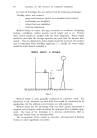
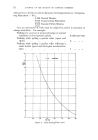
ERRORS IN THE ANALYSING OF PERFUMERY RAW MATERIALS 33 well separated when ! = 6, and if it is desired to identify a substance which is present in a minor proportion relative to another, this condition also must be satisfied. If, however, it is only necessary to distinguish two substances so as to be able to exactly measure the peak heights, it is permissible for t to be greater than 3, or better still, at least 4. With t: 2, it is just possible to recognise the complexity of a peak 13'14'15. The distinction between peaks becomes more difficult as the retention volume increases. With a column of 1,000 to 1,500 theoretical plates, it is found that the relative retention volumes must differ by about 20•o for the peaks to be perfectly separated differences of 10-15% will result in a certain confusion of peaks (shoulders, double peaks). For differences of 7•o or less, the peaks are not sep- arated16.17,18. The possible resolution of a mixture of substances in given elution time is therefore severely limited. Chromatography under ordinary conditions does not permit an assessment of the complexity of the compositions of most perfumery raw materials. The impossibility of distinguishing peaks falsities both qualitative and quantitative analyses. A critical study of most publications devoted to gas-chromatography of essential oils illustrates this point. Other causes of error have their origin in lack of knowledge of the pro- perties of detectors. The non-destructive detectors, chiefly catharometers and ionisation detectors, to which reference has been made above, permit the olfactive study of the elute, and are used most often for the analysis of perfumery raw materials. The molecular percentages of the various con- stituents of a mixture are very frequently evaluated in accordance with a procedure, well described by Hausdorff •9. "The areas for all peaks are added to give a total area which is normalised to 100 per cent. The ratio of individual areas to this total gives the mole percentage concentration directly." In this manner, according to Hausdorff, "quantitative analysis can be made directly on each recording, without knowing the instrument settings, the identity of the components present, or the components' individual calibrating constants or plots." Such an enthusiastic viewpoint is acceptable only for mixtures of con- stituents which are similar and of the same chemical type. Applied to mixtures such as essentiM oils, it leads to errors amounting to as much as 15-20% of the real value. In effect, the response of the catharometer varies with the proportion and with the type of substance. Most perfumery raw materiMs being mixtures of many substances in widely varying proportions, the response signal is not linear with respect to concentration. Calibration is essential if accuracy is to be obtained, less, however, where hydrogen or helium are employed as opposed to nitrogen. With moderate variations in the opera-

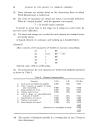
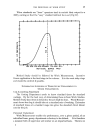
34 JOURNAL OF THE SOCIETY OF COSMETIC CHEMISTS tional conditions, in particular in the concentration of the carrier gas, and for a large range of concentrations in the product being analysed, the cali- bration factor can be considered as constant. Moreover, constituents of similar type have fairly similar factors of calibration. This facilitates the analysis considerably. The calibration is effected most often by the use of internal standards. A known concentration of a standard substance, which gives an isolated uniform peak, is introduced into the sample being analysed and the responses of the detector to the standard, and to the substance being evaluated, are compared. Ideally, the two peaks should be side by side, the two products of the same type, and the concentrations of the same order of magnitude, in which case the calibration factor will approach unity. The precision of determinations by the use of an internal standard can approach 4-1%20. An excellent internal standard, particularly when it is desired to evaluate the percentage of a minor constituent, is the substance itself. One com- mences by roughly determining the percentage of the constituent by analysing the crude product, then one adds to it an equivalent percentage of the constituent in question. The two chromatograms are compared, all operating conditions being identical or very similar, notably the quantity of the product injected, the gas flow rate and the temperature, by taking as a reference the peak isolated from adjacent constituents of the substance by its retention time. Beta Ray ionisation detectors appear to be excellent for the routine analysis of perfumery raw materials. The source of radiation most used is Strontium 90 which only produces/• rays, the fission reaction being-- Sr Y Zr 0,6 2,5 Me V Me V half-life half-life stable ca. 25 y ca. 60 h Normally sources of 25 m.c. are used as these are not dangerous if normal precautions are taken. These detectors have been particularly well studied by Boer 2•'22'2aa4'25, who has claimed that "calibration is virtually unnecessary since the differ- ential ionisation currents may be predicted from the ionisation cross sections of the component molecules." It is therefore necessary to know this parameter for each constituent. Otvos and Stevenson 26 have shown by the extension of a result anticipated theoretically by Bethe 27 that the relative total ionisation cross sections of molecules are constitutive molecular properties, i.e., they are obtained from
Purchased for the exclusive use of nofirst nolast (unknown)
From: SCC Media Library & Resource Center (library.scconline.org)