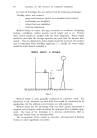
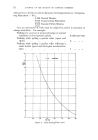
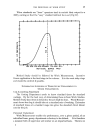
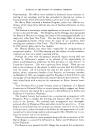
THE PRINCIPLES OF WORK STUDY 17 When standards are "loose" operators tend to restrict their output to a 33•-% earning so that the "easy" standard will not be re-set (Fig 11). INDIVIDUAL BONUS PAID Figure 11 Method Study should be followed by Work Measurement. Incentive Bonus application is the final stage in the scheme. It is the most risky stage and should be omitted if possible. INFORMATION SUPPLIED BY WORK STUDY DEPARTMENT TO OTHER DEPARTMENTS Cost Accounting Department The Costing Department needs to know standard times for standard costings. By far the best way of determining these is from Work Studies. Method Study lays down in detail how the job shall be done. Work Measure- ment shows how long it should take at a standard rate of working. Extension of standard times at a standard wage rate gives the standard direct labour cost for the job. Personnel Department Work Measurement enables the performance, over a given period, of an individual team, group.• department or factory to be defined. It is therefore a measure both of supervisor and worker on an impartial basis. There is no

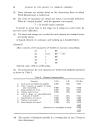
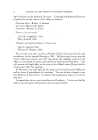
18 JOURNAL OF THE SOCIETY OF COSMETIC CHEMISTS reason why results worked out by the Work Study Department should not be recorded in Personnel Department's records. These results, of course, illustrate only one facet in an individual's useful- ness to the employer, and should be reviewed as such. CONCLUSION This is only a brief and elementary account of Work Study. In this Productivity Year it may be appropriate to quote the results obtained in one group of factories in World War II. Table 4 Labour Reduced from 45,000 operators to 30,000 operators. 15,000 men and women transferred to the armed forces. Output From 30,000, double that previously obtained from 45,000. Estimated increase in operator earnings 33.0% Economy fl,000,000 per year. Cost of application f75,000 per year. It should be noted that much of this was obtained by chemists after a brief training in Work Study. (Received: $Oth July 196oe)
Purchased for the exclusive use of nofirst nolast (unknown)
From: SCC Media Library & Resource Center (library.scconline.org)